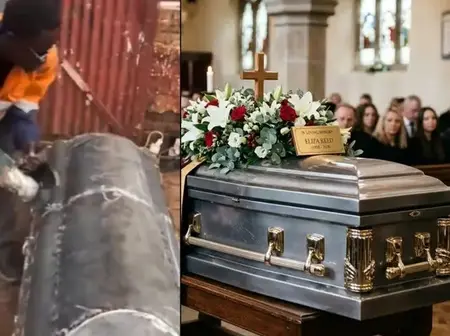
A video of a welder making a metallic coffin has attracted attention online, introducing Kenyans to an unusual alternative to traditional wooden coffins.
The video shows the process of making the burial container using metal, leaving viewers curious about the design.
While wooden coffins remain common in many communities, metallic coffins are also used in different parts of the world.
Their use varies depending on cultural practices, personal preferences and the choices families make during funeral arrangements.
Metallic coffins, also known as metal caskets, are made using materials such as steel, stainless steel, copper and bronze.
Each material has different qualities, with some offering better resistance to corrosion and general wear.
The use of metallic coffins gained momentum in the 19th century, particularly in the United States.
Inventors began exploring ways of making burial containers that could protect human remains during transportation and burial.
Before then, wooden coffins were widely used, although some wealthy Europeans were buried in lead containers.
Lead coffins were also used in medieval Europe, particularly among wealthy families and members of the nobility.
One reason some families choose metallic coffins is their durability, as certain metals can withstand underground conditions longer than wood.
Some designs also have rubber seals fitted around their lids to limit the entry of water, soil and other external elements.
Their appearance is another consideration, with manufacturers offering different colours, polished finishes and designs.
Steel is among the commonly used materials, with its thickness measured using gauges.
A lower gauge number indicates thicker and heavier metal, which affects the construction of the casket.
Other options include stainless steel, copper and bronze, which are often considered premium materials because of their resistance to corrosion.
However, metallic coffins are not suitable for every funeral arrangement because they cannot be used for cremation.
Families choosing cremation would therefore need to make alternative arrangements for the burial container.
The viral video has brought renewed attention to this less familiar burial option, showing that families have alternatives beyond traditional wooden coffins.
https://www.facebook.com/share/1C9LzPfxkh/