HIV Tribunal Orders Three Organisations to Pay Sh1.2 Million for Disclosing Student’s Status
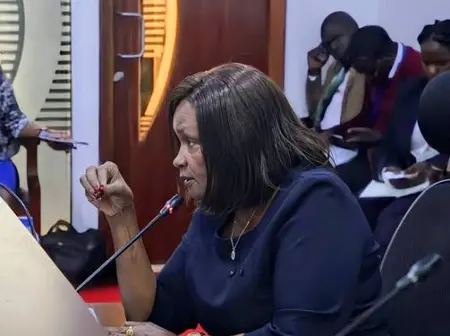
Kenya’s HIV and AIDS Tribunal has ordered three organisations to jointly pay Sh1.2 million to a university student after her HIV status was shared and published without her written consent.
The decision was delivered on February 20, 2025, in a case filed by a student identified as JLO. The respondents were a programme that supported her, its managing institute, and the publisher of SkyGirls Magazine.
The claimant said she had lived with HIV since birth but learned of her status in 2018. In July 2022, an employee asked her to write her story, assuring her it would remain confidential and could encourage other girls.
However, the story was shared with the magazine publisher and later appeared with her full names. She said she had not agreed to its publication and learned about it after a friend contacted her.
She said the disclosure affected her relationships, as some friends and classmates avoided her. Witnesses said the story became a topic of discussion among students and that she appeared distressed.
The respondents argued that consent had been given. However, the tribunal found no written proof. It said writing a personal story did not mean the claimant had agreed to have her HIV status published.
The tribunal ruled that the disclosure breached the HIV and AIDS Prevention and Control Act, which protects the privacy of people’s HIV status. It awarded Sh500,000 for unlawful disclosure and Sh700,000 for emotional distress, stigma, and exemplary and punitive damages.
The respondents were also ordered to pay legal costs and interest. The magazine publisher was directed to remove the story within 24 hours and not publish her information without informed consent. The programme and its managing institute were ordered to train staff on confidentiality.
The sensitisation meetings will begin in Nairobi on November 18 at the TSC headquarters in Upper Hill. Other sessions will take place in Nyeri, Garissa, Embu, Kakamega, Mombasa, Nakuru, Uasin Gishu and Kisumu on different dates.
Reports indicate that the programme will also cover participants from surrounding counties, allowing more eligible businesses to benefit from the exercise. The Rift Valley region will have separate sessions for North Rift and South Rift participants.
The required information includes the name of the business, physical or postal address, tender name, telephone number and email address. Participants can also use the same email address to seek clarification about the programme.
The AGPO initiative is part of the government's efforts to promote economic inclusion by increasing access to public procurement opportunities for businesses owned by women, youth and persons with disabilities. Under the Public Procurement and Asset Disposal Act, 2015, at least 30 per cent of government procurement opportunities are reserved for these groups.
The commission has encouraged eligible suppliers to take advantage of the sensitisation meetings and familiarise themselves with the requirements for participating in government tenders.
Applicants seeking recruitment opportunities should carefully check the age requirements before submitting their applications. The required age limit may differ depending on the position, department, or category of recruitment. While some applicants must be below 24 years of age, others may qualify for recruitment at an age of up to 39 years.
These age limits are important because they help applicants understand whether they meet the basic requirements for the positions they wish to apply for. Candidates are therefore encouraged to confirm the specific age conditions before beginning the application process. This will help them avoid applying for positions for which they do not meet the required qualifications.
For applicants required to be below 24 years, it is important to ensure that they fall within the stated age limit at the time specified in the recruitment guidelines. Those applying for positions with an upper age limit of 39 years should also check whether they meet the relevant conditions.
The difference in age requirements means that recruitment opportunities may be open to people from different age groups, depending on the position available. Therefore, applicants should not assume that all positions have the same age restrictions. Each category may have its own conditions, which must be followed.
In addition to checking the age limits, applicants should carefully read the official recruitment notice to understand all the requirements. They should ensure that the information they provide is accurate and that they meet the conditions set for their preferred positions.
Understanding the age requirements is an important step towards making a successful application. Applicants should take time to review the guidelines, confirm their eligibility and apply only for positions that match their qualifications and age group. This will help make the recruitment process easier and reduce the chances of unnecessary application errors.
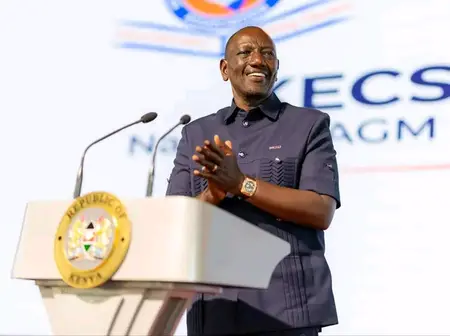
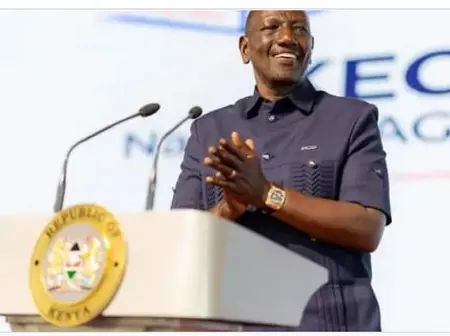
Speaking on Thursday during the Kenya Comprehensive Schools Heads Association Annual General Meeting in Mombasa, the Head of State revealed that the government will employ 20,000 new teachers next month.
This upcoming December hiring wave will bring the total number of educators recruited under his administration to 120,000, adding to the 100,000 tutors already absorbed into the workforce.
Addressing school heads at the Sheikh Zayed Children Welfare Centre in Nyali, President Ruto emphasized that expanding the teaching workforce is a central pillar of his plan to transform learning outcomes. He noted that the modern Kenyan classroom requires enough skilled personnel to equip learners with practical problem-solving abilities and creative thinking.
Beyond job creation, the President outlined sweeping structural changes aimed at making school operations smoother. He explained that the government has merged primary and junior schools under a single comprehensive school management system.
According to the President, this unified approach strengthens financial accountability and ensures that increased government capitation funds are disbursed on time to support daily learning.
To ease congestion in public institutions, the Head of State also pointed out that 23,000 new classrooms have been constructed nationwide. He assured educators that his administration remains committed to their welfare, career progression, and timely promotions.
During the same forum, Teachers Service Commission Chairman Dr. Jamleck Muturi John echoed the President's sentiments. He pledged that the commission will continue prioritizing teacher welfare, professional development, and open dialogue with educators while urging school heads to foster environments of excellence.
With the December recruitment drive fast approaching, trained teachers awaiting deployment are urged to prepare their documents and keep a close eye on official Teachers Service Commission portals for application guidelines.
Second, physical standards demand perfection. Men need at least 1.60 metres and 54.55 kg; women 1.52 metres and 50 kg. BMI must sit between 18.5 and 30. Pregnant candidates are automatically barred.
Third, any medical condition that fails KDF fitness tests ends the journey during rigorous assessments.
Fourth, a criminal record of any kind signals immediate rejection. Discipline and integrity are non-negotiable.
Fifth, academic mismatches kill chances. Cadets require a B mean grade with strong English, maths and science. Recruits need at least a D, while specialists demand degrees plus experience.
Shortlisting hits December 21-25. Prepare ruthlessly or watch your uniform dreams vanish.
The announcement targets deep teacher shortages that have strained schools amid rising enrollment. Officials expect the December recruitment to ease overcrowding, strengthen staffing, and accelerate the transformation of Kenya’s education system. Education leaders and parents are watching closely as this ambitious push aims to equip a new generation of learners for future success.
The former Mombasa governor shared the experience while reflecting on his journey from struggling with school fees to becoming one of the country's senior government officials.
Joho explained that his poor performance was not because he lacked intelligence but because his parents could not afford to pay his school fees.
He revealed that financial difficulties became so serious that he missed an entire school term because his family could not raise the money needed to keep him in school.
The Cabinet Secretary said his experience was a painful reminder of how poverty can interfere with a child's education and limit opportunities.
Despite the challenges, Joho went on to build a successful political career. He served as Mombasa governor for 10 years before joining President William Ruto's Cabinet as a Cabinet Secretary.
His journey from struggling to pay school fees to holding a senior government position has become the main point of his message, showing how difficult beginnings do not necessarily determine someone's future.
Joho also praised President Ruto for the efforts his administration is making to ensure that children do not miss out on education because their parents cannot afford school fees.
He expressed support for initiatives aimed at giving young people access to learning opportunities regardless of their family backgrounds.
. Through his personal story, Joho delivered a message of hope to young people facing similar difficulties, showing that a difficult start in life does not have to define their future.
Ruto Announces Recruitment of 20,000 Teachers by December 2026
President William Ruto has announced that the government plans to recruit 20,000 additional teachers by December 2026, bringing the total number hired under his administration to 120,000.
He made the announcement during the World Teachers’ Day celebrations at Kasarani Gymnasium on October 5, 2026. Ruto said the new recruitment would help address the shortage of teachers in schools across the country and strengthen Kenya’s education system.
The President noted that the government had already recruited 100,000 teachers. He described the recruitment as the largest expansion of Kenya’s teaching workforce. When his administration took office, the country had a shortage of about 116,000 teachers.
Ruto also announced plans to improve the employment terms of teachers. He said the government had set aside Sh4.9 billion to move 20,000 contract teachers who have completed two years of service to permanent and pensionable terms from January 2027. This transition is separate from the recruitment of the additional 20,000 teachers.
On promotions, the President said the Teachers Service Commission (TSC) had advertised 34,016 promotion opportunities. However, he urged the commission to increase the number to 50,000, adding that the government would provide extra funds for the exercise. He said the promotion budget had been increased from Sh1 billion to Sh2 billion.
Ruto said the government was working to improve teachers’ welfare, including healthcare and the payment of retirement benefits. He noted that teachers’ access to inpatient medical services had improved, with more health facilities available to them.
The President also said a pension information system was being used to speed up the processing of retirement payments. He expressed hope that teachers would receive their benefits within 10 days of retirement.
The announcements form part of government efforts to strengthen education, improve teachers’ working conditions and support the implementation of the Competency-Based Education system.
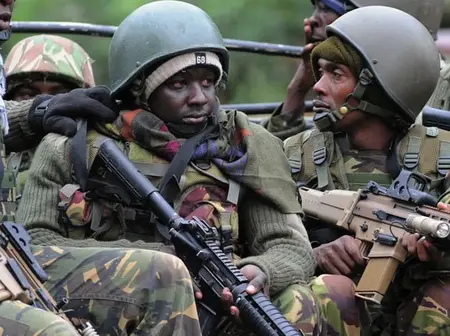
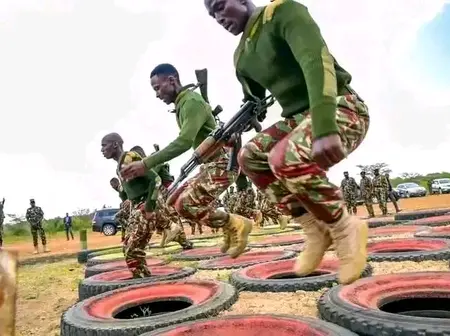
The Kenya Defence Forces (KDF) has announced a new recruitment exercise scheduled for December 2026, opening opportunities for Kenyans seeking to join the military as officers, general duty recruits, specialist officers and tradesmen and women.
In an advertisement issued by the Ministry of Defence, the military outlined several conditions prospective candidates must satisfy before they can be considered for recruitment.
The announcement provides an opportunity for thousands of young Kenyans to pursue military careers. However, meeting the minimum academic qualifications alone does not guarantee selection, as applicants must also satisfy strict age, physical fitness, medical and personal conduct requirements.
The military has emphasised that recruitment is free and open to all eligible candidates, warning that bribery and other attempts to influence the selection process are criminal offences.
Here are five reasons why a candidate could be disqualified during the December 2026 KDF recruitment exercise.
Age is among the first requirements prospective recruits must consider before presenting themselves for recruitment.
According to the Ministry of Defence, applicants must fall within specific age brackets depending on the position they intend to pursue.
Regular General Service Officer (GSO) Cadets must be aged between 18 and 23 years, while Graduate GSO Cadets, General Duty Recruits and Tradesmen and Women must be between 18 and 26 years.
Specialist Officers must not be above 30 years, while Medical Consultants must not exceed 35 years.
The age limit is extended to 39 years for Chaplains and Imams, while Catechists and Maalims must not be above 35 years.
Candidates who exceed the prescribed age limits for their respective recruitment categories risk being turned away regardless of their academic or professional qualifications.
Physical fitness is another major consideration in the KDF recruitment process, with the military prescribing minimum height, weight and Body Mass Index (BMI) requirements.
According to the advertisement, male candidates must have a minimum height of 1.60 metres (5ft 3in), while female candidates must be at least 1.52 metres (5ft).
The minimum weight requirement is 54.55 kilograms for men and 50 kilograms for women.
Additionally, applicants must have a BMI ranging between 18.5 and 30.0 kg/m².
Female candidates who are pregnant at the time of recruitment or during the entire training period are also ineligible.
These requirements mean that candidates who fail to meet the prescribed physical standards risk disqualification even if they satisfy the academic requirements.
The military has also made medical fitness a mandatory requirement for anyone seeking to join its ranks.
The Ministry of Defence states that candidates must be medically fit in accordance with KDF standards.
This means applicants must undergo medical assessments to establish whether they are physically and medically capable of handling military training and responsibilities.
Unlike ordinary employment, military service involves physically demanding exercises, operational duties and conditions that require a high level of physical endurance.
Consequently, candidates who fail the required medical assessments may not proceed to the next stage of recruitment.
A criminal record is another reason that could prevent an applicant from joining the Kenya Defence Forces.
The Ministry of Defence has explicitly stated that prospective recruits must have no criminal record.
The requirement underscores the importance of discipline, integrity and personal conduct in an institution entrusted with protecting the country’s sovereignty and territorial integrity.
Candidates with criminal records therefore risk being disqualified during the recruitment and verification process.
Possessing the wrong academic qualifications or failing to meet the professional requirements for a particular position could also lock candidates out of the recruitment exercise.
For instance, Regular GSO Cadets must have a minimum KCSE mean grade of B (Plain), with at least C+ in English, Mathematics and one Science subject.
General Duty Recruits must have a minimum mean grade of D (Plain), while Tradesmen and Women seeking diploma positions require at least C- and a relevant diploma from a recognised institution.
Those applying for certificate-level trades positions must have a minimum grade of D+ and a relevant certificate with Government Trade Test Grade II or Craft II.
Specialist Officers must possess the relevant bachelor’s degree and professional registration where applicable.
Additionally, Specialist Officers and Tradesmen and Women must have at least two years of practising experience in their respective fields from the date of registration with the relevant regulatory or statutory body in Kenya.
Candidates who present qualifications that do not match their preferred positions risk being rejected during verification.
Beyond the five requirements, the military has cautioned applicants against individuals promising to influence the recruitment process in exchange for money.
The Ministry of Defence emphasised that recruitment is free and that engaging in bribery or corruption is a criminal offence.
It further announced that biometric verification will be the sole method of identification during recruitment and when candidates report for training.
Consequently, no calling letters will be issued during recruitment or when successful candidates report for training.
Applications for GSO Cadets, Specialist Officers and Tradesmen and Women must be submitted through the official recruitment portal, recruit.mod.go.ke, by December 12, 2026.
Shortlisted candidates will be notified through the Ministry of Defence website and print media between December 21 and 25, 2026.
General Duty Recruits will be assessed at designated recruitment centres across the country between December 14 and 18, 2026.
The move follows concerns from school leaders that current allocations have failed to match rising costs of food, electricity, water and learning materials.
Ruto announced the plan during the 2026 World Teachers Day celebrations at Kasarani, Nairobi, noting that existing rates were last reviewed in 2015.
Senior schools currently receive about KSh22,244 per learner annually, junior schools around KSh14,000 and primary schools approximately KSh2,340.
The President said allocations should be reassessed upwards to give institutions enough resources to teach learners and maintain suitable learning environments.
He tasked the ministry to work with the Teachers Service Commission, teachers and other stakeholders after completion of the Tertiary Education, Placement and Funding Bill process.
The review comes as schools implement Competency Based Education, which has increased demand for classrooms, laboratories, teaching materials and trained teachers.
School heads have cited financial pressure, saying inadequate or delayed payments make it difficult to buy supplies and maintain facilities.
Ruto said the government released KSh86.1 billion to schools during 2026, including KSh44.2 billion in January, KSh23.4 billion in May and KSh18.5 billion in August.
The President has also promised timely termly releases, which school administrators say are essential for planning purchases and meeting routine expenses properly.
The debate coincides with a proposal by the Kenya Secondary School Heads Association to increase annual fees because operating costs have risen.
Parents have opposed higher contributions, warning that additional charges would burden households already struggling with the high cost of living.
They have urged the government to provide sufficient funding and ensure the money reaches schools on time.
A revised formula could ease pressure on institutions, but its impact will depend on the final allocations and consistent disbursement.
The ministry is expected to consult education agencies and assess the actual cost of teaching at each level before presenting recommendations.
No new rates have been announced, leaving school managers and families waiting to see whether the review will bring meaningful financial relief.