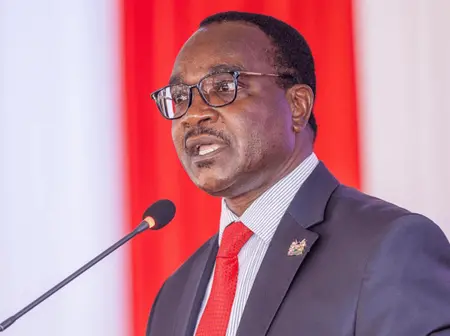
Speaking during the second graduation ceremony at Bureti National Polytechnic in Kericho on Friday, November 20, Ogamba said graduates who fail to secure employment will not be required to start repaying their loans immediately.
He explained that those who secure jobs will enjoy a one-year grace period before beginning repayment.
"If you do not get a job, you don't pay. If you get a job, then we have a grace period of one year. You work for a year, then your payment will be for 10 years," Ogamba stated.
The CS said the proposed arrangement is part of the Tertiary Education Placement and Funding Bill, 2026, which seeks to change how the government finances university and TVET education.
Under the proposed framework, funding will focus more on individual students and their chosen courses rather than their parents' financial ability.
Ogamba also revealed that college students could access loans of up to Ksh100,000 per semester, with approximately Ksh67,000 allocated for tuition and Ksh38,000 for upkeep.
The government expects the new repayment arrangement to increase loan recovery from the current 75 per cent to 85 per cent.
The proposed changes come amid concerns from students and parents over unemployment and the growing cost of higher education.
The government says the reforms are intended to ensure that students can pursue courses such as medicine, engineering and law without their parents' financial circumstances becoming the main obstacle.
The new framework is expected to become operational next year, subject to the legislative process.
Students and parents will therefore be watching Parliament's consideration of the Bill as the government prepares to introduce the proposed funding arrangements.
The appointment of Cheptumo Ayabei as the Teachers Service Commission (TSC) Chief Executive Officer has been challenged in court, with a petitioner seeking to have the recruitment process declared unconstitutional and cancelled over alleged irregularities.
Fredrick Bikeri filed a constitutional petition at the High Court in Nairobi on Tuesday, November 17, a day after TSC announced Ayabei's appointment. He wants the court to overturn the decision and compel the commission to conduct a fresh recruitment exercise.
In his petition, Bikeri questions how TSC narrowed down 124 applicants to just five candidates selected for interviews. The commission had advertised the vacancy on September 29, 2026, giving interested candidates until October 30 to submit their applications.
The petitioner argues that TSC did not disclose the evaluation criteria, scoring methodology or comparative assessment used to determine which applicants qualified for interviews.
He maintains that the lack of information raises concerns about whether candidates were shortlisted fairly and strictly on merit.
“The failure to disclose the evaluation criteria, scoring methodology and comparative assessment of the applicants creates a reasonable apprehension that the shortlisting process may have been arbitrary, discriminatory and/or influenced by considerations other than merit,” Bikeri stated in his court papers.
He has also questioned changes to the published interview schedule, claiming that candidates were initially informed that interviews would begin at 9am on November 16 before the timetable was altered.
According to Bikeri, the changes were made without adequate notification or explanation, potentially giving some applicants an unfair advantage.
The petitioner further alleges that Ayabei appeared to have undertaken certain duties associated with the CEO's office before his formal appointment. He claims this raised questions about whether the recruitment outcome had been predetermined.
“I have strong reasons to believe that the recruitment process was predetermined in favour of the Interested Party,” he stated in his supporting affidavit.
Bikeri wants the court to declare Ayabei's appointment unconstitutional, illegal, null and void and subsequently quash the decision.
He is also seeking orders requiring TSC to conduct a fresh recruitment exercise in accordance with the Constitution, the Teachers Service Commission Act and the Fair Administrative Action Act.
Additionally, he wants the commission compelled to release recruitment records, including shortlisting criteria, applicants' scores, interview evaluation matrices and the final recruitment report.
The petitioner has also asked the court to issue conservatory orders preventing Ayabei from assuming or exercising the functions of the CEO while the case is pending. He proposes that an acting CEO should oversee the commission's operations in the meantime.
TSC announced Ayabei's appointment on Monday, November 16, describing the recruitment exercise as competitive and conducted in accordance with the Constitution and the Teachers Service Commission Act.
Commission chairman Dr Jamleck Muturi John said the incoming CEO would provide strategic and administrative leadership to the institution.
However, the appointment now faces a legal challenge after Justice David Mburu certified the application as urgent. The judge directed TSC and Ayabei to file and serve their responses within three days of service.
The case is scheduled for mention on November 23, 2026, when the court is expected to confirm compliance and give further directions.
The petitioner's claims are yet to be determined by the court, and the commission and Ayabei have been directed to respond to the allegations.
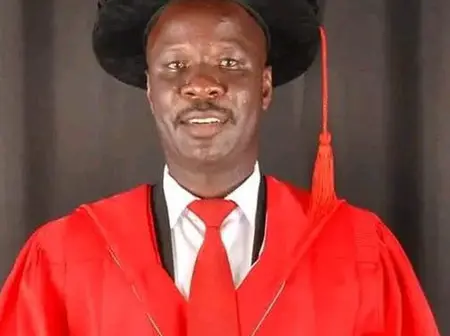
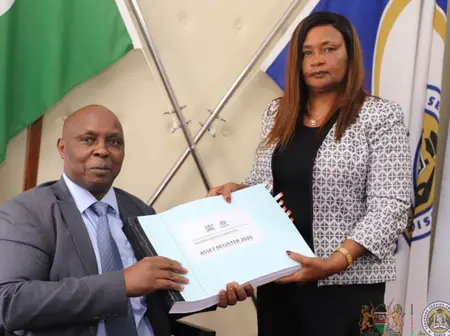
The Kenya School of Law (KSL) has appointed Dr. Rodgers Edison Wanyonyi Manana as its new Director and Chief Executive Officer.The appointment was announced on Friday, November 20, by the KSL Board of Directors, which said the recruitment was conducted through a competitive, transparent and merit-based process in accordance with the Constitution, the Kenya School of Law Act and other applicable laws.
Stepping into the role after serving 27 years within the institution—most recently as Director of Finance—Ayabei ends a 17-month substantive leadership vacuum following the June 2025 retirement of Dr. Nancy Macharia, while also making history as the first person with a disability to head the commission.
As Commission Secretary and Chief Executive Officer, Ayabei assumes strategic, administrative, and accounting leadership over Kenya’s public teaching service.
His core constitutional and statutory responsibilities include executing commission policies and decisions, managing human resources across the entire teaching workforce—spanning teacher registration, recruitment, employment, deployment, transfers, promotions, professional standards, and disciplinary matters—and overseeing institutional governance, financial management, and secretariat operations.
In taking the helm, Ayabei inherits an urgent and complex operational in-tray. Key priorities include addressing persistent teacher shortages, navigating union demands for improved remuneration, medical cover, and career progression, and steering workforce readiness for the senior school (Grade 10 and Grade 11) transition under the Competency-Based Education (CBE) system.
Pledging a collective and consultative approach to leadership during the handover, the new CEO faces high expectations from educators, unions, and education stakeholders to deliver stability and efficient service across public schools nationwide.
What are your thoughts about this article? Share your reactions in the comment section and don't forget to share and follow for more updates.
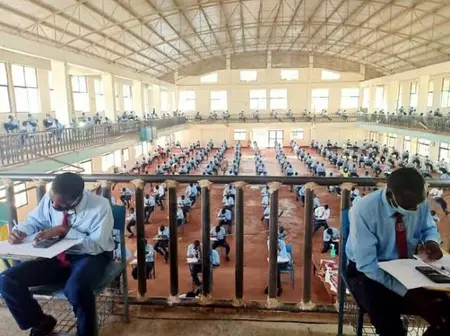
A Kenyan Form Four student has gone viral online after he tore up his trousers to celebrate completing his Kenya Certificate of Secondary Education (KCSE) exams.
The dramatic celebration took place in a school, with several students in uniform nearby.
As the boy celebrated, a man with a microphone approached to conduct an impromptu interview.
In the caption, it seems that the boys have completed their exams impressively.
Many Form Four students, complete their KCSE exams after 4 years at secondary school. Therefore, finishing their last paper is worthy of celebration.
Why students tear up uniforms in Kenya
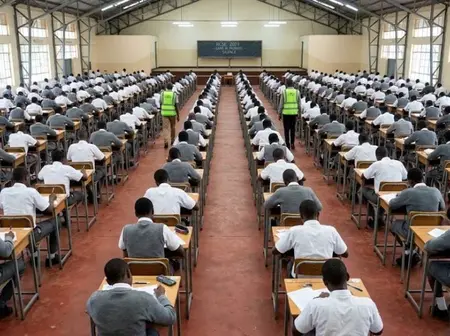
A photo of Students During KCSE Exams
for illustration purposes only
Doing so symbolises freedom from the strict rules of school, getting up very early to get ready in the morning, learning in lessons, and stressful national exams.
While some students may take pictures with friends or send goodbye messages, others partake in more extreme forms of celebration.
As the boy tore his trousers into tassels, it made for a unique celebration.
The KCSE exams are run by the Kenya National Examinations Council. It is used to test students who have completed secondary school.
Students typically sit multiple papers, and therefore, the completion of these exams is a major milestone.
It seems as though for this student in the viral video, completing the exams was a great way to relieve the stress felt throughout the exam period.
Although the celebration in this video seems fun, it also shows how relieved many students may have felt having completed their final exam, and can now move onto the next stage of their life.
This was a memorable way for the student to finish his secondary school exams.
His appointment, announced on November 16 after a competitive process that drew 124 applicants and followed court interventions that prompted a fresh advertisement, brings an end to a prolonged leadership transition after the retirement of former CEO Dr. Nancy Macharia.
Stepping into the secretariat’s top executive seat, Ayabei takes charge of implementing the commission’s policies, strategic priorities, and day-to-day administrative operations across the country.
His statutory mandate spans core human-resource functions for Kenya’s public teaching workforce—including teacher registration, recruitment, deployment, promotions, transfers, professional development, and disciplinary processes—while working alongside commissioners and education stakeholders.
Ayabei arrives with more than 27 years of institutional experience at TSC, having joined in 1999 as a finance officer after earlier service in the Ministry of Education before rising to head financial leadership.
During his tenure overseeing financial operations, the commission’s annual budget grew from Sh150 billion to Sh425.6 billion alongside an expansion of the teaching workforce to roughly 467,000 teachers, while he also helped mobilize funding for headquarters construction and digital literacy initiatives.
In his acceptance remarks, Ayabei emphasized that running the commission’s daily operations effectively requires collective effort from staff, commissioners, and partners.
He takes the helm at a pivotal moment as educators, unions, and parents press for solutions on teacher shortages, career progression, working conditions, and the smooth delivery of the Competency-Based Education system.
What are your thoughts about this articles? Share your reactions in the comment section and don't forget to share and follow for more updates.
Marking the end of field administration, Education Cabinet Secretary Julius Migos Ogamba announced that grading will begin immediately—mobilizing approximately 34,170 examiners across 41 marking centres—with the 2026 KCSE results targeted for release in January 2027.
CS Ogamba also outlined the release timelines for lower-level national assessments concluded during the season.
Processing of the Kenya Junior School Education Assessment (KJSEA) scripts has been prioritized for release in December 2026 to allow the Ministry of Education to place learners into Senior Schools (Grade 10) before the new academic year opens in January, while machine-scored Kenya Primary School Education Assessment (KPSEA) results are scheduled for release in January 2027.
Reflecting on the administration of the tests, the Cabinet Secretary commended candidates for maintaining discipline and academic integrity despite localized disruptions caused by heavy rains, flooding, and isolated security challenges in parts of the country.
He credited the smooth conclusion to close multi-agency coordination involving the Ministry of Interior and National Administration, the Teachers Service Commission (TSC), and the Kenya National Examinations Council (KNEC), assuring learners and parents of fair and credible certification.
What are your thoughts about this article? Share your reactions in the comment section and don't forget to share and follow for more updates.
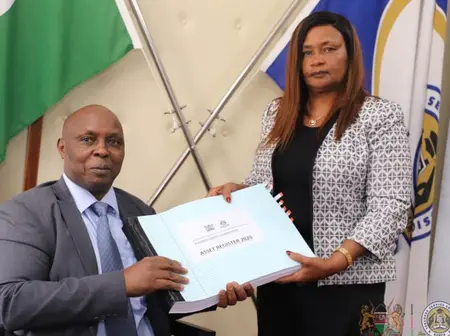
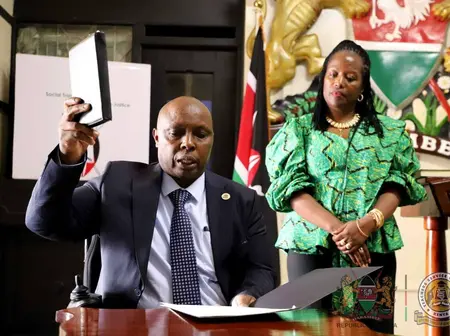
Chief Justice Martha Koome has sworn in the newly appointed Teachers Service Commission (TSC) Secretary and Chief Executive Officer Cheptumo Ayabei and Kenya National Commission on Human Rights (KNCHR) Secretary Dr Mary Kimari.
The swearing-in ceremony took place at the Supreme Court in Nairobi on Friday, November 20, 2026, marking the formal assumption of their respective public offices.
Ayabei takes over as the new TSC Secretary and CEO, a position that places him at the centre of the commission's administrative operations and implementation of policies governing the teaching profession in Kenya.
The Teachers Service Commission is responsible for managing the country's teaching workforce, including teacher recruitment, registration, deployment, promotion and disciplinary matters.
As the new chief executive, Ayabei will be expected to oversee the commission's day-to-day operations while working with other stakeholders to address challenges affecting teachers and the education sector.
His appointment comes at a time when the education sector continues to experience significant changes following the implementation of the Competency-Based Education (CBE) system.
The commission also faces various responsibilities involving teacher recruitment, staffing shortages, professional development and the welfare of educators across the country.
Meanwhile, Dr Mary Kimari was sworn in as the new Secretary of the Kenya National Commission on Human Rights.
The KNCHR is an independent constitutional commission mandated to promote and protect human rights and fundamental freedoms in Kenya.
The commission monitors human rights violations, investigates complaints, advises government institutions and promotes accountability in the protection of citizens' rights.
Kimari's new role will involve overseeing the commission's secretariat and supporting the implementation of its constitutional mandate.
The ceremony, presided over by Chief Justice Koome, formally ushered the two officials into their respective responsibilities.
Their appointments are expected to strengthen the leadership and administrative operations of the two important public institutions.
The event at the Supreme Court brought attention to the constitutional processes governing the assumption of leadership positions in Kenya's public institutions.
Education Cabinet Secretary Julius Ogamba has explained the conditions governing the repayment of student loans under Kenya’s new university funding model, offering clarity to students and graduates concerned about financing their higher education.
The new funding model was introduced to make university and college education more accessible by providing financial assistance based on students' levels of need. Under the arrangement, eligible learners receive government scholarships and loans through the Higher Education Loans Board (HELB).
Ogamba's latest remarks have renewed attention on how beneficiaries are expected to repay the loans after completing their studies. The repayment arrangements are intended to ensure that money advanced to students can be recovered and used to support future generations seeking higher education.
Student loans are generally repayable, unlike government scholarships and bursaries, which do not require beneficiaries to refund the money. Graduates who receive HELB loans are therefore expected to meet their repayment obligations in accordance with the applicable terms and conditions.
The government has maintained that the funding model is designed to distribute available resources according to students' financial circumstances rather than applying a uniform funding arrangement to everyone.
However, the system has attracted public debate, particularly among university students, parents and graduates who have raised concerns about affordability, loan accumulation and the financial pressure associated with repayment.
Ogamba's explanation comes at a time when thousands of students are navigating university education under the revised funding arrangement. Many are keen to understand what happens to their loans after graduation and when repayment obligations begin.
The clarification is expected to help beneficiaries better understand their responsibilities and plan for life after university.
Education Cabinet Secretary Julius Ogamba has clarified how university and college graduates will repay government education loans under the proposed new higher education funding model.
Speaking during a graduation ceremony at Bureti National Polytechnic in Kericho on Friday, November 20, 2026, Ogamba explained that graduates who remain unemployed will not be required to start repaying their loans immediately after completing their studies.
The CS stated that repayment would only begin after beneficiaries secure employment, with the government providing a one-year grace period before deductions commence.
Ogamba explained that employed graduates would have ten years to repay their loans, giving them time to establish themselves financially before taking on the repayment responsibility.
"If you do not get a job, you don't pay. If you get a job, then we have a grace period of one year. You work for a year, then your payment will be for 10 years," Ogamba stated.
The Cabinet Secretary further explained that the proposed Tertiary Education Placement and Funding Bill, 2026, seeks to change how the government finances higher education.
Under the proposed arrangement, funding will focus on individual students rather than their parents' financial abilities.
Ogamba also revealed that students in colleges could access loans of up to KSh100,000 per semester. The amount would cover approximately KSh67,000 in tuition fees and KSh38,000 for upkeep.
The government expects the proposed repayment arrangements to improve loan recovery and ensure that funds remain available for future students.
The announcement comes amid growing concerns among university students and parents about the financial burden of repaying education loans, particularly given the country's unemployment challenges.
However, the proposed funding framework is yet to become law, as Parliament must first approve the Tertiary Education Placement and Funding Bill, 2026.