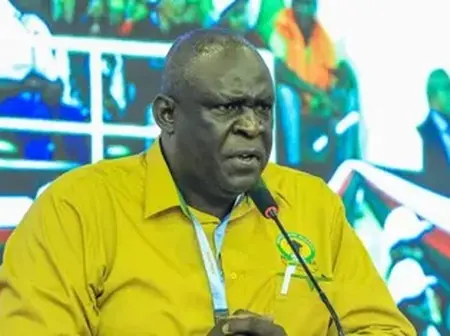
Speaking at the close of the union's 28th Annual Delegates Conference in Diani, Kwale County, union leaders demanded full administrative independence for Junior Secondary Schools (JSS) and warned of legal action if the government pushes ahead with the changes.
A Clash Over School Leadership
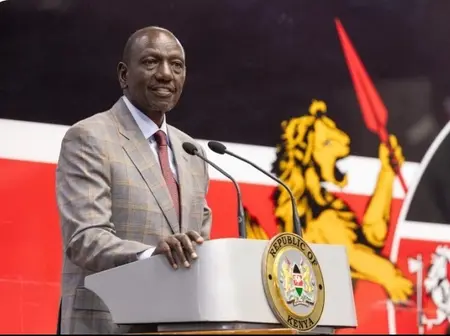
The standoff follows President Ruto’s November 11 directive to the Ministry of Education to prepare legal amendments within 90 days to anchor the "comprehensive school" model in law. Under the government's proposal, pre-primary, primary, and junior schools sharing a compound would be managed by a single primary school headteacher.
KUPPET Secretary General Akelo Misori dismissed the plan as unworkable, arguing that primary school headteachers lack the training to supervise a secondary-level curriculum.
"Making a primary school headteacher the person administering a secondary-level curriculum is in itself a terrible mistake," Misori stated. He maintained that sharing physical compounds to save on infrastructure costs should not strip junior schools of their own principals and management.
Constitutional Questions and Legal Threats
KUPPET also challenged the legal foundation of the proposed merger. Misori pointed to Schedule Four of the Constitution, which categorizes education into distinct levels: pre-primary, primary, secondary, tertiary, and universities.
He argued that running a combined administrative structure without changing the Constitution amounts to "trial and error". Deputy Secretary-General Moses Nthurima backed the stance, warning that existing education laws do not recognize comprehensive schools and signaling that the union is ready to go to court to block the plan.
More Demands on Teacher Promotions and Exam Marking
Beyond the governance dispute, the 2,000 delegates attending the Diani conference issued fresh demands over teacher welfare.
National Chairman Omboko Milemba urged the government to fulfill its pledge to double the teacher promotion budget in 2027. He also demanded better pay for teachers marking national examinations, warning that KUPPET could advise members to boycott marking if the Kenya National Examinations Council (KNEC) ignores collective bargaining talks.
Additionally, the union urged Parliament to reject proposals that would classify exam marking as an essential service, arguing it would strip teachers of their right to strike.
What Do You Think?
Should Junior Secondary Schools have their own independent principals as KUPPET demands, or is President Ruto’s single-administration model better for saving costs and managing resources? Share your thoughts in the comments below!
Mohamed Ahmed has received national recognition for his professional contribution after securing a place in the 2026 list of Kenya's 100 Most Influential and Inspirational Muslims.
The former Nation Media Group journalist was recognised in the Business and Management category during an awards programme organised by The Muslim Media.
His inclusion in the list comes after years of working in different professional fields, with his experience stretching from journalism to the real estate industry.
Ahmed's career in the media industry gave him an opportunity to cover important developments along the Kenyan Coast. He worked at Nation Media Group for six years, reporting on security matters and political affairs.
The experience exposed him to different aspects of public life and allowed him to interact with various stakeholders. He later moved into the corporate sector, where he continued developing his skills in communication, marketing and business development.
He currently works as the Head of Sales at Megna Homes, a property development company operating in Mombasa.
In his current position, Ahmed is involved in the company's sales activities and business growth. The company has interests in residential property development, project management and property management.
Among its developments is Santana, a gated residential community situated in Mtopanga, Mombasa.
The project features 816 residential units alongside 64 commercial spaces. It also received EDGE certification in 2025 in recognition of its sustainable design.
Ahmed's recognition places him among professionals from different sectors whose work has attracted attention through the annual initiative.
The 2026 awards covered several areas, including leadership, media, law, education, community service, science and technology, business and entrepreneurship.
Other recognised areas included fashion, food and the arts.
His selection also highlights the variety of professional backgrounds represented in this year's list.
For Ahmed, the recognition comes at a time when he has established himself in a different career path from the one that first introduced him to the public.
His journey from covering news stories at the Coast to taking up a leadership role in the property sector marks a significant development in his professional life.
The Kenya Union of Post Primary Teachers has rejected President William Ruto's Comprehensive School Model. The union wants junior secondary schools to run independently under their own leadership.
Speaking during its 2026 annual conference in Diani, KUPPET said placing Grades 7 to 9 under primary school headteachers ignores the secondary curriculum. Junior school teachers across the country teach that curriculum every day.
Secretary General Akelo Misori and Chairman Mboko Milemba argued that junior schools need separate administration. They want principals who have real experience in secondary education.
"This model should be rethought by all means necessary. It is not only unfair for our teachers on very many elements, but its repercussions will mostly be felt by the learners," Milemba stated.
The union says sharing primary school compounds to cut infrastructure costs should not mean merging management. It insists junior schools must keep their own institutional identity.
President Ruto has been pushing for one system that brings together pre-primary, primary and junior secondary education. On November 11, 2026, he directed the Ministry of Education to prepare proposals within 90 days. These will amend the Basic Education Act to guide governance, staffing and financing.
Under the plan, primary school headteachers would oversee junior sections with help from deputies. The president also proposed merging capitation funds for both levels. He further directed that school funds be released before the start of each term from 2027.
KUPPET still wants substantive principals and deputy principals for junior schools. It says the plan could limit promotion chances for post-primary teachers and make movement between junior and senior schools harder.
The union has also questioned the legal basis of the model. It says current education laws do not recognise comprehensive schools and constitutional concerns remain unresolved.
The Kenya Union of Post-Primary Education Teachers has rejected President William Ruto's proposed school model plan, raising fresh concerns over the government's direction in implementing education reforms.
The teachers' union has expressed reservations about the proposed changes, arguing that the government must address critical challenges affecting schools and teachers before introducing another major restructuring of the education system.
KUPPET maintains that education reforms should be guided by adequate consultations with teachers, education stakeholders and parents to ensure that any proposed changes do not negatively affect learning institutions.
The union has also called on the government to prioritise the welfare of teachers, improve learning facilities and provide sufficient resources to schools across the country.
According to the union, introducing new education policies without addressing existing challenges could place additional pressure on teachers and school administrators who are already dealing with numerous responsibilities.
KUPPET has further insisted that teachers must be actively involved in discussions surrounding the proposed school model, arguing that educators are directly affected by decisions made by the Ministry of Education.
The union's position presents another challenge for President Ruto's administration as it continues to pursue reforms aimed at transforming Kenya's education sector.
Education has remained one of the government's key priorities, particularly following the implementation of the Competency-Based Education system, which has brought significant changes to the country's learning structure.
However, the transition has also attracted criticism from various stakeholders over infrastructure, teacher shortages, funding and the availability of learning materials.
KUPPET's latest demands are likely to intensify discussions between teachers' representatives and the government over the future of education reforms.
The union wants the government to address its concerns and engage stakeholders before proceeding with the proposed school model changes.
The developments come amid growing debate over how best to improve the quality of education while protecting teachers' interests and ensuring that learners receive adequate support.
The uniform designs were showcased in a TikTok video shared by the school, featuring mannequins dressed in different outfits, including navy blue vests paired with bow ties and pastel-coloured pyjama sets.
The formal attire stood out for its distinctive combination of a vest and bow tie, while the additional clothing suggested the school was preparing a range of outfits for students beyond their regular daytime wear.
The reveal comes days after First Lady Rachel Ruto officially launched the institution, which is expected to open in January 2027.
A look at the school's uniform collection
The video showed several clothing designs arranged on child-sized mannequins, giving viewers a first look at the school's planned dress code.
One of the outfits featured a navy blue vest and bow tie, presenting a formal appearance. Other designs included pastel-coloured pyjamas, although the school did not explain when students would be expected to wear each outfit.
The pyjama sets sparked interest because they may be intended for learners staying at the institution, but the video did not confirm the school's boarding arrangements, accommodation facilities or daily dress schedule.
The uniform showcase is among the latest glimpses into the institution as preparations continue following its launch.
Inside Ruto's school and sports academy
SIBOH School and Sports Academy is located at Koilel Farm in Eldoret, Uasin Gishu County, where President Ruto has established the institution to combine education with sports development.
The academy is expected to offer learners an opportunity to pursue classroom education while developing their sporting abilities, with an emphasis on nurturing talent.
Its launch was announced by Rachel Ruto on November 18, 2026. During the event, the First Lady described the institution as a project inspired by the President's vision and spoke about the transformation of the land into a facility intended to support young people.
She noted that the grounds, which were previously marshy, had been transformed into a place where learners could nurture their dreams, discover their talents and prepare for the future.
With the planned January 2027 opening approaching, more details about the academy's facilities, student programmes and daily operations are expected to emerge as preparations progress.
The Kenya National Union of Teachers (KNUT) and the Kenya Union of Post-Primary Education Teachers (KUPPET) hold opposing positions on how Junior Schools should be administered, raising fresh questions about who should oversee the institutions and how public resources allocated to them should be managed.
The disagreement has intensified as the government continues implementing Competency-Based Education (CBE), which introduced Junior School as a distinct learning level covering Grades 7, 8 and 9.
At the centre of the disagreement is whether Junior Schools should operate independently, with their own principals and administrative structures, or remain under the leadership of existing primary school headteachers through the comprehensive school arrangement.
KUPPET, which represents post-primary school teachers, has consistently pushed for independent administration of Junior Schools. The union argues that the institutions have specialised educational requirements that demand dedicated leadership and management.
Its position is that teachers handling learners in the junior level should not remain under administrative structures traditionally associated with primary education.
The union has also raised concerns about professional recognition, career progression and the representation of teachers working in Junior Schools.
KNUT, however, supports the comprehensive school arrangement, which brings Early Childhood Development Education, primary education and Junior School under one institutional administration.
The union maintains that having one administration would promote coordination, encourage the efficient use of available facilities and prevent unnecessary duplication of leadership positions.
The disagreement has consequently developed beyond an ordinary difference between professional organisations, with both unions seeking to influence the future structure of basic education.
The financial implications have added another dimension to the debate.
According to the National Treasury's 2026/2027 Budget Statement, the government has proposed approximately KSh30.7 billion for Junior Secondary School capitation.
The allocation highlights the enormous responsibility involved in managing the level, particularly as schools require learning materials, laboratory equipment, infrastructure improvements and other resources to support the new curriculum.
However, the debate is not simply about the amount of money allocated. It also concerns the administrative arrangements through which school resources are supervised, expenditure approved and financial accountability maintained.
Under the existing funding arrangements, different categories of school expenditure have specific requirements. These include tuition, operational activities and infrastructure development.
Consequently, whichever administrative model the government eventually adopts must provide clear procedures for managing school finances and ensuring that resources reach their intended beneficiaries.
A change in leadership structure could also affect how responsibilities are distributed between school administrators, teachers and management boards.
The disagreement has also attracted attention from the Teachers Service Commission (TSC), which has previously maintained that primary school headteachers should remain the substantive heads of comprehensive schools.
In its November 2026 position, the commission rejected demands for completely independent Junior School leadership, reinforcing the existing comprehensive school arrangement.
This position has placed the commission alongside KNUT in the wider debate, while KUPPET continues advocating for greater institutional independence.
The dispute has also exposed disagreements over the professional representation of teachers deployed to Junior Schools. KUPPET has previously challenged the handling of teachers seeking to change their union membership, making representation another important aspect of the ongoing disagreement.
For the government, resolving the matter will require balancing administrative efficiency, teachers' professional interests and the educational needs of learners.
Creating separate administrations could provide specialised leadership for Junior Schools, but it would also require careful consideration of additional management costs and responsibilities.
Retaining comprehensive schools, on the other hand, could allow institutions to share facilities and administrative resources, although clear arrangements would be necessary to ensure Junior School programmes receive adequate attention.
The outcome is particularly important as Kenya continues transitioning to the senior school stage under the Competency-Based Education framework.
Parents and learners ultimately stand to be affected by decisions concerning the availability of teachers, learning materials, infrastructure and the quality of supervision within schools.
The government is therefore facing pressure to establish a clear and sustainable administrative framework that addresses the concerns raised by the unions without allowing institutional disagreements to interfere with learning.
As KNUT and KUPPET maintain their competing positions, the question of who should manage Junior Schools remains a major issue in Kenya's education sector.
Victoria Oluebube Igboanugo has attracted attention after graduating with First Class Honours despite facing financial difficulties and other personal challenges throughout her university education.
The Nigerian graduate studied Food Science and Technology at Nnamdi Azikiwe University, where her academic performance earned her recognition at both faculty and departmental levels.
Her success was particularly significant because she had to find ways of supporting herself while pursuing her studies. At a time when many students depend on financial assistance from their families, Victoria took up house cleaning jobs to cater for some of her personal needs.
She recently opened up about her experiences, giving an account of the sacrifices she made before completing her degree.
According to her account, combining manual work with university responsibilities was not always easy. There were occasions when she had to attend to cleaning assignments despite having examinations and other academic commitments.
One experience that stood out involved cleaning a two bedroom apartment while she was still recovering from an illness. The assignment came shortly before an examination, leaving her with limited time to prepare.
Her struggles were not limited to finances. Victoria also disclosed that she experienced recurring health complications during several years of her university education.
Despite these difficulties, she remained committed to completing her studies. Her determination eventually paid off when she graduated with First Class Honours during the 2024/2025 academic session.
She also received recognition as the Overall Best Graduating Student in the Faculty of Agriculture and the Department of Food Science and Technology.
Interestingly, Victoria revealed that academic excellence had been one of her personal ambitions since her secondary school years. She had written down the goal in her journal and continued working towards it over the years.
Her story has attracted attention because it highlights the challenges some university students experience while trying to secure an education without reliable financial support.
Victoria's achievement is a reminder that the journey towards academic success can involve sacrifices that are rarely visible during graduation celebrations.
A young woman has inspired many people after overcoming several challenges on her journey to university, eventually achieving an impressive academic milestone after five years of determination and hard work.
Her story is a powerful reminder that difficult beginnings do not have to determine how far someone can go in life.
According to the story shared online, the young woman faced several setbacks before finally getting the opportunity to pursue her university education. Despite the challenges, she remained focused on her dream and refused to give up on her ambitions.
For many students, joining university is a major achievement. However, the journey is not always easy. Some face financial difficulties, personal struggles and other obstacles that can make it difficult to continue with their education.
The young woman’s experience reflects the reality faced by many students who must overcome difficult circumstances to achieve their academic goals.
After five years of dedication, patience and hard work, her results finally told a remarkable story. What once seemed like a difficult journey had become an achievement worth celebrating.
Her determination has attracted attention, with many people admiring her ability to remain focused despite the setbacks she encountered along the way.
The story has also sparked conversations about the importance of education, perseverance and believing in oneself, even when circumstances appear difficult.
Many people have praised her achievement, describing her journey as an inspiration to students who may be struggling to complete their studies.
Although the details of every challenge she faced have not been fully shared, her success demonstrates the value of persistence and commitment.
Her journey serves as encouragement to young people who may feel discouraged by delays or difficulties in pursuing their education.
Sometimes, success does not come quickly. However, with determination and a clear goal, even a challenging journey can lead to a remarkable achievement.
Her story continues to inspire many, proving that giving up is not the only option when life becomes difficult.
Victoria Oluebube Igboanugo, a Food Science and Technology graduate of Nnamdi Azikiwe University in Awka, Nigeria, was named Overall Best Graduating Student in both the Faculty of Agriculture and her department for the 2024/2025 academic session.
She also received two best-graduating-student awards, marking the culmination of a five-year academic journey that came with financial difficulties, health challenges and determination to succeed.
Four attempts before university admission
Victoria's journey to university was not easy. She sat Nigeria's Joint Admissions and Matriculation Board (JAMB) examination four times before securing admission.
She reportedly averaged 240 points across her attempts before finally joining Nnamdi Azikiwe University to study Food Science and Technology.
Although she initially hoped to pursue medicine, she eventually chose a different academic path, which would later lead her to graduate with top honours.
Worked as a house cleaner to survive
While pursuing her degree, Victoria faced financial pressure that made it difficult to meet her living expenses. She took house-cleaning jobs to support herself while continuing with her studies.
One of the most difficult moments she recalled involved accepting a cleaning job for a two-bedroom apartment while recovering from illness, just a night before an examination she had not adequately prepared for.
Despite her condition and the approaching exam, she could not afford to turn down the work. After completing the job, she prayed for strength and continued studying in preparation for her examination.
Her experience highlights the difficult choices she had to make to keep her education going while dealing with financial hardship.
Completed 88 courses without repeating
Victoria completed 88 courses across 10 semesters during her five years at university without failing or repeating a course.
Maintaining that academic record while working to support herself was among the accomplishments she highlighted when reflecting on her graduation.
She also struggled with recurring illnesses throughout much of her university life, including ulcers that affected her for years. In her account, she said her health improved in 2024 after making a personal commitment to Christ.
Prayed for the achievement for 10 years
Victoria said her dream of becoming the best graduating student began during secondary school, where she completed her education without receiving an award or special recognition.
She later wrote down her ambition to become the best graduating student at university and continued praying about it for a decade before finally achieving the goal.
Reflecting on what contributed to her success, she said consistent studying was important but also credited her Christian faith, challenging the idea that reading every night alone was enough to guarantee a First Class degree.
Victoria's achievement adds to stories of graduates who overcome difficult beginnings to excel academically, demonstrating how persistence, discipline and support can help students navigate challenging circumstances.
A young university graduate has inspired many people after achieving an outstanding academic milestone despite facing numerous challenges throughout her education.
Her journey to success was not easy. She faced financial pressure, difficult personal circumstances and several obstacles that threatened to interrupt her university studies. However, through determination, patience and hard work, she managed to overcome the challenges and complete her education.
The graduate's story has attracted attention from people who have been moved by her commitment to achieving her academic dreams. Many have praised her resilience, saying her journey demonstrates the importance of remaining focused even when life becomes difficult.
For many students, pursuing higher education comes with financial difficulties. The cost of tuition, accommodation, food and other basic needs can make university life challenging, especially for those from financially struggling backgrounds.
Despite these challenges, the young graduate continued working towards her goals. Her achievement is a reminder that difficult circumstances do not necessarily determine a person's future.
Her story has also highlighted the importance of education as a tool for personal growth and improved opportunities. Many young people facing similar struggles can draw inspiration from her experience and continue pursuing their dreams.
As reactions continue to emerge, several people have celebrated her achievement, describing it as a powerful example of perseverance and courage.
The graduate's success serves as encouragement to students who may be considering giving up because of financial or personal challenges. It shows that with determination, support and a strong commitment to one's goals, it is possible to overcome obstacles and achieve meaningful progress.
Although the road to success may be difficult, her journey offers an important message: challenges should not be allowed to destroy one's dreams.
Her academic achievement is not only a personal victory but also an inspiring reminder to young people that persistence and hard work can open doors to a brighter future.