
Artificial intelligence is changing how Kenyan students learn, but the bigger challenge for our education system is ensuring that faster access to information translates into deeper understanding and stronger critical thinking.From secondary schools and universities to TVET institutions and professional training programmes, learners can now use AI tools to summarise notes, explain difficult concepts, generate ideas and produce written work in seconds.
Category: Education
-

IN PICTURES: Kabojja International School Celebrates Year 11 and Year 13 Graduates at 19th Graduation Ceremony
Kabojja International School celebrated the achievements of its Year 11 and Year 13 students during its 19th graduation ceremony, held on 21 November 2026 at the school’s KIS Health Club Swimming Pool.The ceremony brought together students, parents, school staff and invited guests to mark the end of an important chapter in the learners’ academic journeys as the October/November 2026 cohort graduated.
-

Heri wewe: Kenyans react as Form Four leaver seeks Ksh45K side hustle as she awaits results
A young Kenyan woman who has just completed her Form Four studies has attracted attention after revealing that she is looking for a side hustle that can earn her Ksh45,000 as she waits for her examination results.The young woman is among thousands of candidates who have completed their Kenya Certificate of Secondary Education (KCSE) examinations and are now considering what to do during the waiting period.
-

Chandaria Foundation commits Ksh.120M annually to university innovation hubs
The Manu Chandaria Foundation has committed Ksh.120 million annually towards establishing innovation centres in Kenyan universities to support youth entrepreneurship, innovation and enterprise development.The initiative will see six innovation hubs established every year at a cost of Sh20 million each, with KCA University, the United States International University (USIU) and Murang’a University among the first beneficiaries.
-

Bathrooms, uniforms and goats: Girls reveal how they would spend Sh1 million to change lives
What you need to know:A recent Usawa Agenda report on gender equality in basic education found that four in every 100 school-age girls in Kenya are out of school, even though education is a constitutionally protected right.The report also notes that an out-of-school teenage girl is 12 times more likely to experience early pregnancy than a girl who remains in school.
-

“Parents Will No Longer Pay,”: Ruto Announces Major Relief for Kenyan Families
For years, parents have carried the financial burden of supporting additional teachers whenever schools faced staffing shortages. Now, the government is signalling a possible change that could end this arrangement and place more responsibility on the state.
For many families, the issue is deeply personal. In schools facing teacher shortages, parents have often been asked to contribute money to hire additional teachers. Such payments add pressure on households already dealing with food prices and other school expenses.
The proposal could also bring relief to BOM teachers, whose pay and employment arrangements often depend on resources available at their schools. Moving them to the government payroll may offer greater stability, although details of the transition have not been fully explained.
Ruto said his administration had employed 100,000 teachers over the past four years and was preparing to recruit another 20,000. He also cited the construction of 23,000 classrooms as part of efforts to improve learning conditions.
However, important questions remain. The government has yet to explain how teachers will be absorbed, what terms of service will apply and when the change will take effect. Parents and teachers will be watching closely.
The announcement has sparked debate about education funding, teacher shortages and the cost of keeping children in school. Do you think the government should take over salaries for all BOM teachers? Share your views in the comments.
-
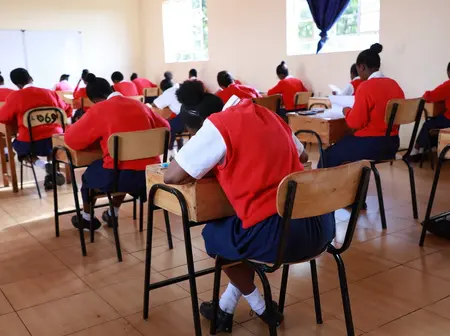
Fresh Pressure on Govt as Teachers Demand Junior Secondary Schools Be Separated From Primary Schools
The latest demand has placed the government's Comprehensive School Model at the centre of another education debate, with the Kenya Union of Post Primary Education Teachers (KUPPET) arguing that the current arrangement does not reflect the level of education being offered to learners in Grades 7, 8 and 9.
Speaking during the union's 2026 annual conference in Diani on Sunday, November 22, KUPPET leaders maintained that junior secondary education should have its own administrative structure, separate from primary schools.
The union's position is that junior schools teach a secondary-level curriculum and should therefore be managed by principals with the relevant experience and understanding of secondary education.
KUPPET Secretary General Akelo Misori and Chairman Mboko Milemba questioned the decision to place junior secondary schools under primary school headteachers, arguing that the arrangement fails to recognise the distinct responsibilities of teachers handling learners at this level.
Milemba was particularly critical of the model, warning that the decision could have consequences beyond the administration of schools.
"This model should be rethought by all means necessary. It is not only unfair for our teachers on very many elements, but its repercussions will mostly be felt by the learners," he stated.
The remarks suggest that the disagreement is no longer simply about which headteacher should be in charge of a school compound.
KUPPET wants the government to reconsider how junior secondary education is organised and ensure that its management reflects the nature of the curriculum.
The union also sought to separate the question of sharing school facilities from that of institutional leadership.
According to its position, allowing primary and junior secondary learners to use the same compound to reduce infrastructure costs should not automatically mean placing the two levels under one administration.
This puts pressure on the government's approach, which seeks to bring pre-primary, primary and junior secondary education together under a comprehensive school structure.
SOURCE
-

Eight Kenyan University Students Arrive in China for Huawei’s 2026 Seed for the Future Tech Training
Eight top-performing Kenyan university students have officially arrived in China to participate in Huawei’s prestigious 2026 Seeds for the Future programme, a global initiative designed to equip young minds with cutting-edge digital skills and industry exposure.
The cohort is accompanied on the trip by Huawei ICT Talent Development Executive and Project Manager Kenneth Onyikachi, who is guiding the delegation through their technical immersion in the Chinese tech hubs of Shenzhen and Dongguan.
Before departing for China, the eight students were officially flagged off in Nairobi by the Principal Secretary for Foreign Affairs, Dr. Abraham Korir Sing’Oei, who represented Prime Cabinet Secretary and Foreign Affairs Cabinet Secretary Musalia Mudavadi.
Speaking during the ceremony, Dr. Sing’Oei underscored the importance of bridging the gap between classroom theory and global industry standards. He noted that the programme directly supports Kenya’s Digital Superhighway agenda under the Bottom-Up Economic Transformation Agenda (BETA) and builds upon diplomatic commitments made during his delegation's visit to Huawei’s headquarters in August 2026.
Huawei Technologies Kenya Deputy CEO Sun Quan also lauded the partnership, expressing confidence that the students would return home as technological ambassadors ready to drive innovation and national development.
Beyond technical workshops, the students will participate in leadership forums and cross-cultural exchanges alongside international peers from around the world.
Launched globally in 2008, Huawei’s Seeds for the Future flagship programme has grown to reach nearly 19,800 students across 143 countries, partnering with more than 500 universities worldwide. In Kenya, Huawei has worked closely with the ICT Authority and local institutions since 2014 to build a steady pipeline of job-ready digital professionals.
With the students now on the ground in China under the mentorship of Kenneth Onyikachi and Huawei’s global engineering teams, the experience marks a major milestone in preparing Kenya’s next generation of tech innovators for the global stage.
Source:https://www.facebook.com/100044260518058/posts/1774575617361105/
-

ELDORET: Two University Students Meet in a Club, Get Intimate Before Discovering They Are Cousins
Rape case takes a twist as alleged victims are cousins.
Both families were left shocked to discover that in the case at Eldoret Law Courts, the complainant and accused are cousins.
The 21-year-old students are studying for a bachelor of education at a local university.
The girl was born out of wedlock, however her mother is said to have kept the identity of the girl’s real father a secret. The mother is said to have done this out of fear of causing a conflict with the man’s current wife.
It was discovered that the two second year students are closely related. The name of the university has been withheld to protect the identity of the complainant.
An elder in the court spoke to the students and asked them to be cleansed according to tradition.
The twist in the case caught the complainant by surprise, and she later informed the prosecuting lawyer in the case that she would like to drop the charges.
The alleged rape incident occurred on the night of November 13 in Kesses Sub-County.
An AI generated image for illustration purposes only
The prosecution requested more time to review the case and make a decision on how best to proceed due to the seriousness of the allegations.
Eldoret Senior Principal Magistrate Keynes Gweno released the accused on bail and the case has been listed for mention on December 2. Further directions can be expected.
Although this case has raised interest due to the unexpected relation between the parties, the fact that the complainant would like to drop charges does not necessarily mean that criminal proceedings will no longer take place. The case will be considered in line with legal processes.
https://www.facebook.com/share/19FgYj4MQV/
-

Huawei Picks 8 Kenyan Students for Special China Trip Led by Kenneth Onyikachi
The cohort landed in China this weekend following an official flag-off ceremony in Nairobi on Thursday, November 19, 2026, presided over by Foreign Affairs Principal Secretary Dr. Abraham Korir Sing’Oei.
Under the guidance of Kenneth Onyikachi, the eight Kenyan delegates are stationed across Huawei’s global research and development hubs in Shenzhen and Dongguan for hands-on training in emerging digital technologies.
During the fully funded technical exchange, the students are exploring advanced fields such as Artificial Intelligence (AI), 5G and sixth-generation (6G) mobile networks, cloud computing, and digital power systems.
Beyond classroom sessions and laboratory tours, the programme brings together university scholars from different nations for cross-cultural exchange, leadership development, and global innovation challenges.
Speaking at the Ministry of Foreign Affairs headquarters in Nairobi during the flag-off ceremony, PS Sing’Oei congratulated the eight finalists for earning their spots through a rigorous national selection process.
He noted that education delivers true economic transformation only when classroom theory is directly connected to practical industry skills, global markets, and job creation.
PS Sing’Oei pointed out that sending young Kenyan innovators to interact directly with engineers at Huawei’s Shenzhen headquarters fulfills key bilateral commitments made during his official visit to China in August 2026.
He also urged the students to serve as worthy ambassadors for Kenya’s youthful creativity and technological ambition while representing the country on the international stage.
Representing Huawei Technologies Kenya at the Nairobi send-off, Deputy Chief Executive Officer Sun Quan reaffirmed the company’s long-term dedication to building local digital capacity.
Sun explained that the initiative is designed to nurture young university talent so that when the eight delegates return home, they grow into industry leaders capable of driving Kenya’s digital economy.
University of Nairobi Faculty of Law student Ahmed Rashid spoke on behalf of the selected cohort during the ceremony, expressing gratitude for the rare opportunity to gain direct exposure to world-class tech infrastructure.
Launched globally in 2008, Huawei’s Seeds for the Future initiative has trained nearly 19,800 students across 143 countries.
In Kenya, the programme has operated in partnership with the ICT Authority since 2014, bridging the gap between university coursework and real-world industry demands.
With Kenneth Onyikachi leading the delegation on the ground in China, the eight students are expected to bring back practical technical expertise to support Kenya’s growing digital superhighway and innovation ecosystem.
SOURCE