Category: Economy&Finance

  • US investors increase their exposure to Kenya as Nairobi strengthens its position in Africa’s financial markets

    US investors increase their exposure to Kenya as Nairobi strengthens its position in Africa’s financial markets

    Frank Mwiti, CEO of the Nairobi Securities Exchange, speaks on expanding retail investor access and market participation in Kenya

    American investors increased their portfolio holdings in Kenya by 45 percent in 2025 to Sh258 billion ($1.9 billion), marking the highest level in four years as demand for Kenyan government securities and listed companies recovered after a prolonged decline.

    Data from the US Department of the Treasury shows that holdings of Kenyan equities and long-term debt securities by US investors rose by Sh80 billion ($615 million), from Sh178 billion ($1.3 billion) in 2024. The increase marked a second consecutive year of growth following four years of declining exposure, pointing to renewed interest in Kenya’s financial markets among American investors.

    The recovery came against a difficult international investment environment, as geopolitical tensions and uncertainty surrounding US President Donald Trump’s trade policies prompted investors to reassess their exposure to emerging and frontier markets. Relatively high interest rates in developed economies, particularly the United States, also intensified competition for international portfolio capital.

    Daniel Mainda, chief executive of the Nairobi International Financial Centre, attributed Kenya’s appeal to improvements in its financial products and efforts to strengthen the investment environment. He said that the country had taken deliberate steps to maintain economic stability while identifying alternative methods of attracting direct investment.

    American investors’ exposure to Kenya remains heavily concentrated in long-term debt securities, which accounted for approximately 90 percent of their total portfolio holdings in 2025.

    US holdings of Kenyan long-term debt securities increased by 42 percent to Sh231 billion ($1.785 billion), compared with Sh164 billion ($1.261 billion) a year earlier. The increase reflects the continued importance of government securities in attracting international portfolio investors, with Treasury bonds and infrastructure bonds offering exposure to Kenya’s domestic debt market.

    The growth coincided with a decline in domestic interest rates as the Central Bank of Kenya eased monetary policy. Treasury Bill rates averaged 8.7 percent in June 2025, down from 16.5 percent in June 2024, according to the CBK, creating an opportunity for investors to secure prevailing returns on longer-dated securities.

    Government securities remained an important component of Kenya’s investment proposition as the Treasury continued issuing bonds to finance public expenditure and infrastructure development. For international investors, these instruments provide access to shilling-denominated returns, while their attractiveness is influenced by interest rates, currency movements and developments in the domestic economy.

    Despite the growth in debt holdings, American investors’ exposure to Kenyan equities recorded the faster rate of expansion. Equity holdings almost doubled to Sh27 billion in 2025, up from approximately Sh14 billion in 2024, reflecting increased exposure to companies listed on the Nairobi Securities Exchange.

    The increase in American equity holdings coincided with a recovery in the Nairobi Securities Exchange, where improving share prices and trading activity supported renewed investor participation.

    The NSE All Share Index gained 24.3 percent in the first half of 2025, while market capitalisation increased by 24.6 percent over the same period, according to the CBK. Foreign investor activity also improved, with net purchases on the exchange reaching a record Sh1.2 billion in August 2025 as uncertainty surrounding President Trump’s tariffs eased.

    The recovery continued into 2026. The NSE recorded Sh395 billion in equity turnover during the first nine months of the year, compared with Sh145 billion across the entire 2025 calendar year, according to TechTrendsKE reporting. The exchange also added 333,043 investors between January and September 2026, taking its reported investor base to 2.36 million.

    Kenya’s broader capital-market position also improved. The country rose from seventh to fifth place in the 2026 Absa Africa Financial Markets Index, scoring 65 out of 100, according to the index findings reported by TechTrendsKE. Improvements in stock and bond trading, dollar-denominated securities and market transparency contributed to Kenya’s stronger position.

    These developments provide a wider context for the increase in American holdings, as the Nairobi Securities Exchange works to deepen its markets and expand access to domestic and international investors.

    Kenya is also pursuing investment through the Nairobi International Financial Centre, which is intended to attract financial institutions, investment funds and multinational businesses seeking to establish operations in the country.

    The NIFC reported that 15 newly certified companies had investment commitments worth Sh25.8 billion ($200 million), adding to efforts to position Nairobi as a regional financial and investment hub. The commitments were associated with the centre’s certification framework and investment incentives introduced through the Finance Act 2025.

    In October 2026, NIFCA chief executive Daniel Mainga outlined plans for a $250 million technology and artificial intelligence investment fund targeting startups and companies in Kenya and across Africa. The proposed fund forms part of the centre’s wider ambition to attract capital into technology businesses and expand Nairobi’s role in regional investment activity.

    The developments complement the growth in portfolio holdings by showing how Kenya is pursuing different sources of international capital. While government securities and listed equities provide foreign investors with access to financial markets, the NIFC’s initiatives target companies and investment structures operating across the wider economy.

    The Capital Markets Authority has also reported growth across Kenya’s investment industry, including money market funds, fixed-income funds, special funds and digital investment platforms. The expansion of these products is widening the range of investment opportunities available to individuals and institutions participating in the country’s financial markets.

    The growth in foreign investment comes as Kenya continues to manage its fiscal financing requirements and efforts to maintain stability in the foreign-exchange market.

    CBK Governor Kamau Thugge attributed the shilling’s stability to improvements in the balance of payments, financial inflows and the accumulation of foreign-exchange reserves. He reported a current account deficit of $4.68 billion alongside a financial and capital account surplus of $7.458 billion.

    Foreign portfolio investment contributes to the financial account by bringing external capital into Kenyan securities markets. When international investors purchase government bonds or listed shares, they can also support foreign-exchange supply as they convert funds into shillings to acquire those assets.

    However, the government’s continued reliance on domestic borrowing presents a competing policy consideration. Thugge has urged the National Treasury to rein in domestic borrowing, arguing that heavy government demand for local financing could undermine efforts to reduce lending rates and improve access to credit for businesses.

    For Kenya, attracting international portfolio investors provides another source of demand for government securities and listed companies, while expanding the pool of capital available to its financial markets. The 2025 increase in American holdings represents a recovery from the preceding years of decline, although total exposure remains below the pre-pandemic peak of Sh390 billion ($3 billion).

    The recovery therefore comes as Kenya works to strengthen its capital markets, broaden international participation and establish Nairobi as a destination for investment across Africa.

  • How UEDCL plans to fix power outages

    How UEDCL plans to fix power outages

    thumbnail

    Uganda Electricity Distribution Company Limited (UEDCL) has outlined measures being implemented to strengthen electricity supply and address infrastructure constraints amid rapidly growing demand.UEDCL’s customer base has grown by approximately 71% over the past five years, from 1.64 million customers in 2021 to approximately 2.8 million today.

  • Safaricom Net Profit Jumps 35.9% to KSh58.2 Billion as M-Pesa Revenue Crosses KSh100 Billion

    Safaricom Net Profit Jumps 35.9% to KSh58.2 Billion as M-Pesa Revenue Crosses KSh100 Billion

    thumbnail

    Safaricom PLC has reported a 35.9 per cent increase in net profit to KSh58.2 billion for the first half of the 2026/2027 financial year, driven by strong growth in its Kenyan business and improved performance in Ethiopia.The telecommunications giant attributed the performance to rising M-Pesa revenues, increased customer activity and significant improvements in its Ethiopian operations, which are now approaching profitability.

  • KRA Names 4 Products Driving Tax Revenue Growth as Collections Surpass KSh1 Trillion

    KRA Names 4 Products Driving Tax Revenue Growth as Collections Surpass KSh1 Trillion

    thumbnail

    The Kenya Revenue Authority (KRA) has identified four products that contributed to a significant increase in tax collections in October 2026, helping the agency surpass the KSh1 trillion revenue milestone.The products include keg beer, premium beer, wine and spirits, and tobacco, which recorded significant growth in tax remittances compared to September 2026.

  • Maria Nkumba: How Xperia Founder Made Her First Million At 35 And KSh 100 Million In One Year

    Maria Nkumba: How Xperia Founder Made Her First Million At 35 And KSh 100 Million In One Year

    thumbnail

    A few decades ago, Maria Nkumba, the founder and CEO of Xperia Agency, was a humble village girl playing kati with her friends at her home in Murang’a County.Today, she has managed to build an events management company that generated KSh 100 million in revenue in 2024.

  • Coffee Earnings Drop to KSh870 Million as Auction Volumes Decline

    Coffee Earnings Drop to KSh870 Million as Auction Volumes Decline

    Coffee farmers earned approximately KSh870 million at the Nairobi Coffee Exchange (NCE) after 18,338 bags weighing 1,131,513 kilogrammes were traded during the latest auction, highlighting continued demand for Kenyan coffee despite a decline in sales compared with the previous week.

    The auction, held on Tuesday, November 3, 2026, generated lower returns than the previous sale, which raised approximately KSh1.01 billion from 21,636 bags weighing 1,333,429 kilograms.

    According to the exchange's latest market report, the overall average price stood at USD295.90, equivalent to approximately KSh38,449 per 50-kilogramme bag. Individual prices ranged from USD48 (KSh6,236) to USD387 (KSh50,259), reflecting differences in coffee quality and grade.

    Grade AB recorded the highest trading volume, with 8,268 bags sold at an average price of USD319.07 (KSh41,437) per bag. Grade AA, however, commanded the highest average price of USD334.28 (KSh43,412), with 3,860 bags traded.

    Among marketing agents, Alliance Berries Limited handled the largest volume, selling 3,267 bags weighing 202,482 kilogrammes at an average price of USD292.79 per bag.

    Mt Elgon Coffee Marketing Agency followed with 2,536 bags, while New Kenya Planters Co-operative Union (New KPCU) marketed 2,049 bags valued at approximately KSh82.73 million.

    On the buying side, Ibero Kenya emerged as the leading purchaser with 3,773 bags, followed by Kenyacof Limited, which bought 3,554 bags. Louis Dreyfus Company purchased 2,785 bags, while C. Dorman SEZ Ltd acquired 2,019 bags.

    The highest individual price recorded during the auction was USD387, equivalent to approximately KSh50,259 for a 50-kilogram bag.

    NCE Chief Executive Officer Lisper Ndung’u said buyers were increasingly focusing on quality, with many visiting farmers through their respective factories to assess coffee before purchasing. Coffee Board of Kenya Chairman Henry Kinyua urged farmers to increase production and expand their coffee holdings to improve earnings.

    The latest results underline the importance of quality improvement and increased production in strengthening farmers' returns and maintaining the competitiveness of Kenyan coffee in local and international markets.

    https://x.com/StandardKenya/status/2118316197674439092?a=JloeHc19MQMoyZuROP0&s=20

  • KSh2,083 Monthly Boost: How New PAYE Changes Will Affect Kenyan Workers

    KSh2,083 Monthly Boost: How New PAYE Changes Will Affect Kenyan Workers

    Salaried workers earning more than KSh32,333 per month are set to receive an additional KSh2,083 in monthly take-home pay under proposed changes to Kenya’s Pay As You Earn (PAYE) tax system, as the National Treasury moves to extend tax relief beyond low-income earners.

    The revised proposal will make the first KSh32,333 of monthly employment income tax-free for all salaried workers, including those earning higher salaries. This represents a significant adjustment from the initial plan, which focused on exempting only employees earning at or below the threshold.

    National Treasury Cabinet Secretary John Mbadi told the Business Daily that the government had approved the proposal for submission to Parliament, with the amendments expected to be tabled next week.

    Under the proposed structure, the existing 10 percent and 25 percent tax bands will be scrapped alongside the monthly personal relief of KSh2,400. The first KSh32,333 will instead attract a zero per cent tax rate, while income above that amount will continue to be taxed progressively.

    Treasury estimates indicate that employees earning KSh50,000 monthly would see their take-home pay increase to KSh41,112 from the current KSh39,029. Those earning KSh100,000 would receive approximately KSh72,574, compared with KSh70,441 under the existing system.

    The revised arrangement is expected to benefit approximately 3.46 million salaried workers, with 1.77 million continuing to pay PAYE while receiving the same estimated monthly tax relief.

    The government estimates that the changes will reduce payroll tax collections by approximately KSh3.7 billion every month, equivalent to KSh44.4 billion annually. Treasury expects the additional disposable income to stimulate household spending, support businesses, and encourage economic activity.

    The proposal follows President William Ruto’s announcement during the 2026 Mashujaa Day celebrations that workers earning up to KSh32,333 should be exempted from PAYE.

    However, the changes are not yet law. Parliament must consider and approve the proposed amendments before employers can implement the revised tax calculations.

    Other statutory deductions, including National Social Security Fund contributions, Social Health Insurance Fund contributions, and the Affordable Housing Levy, will remain applicable.

    If approved, the changes will represent a broader restructuring of personal income taxation, giving workers across different salary levels an estimated KSh2,083 monthly boost.

    https://x.com/NationAfrica/status/2118324954458714513?a=pGT1LhdTHm1h0sKTk38&s=20

  • Illicit Cigarette Market Surges, Costing Kenya Billions in Lost Revenue

    Illicit Cigarette Market Surges, Costing Kenya Billions in Lost Revenue

    Kenya lost an estimated KSh47 billion in excise duty and Value Added Tax (VAT) revenue between 2021 and 2025 through the illicit cigarette trade, according to a new study that warns nearly half of cigarettes consumed in the country are now entering the market outside legal tax and regulatory controls.

    The research, conducted by Kantar Insights East Africa and commissioned by British American Tobacco (BAT) Kenya, estimates that illicit cigarettes accounted for approximately 45.1 percent of the total cigarette market in 2025.

    The findings suggest that almost one in every two cigarettes consumed in Kenya was illicit, leaving legally compliant manufacturers facing growing competition from cheaper products that evade applicable taxes.

    The study estimates that the government lost approximately KSh10.2 billion in potential tax revenue in 2025 alone, up from KSh6.8 billion in 2020. The cumulative five-year loss represents revenue that could otherwise have supported public services and development programs.

    The report also points to the economic impact on the formal tobacco industry. Employment supported across the legal tobacco value chain reportedly declined by 4,700 jobs between 2022 and 2025, while the industry's contribution to gross domestic product fell by KSh37.7 billion.

    Uganda was identified as the leading source of illicit cigarettes entering Kenya, with the study estimating that 95 percent of the illegal products originated from the neighboring country. Differences in excise duty rates across East African markets, alongside porous border points and enforcement gaps, were cited as factors facilitating the trade.

    BAT Kenya Managing Director Sidney Wafula said the growing illicit market was undermining government revenue, legitimate businesses, and employment. The company called for stronger border surveillance, improved investigations, tougher enforcement, and a comprehensive system for tracking tobacco products.

    The study also linked the expansion of illicit trade to a 55 percent increase in cigarette excise duty between 2018 and 2022, during which excise revenue from the legal industry reportedly declined by KSh1 billion.

    However, because the research was commissioned by a cigarette manufacturer, its findings and policy recommendations should be considered alongside independent evidence and government data.

    The report adds pressure on authorities to address cigarette smuggling while balancing tax policy, public health regulation, and enforcement of existing laws.

    https://x.com/citizentvkenya/status/2118389700885094434?a=1zLmbzZ0NlFp3lIMumE&s=20

  • Treasury announces two e-Citizen shutdowns, urges Kenyans to complete transactions early

    Treasury announces two e-Citizen shutdowns, urges Kenyans to complete transactions early

    thumbnail

    Listen to articleKenyans are urged to complete urgent transactions ahead of two overnight maintenance exercises scheduled for November 7–8 and November 14–15.Kenyans using the e-Citizen platform have been urged to complete urgent government transactions in advance of two scheduled maintenance exercises that could temporarily disrupt access to online services later this month.

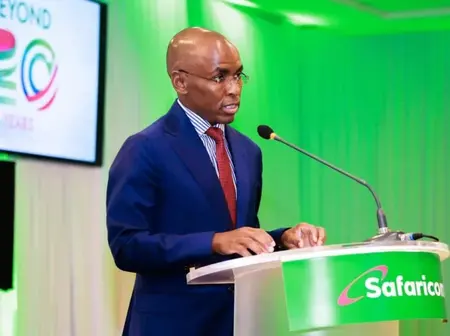
  • Safaricom Reports KSh50.35 Billion Profit as M-PESA Revenue Reaches KSh99.7 Billion

    Safaricom Reports KSh50.35 Billion Profit as M-PESA Revenue Reaches KSh99.7 Billion

    Safaricom PLC has reported a profit after tax of KSh50.35 billion for the six months ended September 30, 2026, supported by increased earnings from its mobile money business and other services.

    In its half-year financial results released on Thursday, November 5, the telecommunications company disclosed that M-PESA generated KSh99.7 billion in revenue during the reporting period.

    The mobile money platform accounted for 46.2 per cent of Safaricom's service revenue in Kenya, making it one of the company's biggest income sources.

    Safaricom attributed the growth to increased customer activity, a wider merchant network and rising transaction volumes.

    The number of M-PESA customers grew by 7 per cent to 37.3 million, while the total value of transactions processed through the platform increased by 16.6 per cent to KSh23.56 trillion.

    The merchant network also expanded by 9.3 per cent to reach 1.1 million businesses, reflecting the continued adoption of mobile money services among traders and other businesses.

    The company's overall financial performance also improved during the six-month period.

    Total group revenue increased to KSh233.73 billion from KSh204.71 billion recorded during the corresponding period in 2025.

    Profit before tax rose to KSh81.33 billion, compared to KSh55.24 billion in the previous year, while operating profit increased to KSh91.14 billion from KSh65.21 billion.

    Safaricom further reported that its earnings before interest, taxes, depreciation and amortisation (EBITDA) grew by 27.5 per cent to KSh129.1 billion. Its EBITDA margin also improved by 9.1 percentage points to 55.3 per cent.

    Profit attributable to the company's equity holders increased to KSh58.15 billion from KSh42.78 billion recorded in the previous corresponding period.

    However, losses attributable to non-controlling interests stood at KSh7.80 billion, compared to KSh13.59 billion in the same period last year.

    The latest results highlight M-PESA's contribution to Safaricom's earnings, with the platform continuing to account for a substantial share of the company's Kenyan service revenue.

    The financial update comes as Safaricom continues to address the legal dispute surrounding the government's sale of a 15 per cent stake in the telecommunications company.

    The High Court ruled against the divestiture on September 15, 2026, prompting Safaricom to announce that it was reviewing the judgment and its implications.

    The company maintained that it would continue providing services to customers in Kenya and Ethiopia as the legal process progresses.

    https://www.facebook.com/100040319114203/posts/2043287230358561/?app=fbl