
ChangesKRA has announced changes to the annual income tax filing deadline, with taxpayers required to submit their returns by April 30 instead of the previous June 30 deadline.The Kenya Revenue Authority (KRA) has announced changes to the annual income tax filing deadline, with taxpayers required to submit their returns by April 30 instead of the previous June 30 deadline.
Category: Economy&Finance
-

Absa Next Introduces Investment Solutions, Featuring the Absa Equity Fund with Returns of Up to 15.95% YTD
Absa Next is expanding beyond everyday banking into wealth creation, introducing investment solutions that give customers access to professionally managed funds through Kenya’s digital bank. The offering includes the Absa Equity Fund, which currently provides returns of up to 15.95% YTD, marking the next phase in Absa Next’s evolution as an all-in-one financial ecosystem for digitally connected consumers and entrepreneurs.
-

What you need to know about the new rules for fishing Mukene
The government has introduced new restrictions on mukene fishing in Uganda, limiting fishing activities to 14 days a month and setting strict requirements for boats, fishing equipment and licences.The measures are intended to regulate the harvesting of mukene, also known as silver fish, and other small fish species, including ragoogi and muziri, while protecting fish breeding grounds and preventing uncontrolled fishing on the country’s water bodies.
-

How Ugandans abroad can build wealth back home through cross-border investments
Ugandans living and working in Kenya have been urged to move beyond sending money home and invest in businesses, property and other income-generating ventures that can build long-term wealth in Uganda.The call was made during a Diaspora Investment Forum organised by Equity Bank Uganda in partnership with the Uganda Network (UGNET) in Nairobi.
-
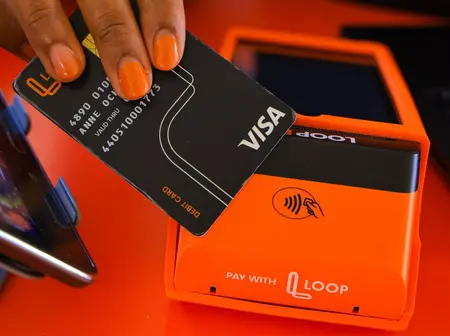
More ways to pay, fewer checkout hurdles: What LOOP Biz PDQ brings to Kenyan businesses
A customer reaches the counter, confirms what they want to buy and prepares to pay. Some prefer using a debit or credit card, others choose M-PESA, while LOOP users have another option. For merchants serving customers with different payment preferences, having a straightforward way to accept these transactions can make the checkout process easier to manage.
The LOOP Biz PDQ extends the payment capabilities available to merchants using LOOP Biz. It supports Visa and Mastercard transactions through chip insertion and contactless payments, M-PESA Till and Paybill payments, as well as M-PESA STK push. Customers can also pay through LOOP STK push at no charge. The device brings these options together at the counter, giving merchants more flexibility when receiving payments.
The LOOP Biz PDQ accepts card payments through chip insertion and contactless NFC technology. Customers with supported cards can insert their cards into the terminal or tap to complete a transaction. Merchants can also receive payments through M-PESA Till and Paybill, or initiate an STK push request for the customer to approve on their phone.
LOOP users have a separate payment option through LOOP STK push, which allows them to authorise a payment through the LOOP application. LOOP-to-LOOP payments are free.
Bringing these payment routes together gives businesses one device for customers who prefer different cashless payment methods. A retailer may serve someone paying by card, followed by a customer using M-PESA, while another customer may choose to pay through LOOP. The merchant can handle these transactions through the same terminal.
The PDQ is linked to the merchant’s LOOP Till, which is required to operate the device. Merchants can have funds settled into a bank account of their choice through the LOOP Till, giving them flexibility over where they receive their payments.
One of the useful features of the PDQ is STK push, which allows a merchant to initiate a payment request from the terminal while the customer approves it on their phone. The cashier enters the amount due and sends the payment request. The customer receives an STK prompt and authorises the transaction using their PIN.
Because the payment request carries the amount entered by the cashier, customers do not have to manually key in the payment amount or merchant Till number. This reduces the possibility of errors associated with entering payment details at checkout, although the cashier still needs to ensure the requested amount is correct.
The same approach applies to LOOP STK push. The merchant initiates the request through the PDQ, and the customer approves it using the LOOP application. This gives customers another way to complete a transaction without having to enter payment details manually.
Accepting a payment is one part of running a business. Merchants also need to identify transactions, reconcile sales and keep records that can be retrieved when questions arise. The LOOP Biz PDQ supports this through transaction histories and downloadable reports.
Merchants can generate X reports for interim transaction checks and Z reports for end-of-day reconciliation. Staff can retrieve previous transactions and reprint receipts when customers need another copy or the business needs to review a sale. The terminal also supports administrator-controlled access for authorised users, helping businesses manage which employees can use the device.
The PDQ has a battery life of up to 48 hours on a full charge. The company has also outlined plans to enable eTIMS invoicing on the devices, allowing merchants to issue tax invoices through the terminal. The PDQ requires an internet connection through Wi-Fi or mobile data to process transactions.
Payment records become more useful when merchants can connect them to other parts of their operations. LOOP Biz also offers inventory management for limited liability companies and partnerships, with features covering stock tracking, low-stock alerts, business insights, supplier payments and staff roles.
When inventory management is active, a sale processed through the PDQ automatically updates the corresponding stock level. This helps merchants keep inventory records aligned with what has been sold and identify items that need replenishment.
The inventory tool also uses AI to track stock, forecast demand and recommend restocking, according to LOOP’s October launch announcement. It can flag slow-moving products, giving merchants another way to monitor stock and make purchasing decisions.
The inventory management feature is available through the LOOP Biz web platform, with a mobile app rollout planned for 2027. Its staff roles and permissions support the management of business tasks, complementing the administrator-controlled user access available on the PDQ.
LOOP Biz is available through the LOOP application and web platform. The PDQ subscription costs KSh1,200 per month, while inventory management costs KSh1,990 per month before tax. LOOP also offers a one-off payment option for the PDQ device.
These additions allow merchants to extend the capabilities of their existing LOOP Biz accounts. Businesses can use the payment terminal to accept different forms of cashless payment, while eligible merchants can add inventory management to support stock tracking and related tasks.
LOOP also provides merchants with access to LOOP Discover, a storefront within its consumer application. Businesses can list products on the platform and reach an audience of more than 500,000 users, according to the company’s launch announcement.
LOOP Biz is part of LOOP, NCBA Group’s digital platform for consumers and businesses. Its merchant offering brings payment acceptance together with tools intended to support everyday business operations. For merchants, the PDQ provides a single point for card, M-PESA and LOOP payments, while the wider LOOP Biz platform offers additional capabilities for managing transactions, stock and customer reach.
-

Kenya Railways announces changes to Nairobi-Limuru and Nyahururu Train Services
Kenya Railways has announced temporary changes to commuter and safari train services to allow for planned engineering and maintenance works along the Nairobi-Kibera-Talanta section of the Metre Gauge Railway line.In a public notice, the corporation said the revised schedule would take effect on Thursday, November 12, affecting the Nairobi Central Station-Limuru commuter train and the Nyahururu Safari Train.
-

Quickmart founders’ Sh890 million bid to increase ownership blocked by IPO oversubscription
Five founding shareholders of Quickmart sought to acquire an additional 118.6 million shares worth Sh889.9 million in the supermarket chain’s initial public offering (IPO), but received no allocation after demand exceeded the number of shares available to investors.
The applications were among the insider bids frozen after Quickmart received applications for approximately 2.45 billion shares against the two billion shares offered at Sh7.50 each. The IPO was therefore oversubscribed by about 22.5%, forcing the retailer to adjust allocations across several investor categories.
“Given the offer was oversubscribed, no offer shares have been allocated to the founder shareholders who applied for the offer,” Quickmart said in its IPO results notice. The five applications show that a section of the retailer’s original owners wanted to increase their exposure to the business as it prepared to join the Nairobi Securities Exchange (NSE).
Quickmart’s founders are Duncan Kinuthia, Gladys Kinuthia, Elijah Okello, Moses Nditika, Joram Njoga, Zipporah Kinuthia and William Kinuthia. They established the business through the combination of Tumaini Supermarket and Quickmart in 2019, creating the supermarket chain that has since expanded its national footprint.
The attempted purchases came as Quickmart’s existing shareholders offered half of their combined ownership through the IPO, creating an opportunity for new investors to acquire shares in the retailer while the original owners retained a substantial interest.
Before the listing, the founders held their interests through Sokoni Retail Kenya Limited, alongside private equity investor Adenia Partners and Quickmart chief executive Peter Kang’iri. Adenia held an effective 48.6% interest in the supermarket chain, while Kang’iri owned 5.4%.
The founders’ applications present an interesting contrast with Adenia’s decision to sell part of its investment. The private equity firm was using the IPO to realise capital gains from its investment, while some of the original business owners were seeking to commit more money to the retailer at the offer price.
The applications also come against the backdrop of Quickmart’s expansion from four supermarkets to a network of 72 stores across 16 counties. The retailer reported revenue of Sh50.43 billion and statutory net profit of Sh1.51 billion for the year ended December 2025, according to its IPO disclosures.
Quickmart’s revenue grew at a compound annual growth rate of 18.4% between 2021 and 2025, while its adjusted profit after tax stood at Sh1.7 billion in 2025. The IPO valued the retailer at approximately Sh30 billion, equivalent to about 19.9 times its reported statutory net profit.
The company’s expansion plans include opening between 10 and 15 additional stores annually, with management targeting a network of more than 100 outlets. Quickmart has also been developing its digital distribution channels, including a partnership with Bolt Food that made more than 12,000 products available through the platform across over 60 stores.
The IPO will see Quickmart’s original shareholders receive gross proceeds of approximately Sh15 billion from the sale of two billion shares at Sh7.50 each. They will retain a combined two billion shares, representing 50% of the retailer following the transaction, with the remaining ownership distributed among investors who participated in the offer.
The partial sale gives Adenia an opportunity to realise part of its investment while maintaining exposure to the supermarket chain through its remaining interest. The transaction also marks an important stage in Quickmart’s transition from a privately held, private equity-backed retailer to a company with a broader public-market shareholder base.
The original shareholders’ relationship with Quickmart has also extended beyond equity ownership. The retailer’s earlier disclosures showed that several founder-linked businesses provided consultancy, property and management-related services, with payments to three related entities totalling Sh638.1 million in 2025.
Quickmart subsequently ended several founder-linked service agreements in July 2026, while continuing to lease some supermarket premises from related parties. The arrangements formed part of the company’s disclosures ahead of the NSE listing and provide additional context to the changing relationship between the retailer and its original owners.
Quickmart’s chief executive, Peter Kang’iri, also applied for additional shares as part of the IPO, seeking to increase his ownership in the retailer.
The company said Kenyan and East African retail investors submitted aggregate applications for 69.4 million shares valued at Sh520.6 million from direct employees, including the group chief executive. These applicants received all the shares they requested, allowing employees participating in the offer to secure additional ownership in the business.
Kang’iri held a 5.4% stake in Quickmart before the IPO. His participation places the retailer’s management alongside the founders in seeking additional exposure to the company as it prepares to trade publicly.
The employee allocations also demonstrate the participation of people directly connected to Quickmart’s operations in the share sale, complementing demand from individual, institutional and foreign investors.
The oversubscription also affected allocations to international institutional investors, with the International Finance Corporation (IFC) and UK-backed investment programme Mobilist receiving fewer shares than they had applied for.
Mobilist, which participated as a cornerstone investor with a guaranteed allocation, agreed to reduce its subscription by approximately $5 million (Sh649.4 million) to allow more shares to be allocated to Kenyan and East African institutional investors and foreign investors.
The programme had applied for 259.8 million shares but received 173.3 million shares worth approximately Sh1.29 billion, giving it a 4.33% stake in Quickmart after the IPO.
The IFC had sought 266.6 million shares but was allocated 258 million shares at a cost of approximately Sh1.9 billion, representing a 6.45% interest in the retailer.
Investment firm 337 Frontier and RWC Asset Management, meanwhile, received their full targeted allocations. Quickmart sold 259.7 million shares, representing 6.49% of the company, to 337 Frontier for approximately Sh1.9 billion, while RWC acquired 173.1 million shares worth Sh1.29 billion for a 4.32% stake.
The allocations reflect the different arrangements made with institutional investors participating in the IPO, including Mobilist’s decision to accommodate additional demand from other investor categories.
Quickmart’s listing will introduce a major supermarket operator to the NSE’s commercial services segment, adding a profitable retailer with an established dividend policy to a section of the market where several listed companies have struggled to generate consistent returns for shareholders.
The company reported a net profit of Sh1.5 billion in 2025 and intends to distribute 80% of its net profits as dividends going forward. The proposed payout ratio would translate to approximately Sh1.2 billion based on its 2025 statutory earnings.
Quickmart has also reported a customer base supported by its Q-Points loyalty programme, which had attracted 2.5 million members by the first half of 2026. The retailer averaged approximately five million customer transactions monthly and recorded revenue of Sh27.3 billion during the six months to June 2026.
Its NSE debut will take place on November 12, giving investors an opportunity to trade shares in a supermarket business whose expansion, profitability and dividend policy will now be assessed through the public markets.
-
Treasury and CBK seek consensus as dispute over Sh10bn bank capital rules deepens
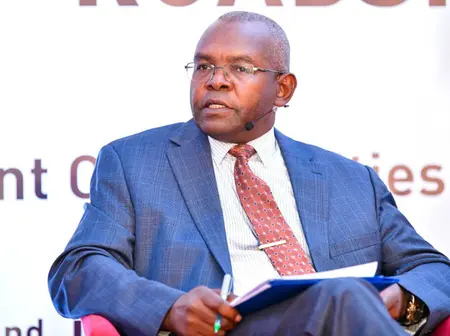
The National Treasury and the Central Bank of Kenya (CBK) are negotiating over Kenya’s Sh10 billion bank capital requirements following a disagreement over the deadline for commercial lenders to meet the higher threshold. Treasury Cabinet Secretary John Mbadi confirmed ongoing discussions with CBK Governor Kamau Thugge, with both institutions seeking consensus on how banks should transition to the new capital rules.
The discussions follow Mbadi’s proposal to extend the final compliance deadline from December 2029 to December 2032 and remove the annual capital-raising milestones. However, the CBK has maintained that commercial banks must continue working towards the existing requirements, including the Sh5 billion minimum core capital target due by December 2026.
Mbadi said the Treasury was committed to resolving the disagreement through discussions with the banking regulator, adding that the eventual position would be guided by what best serves the economy.
“We are in conversations with the governor of the central bank. This is a simple matter; we will sit with CBK, agree and communicate,” Mbadi told the Business Daily. He said the two institutions were considering the implications of the requirements for the wider economy and did not regard the disagreement as a major issue of concern.
The disagreement emerged after Mbadi proposed changes to the banking capital requirements during his June 2026 Budget Statement. The Treasury wanted banks to have until December 2032 to reach the Sh10 billion minimum core capital threshold, removing the annual milestones introduced through the Business Laws (Amendment) Act 2024.
Under the existing framework, banks were required to raise their minimum core capital from Sh1 billion to Sh3 billion by December 2025, followed by Sh5 billion by December 2026. The subsequent milestones require lenders to reach Sh6 billion by December 2027, Sh8 billion by December 2028 and Sh10 billion by December 2029.
Mbadi’s proposal was intended to give banks more time to raise capital while continuing to support lending to households and businesses. The Treasury’s position was that a longer transition would allow financial institutions to pursue commercially sustainable capital-raising strategies without diverting too much funding away from private-sector credit.
The proposal, however, was not accompanied by the necessary legislative amendment to change the existing capital requirements. This prompted the CBK to direct commercial banks to continue complying with the original timetable, leaving the industry facing conflicting positions from the Treasury and its banking regulator.
Banking industry sources told the Business Daily that the Treasury had not consulted the CBK before announcing the proposed extension. The move followed lobbying from smaller lenders that were struggling to meet the higher capital requirements.
The immediate compliance deadline is December 2026, when commercial banks are required to have minimum core capital of Sh5 billion. CBK Governor Kamau Thugge told the National Assembly Finance and National Planning Committee in October that institutions below the threshold had been asked to explain how they intended to meet the requirement.
“We want them to come to us and tell us how they are going to meet the target for 2026, which is Sh5 billion,” Thugge told the committee. He said one or two banks might struggle to meet the requirement, but the regulator wanted to hear their plans for reaching the target.
The CBK also said banks below the Sh5 billion threshold had yet to respond to its query on their capital-raising measures. The regulator has warned that institutions which fail to meet the requirements could face downgrading, although it had not taken enforcement action against the affected banks at the time of the report.
The pressure follows the first phase of the capital transition, which required banks to raise minimum core capital to Sh3 billion by December 2025. The requirement was introduced through the Business Laws (Amendment) Act 2024, which raised the previous Sh1 billion floor as part of efforts to strengthen the banking sector.
As at the end of June 2026, 14 commercial banks had core capital below the Sh5 billion threshold required for December 2026. The institutions included Middle East Bank, M-Oriental Bank, Bank of Africa, Premier Bank, Guardian Bank, DIB Bank and Habib Bank AG Zurich.
Seven banks were also reported to have fallen short of the earlier Sh3 billion requirement for December 2025. They included Credit Bank, UBA Bank, Development Bank of Kenya, African Banking Corporation, Access Bank and Consolidated Bank of Kenya.
Meeting the higher thresholds will require affected lenders to mobilise additional shareholder funds, retain more earnings or pursue other capital-raising strategies. Banks that struggle to raise sufficient funds could also consider strategic investors or consolidation as they seek to maintain their position in the market.
The requirements have raised concerns about the future of smaller locally owned lenders, particularly those serving specialised customer segments and communities that may not be adequately served by larger institutions. The possibility of consolidation has therefore become part of the wider debate over how Kenya should strengthen its banking sector while maintaining competition.
The National Assembly Finance and National Planning Committee has cautioned against implementing the requirements in a manner that could weaken domestic banking institutions or reduce access to financial services.
The Treasury’s push for a longer transition is partly driven by concerns that banks could restrict lending while setting aside more resources to meet the higher capital requirements. Commercial banks told Mbadi that institutions below the required thresholds were likely to preserve funds for capital accumulation, potentially reducing the money available for loans to households and businesses.
A slowdown in private-sector lending would complicate government efforts to expand credit to businesses and support economic growth, particularly among micro, small and medium enterprises (MSMEs). The Treasury has argued that giving banks more time would allow them to maintain lending activities while pursuing capital-raising strategies suited to their financial positions.
Kenya Bankers Association (KBA) Chief Executive Officer Raimond Molenje previously supported a longer compliance period, arguing that it would help banks continue financing customers rather than concentrating their resources on meeting the regulatory thresholds.
“Allowing a longer timeframe facilitates banks to serve customers better and uninterrupted, deploying more capital into lending to the private sector,” Molenje said.
The debate also comes as the government expects commercial banks to expand financing for businesses, particularly smaller enterprises that depend on bank credit to manage working capital, purchase inventory and finance expansion. A longer transition could ease immediate capital pressures, while stronger capital positions are intended to improve banks’ ability to withstand financial shocks and sustain lending over time.
The National Assembly Finance and National Planning Committee has called for a balanced approach to implementing the new capital requirements, warning that the rules could affect financial stability, competition and financial inclusion.
Committee chairperson Kuria Kimani told MPs that although consolidation could strengthen individual financial institutions, policymakers needed to protect competition and local ownership. He also cautioned against weakening the participation of domestic banks serving communities and market segments that larger lenders might not adequately reach.
“While consolidation may strengthen individual institutions, it is important to safeguard competition, local ownership and the continued participation of domestic banking institutions, particularly those serving communities and market segments that may not be adequately served by larger banks,” Kimani said.
He added that implementation should account for financial stability, competition, financial inclusion and the sustainability of locally owned banks.
The Treasury and CBK discussions will determine how the two institutions approach the competing priorities of stronger bank capitalisation and continued access to credit. For commercial lenders below the Sh5 billion threshold, the December 2026 milestone remains the immediate focus as they work to meet the requirements set out in the existing banking capital framework.
-

KPC shuts Line 5 after contractor punctures pipeline in Embakasi, Nairobi
Kenya Pipeline Company (KPC) was on Monday forced to shut down a section of Line 5, its Mombasa-Nairobi petroleum artery, after the pipeline was punctured during third-party works near Tassia, off Outer Ring Road, in Embakasi Central Sub-County.The incident occurred at about 9:00am on Monday on Line 5, which carries petroleum products from Mombasa to Nairobi.
-

Jeff Koinange Visits Billionaire Manu Chandaria at Home, Shares Rare Moment With His Family
Koinange revealed the encounter through a social media post, describing it as an opportunity to spend time with one of Kenya's most accomplished business figures and learn from his life experiences.
The journalist said their conversation covered personal values and the principles that have guided Chandaria throughout his long journey in business and philanthropy.
He particularly highlighted humility, generosity and the importance of giving back to society as some of the subjects they discussed.
Koinange also mentioned Chandaria's book, Success to Significance, which explores the industrialist's personal journey and his philosophy on achieving success while making a positive contribution to others.
The journalist described Chandaria as being nearly 98 years old, making the meeting an opportunity to hear lessons from someone whose business career spans several decades.
Born in Nairobi in 1929, he pursued his education in India before travelling to the United States, where he obtained engineering degrees from the University of Oklahoma.
He returned to Kenya in 1951 and joined the family business, which later expanded into steel and aluminium manufacturing.
Over the years, Comcraft developed into a multinational business group with a presence in more than 40 countries.
Beyond his business achievements, Chandaria has also played prominent roles in Kenya's private sector. He served as founding chairman of the East African Business Council and the Kenya Private Sector Alliance.
The visit offered Koinange an opportunity to engage with a veteran entrepreneur whose career has combined business growth with philanthropy and public service.
https://www.facebook.com/100044344060189/posts/1716502469837872/?mibextid=rS40aB7S9Ucbxw6v