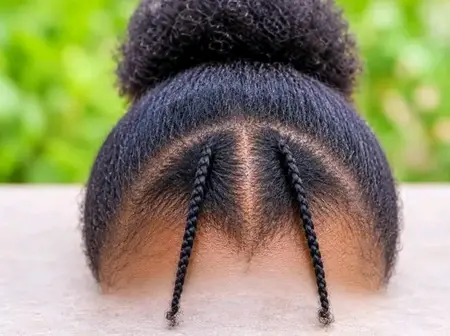
When her mother asked why she was crying, the little girl explained that another pupil had teased her over the way her hair had been styled.
“Vile nimeshuka hivi hizi style mbili wananiambia ati niko Tutam,” she told her mother, expressing her frustration at being associated with the political slogan because of the two strands of hair on her forehead.
Her explanation appeared to surprise her mother, who seemed amused that a comment about a simple hairstyle had made her daughter so emotional.
“Sasa si hii ni style tu ya kushukwa, amekuambia uko Tutam,” the mother responded, reminding her that the strands were simply part of her hairstyle.
Despite her mother's explanation, the girl remained emotional, prompting her to offer further reassurance and encourage her daughter not to let the teasing affect her.
In an attempt to cheer her up, the mother introduced the opposing political slogan, ‘Wantam’, telling her daughter that she belonged to that side instead.
“Hiyo tu inafanya unalia, acha kulia, si unajua tu wewe uko Wantam. Panguza machozi hiyo ni style tu ya kushukwa,” she added.
The exchange turned an otherwise upsetting moment into a light-hearted conversation, with the mother using Kenya's political catchphrases to comfort her daughter.
The incident comes as the ‘Tutam’ and ‘Wantam’ slogans continue to feature prominently in conversations about the country's political direction ahead of the 2027 General Election.
‘Tutam’ is derived from the phrase two terms and is associated with supporters who want President William Ruto to secure another five-year term if re-elected. Meanwhile, ‘Wantam’, meaning one term, is used by those campaigning against Ruto's re-election.
The two slogans have increasingly found their way into everyday conversations, sometimes extending beyond political gatherings and finding their way into unexpected situations, including among schoolchildren.
Source:https://www.facebook.com/share/1D52pXaBhc/
Leave a Reply