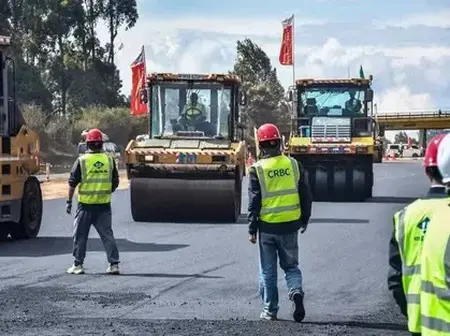
In an official update issued on Tuesday, November 24, 2026, KeNHA confirmed that technical teams held high-level consultative talks with a visiting Japanese delegation to assess how recycled polyethene terephthalate (PET) materials can be integrated into local pavement mixes.
The Japanese team included experts and representatives from the Japan International Cooperation Agency (JICA), Nippon Road Company, Kao Corporation, and Shimizu Corporation.
According to KeNHA, the discussions centered on ongoing research and practical applications of blending processed PET plastic waste into conventional asphalt to strengthen road surfaces.
Engineers noted that the Japanese method offers strong potential for sustainable infrastructure by turning widespread plastic pollution into a high-performance engineering input.
Beyond environmental gains, technical assessments indicate that plastic-modified asphalt improves pavement durability, boosts water resistance, and increases overall resilience against heavy axle loads and harsh weather.
This push toward alternative materials comes at a critical time for Kenya’s road construction sector, which has been grappling with severe bitumen supply disruptions and rising import costs.
Bitumen, the thick, black petroleum-based binding agent essential for holding road aggregates together, has become increasingly scarce and expensive in recent months due to ongoing geopolitical conflicts in the Middle East and global shipping bottlenecks.
According to the Ministry of Roads and Transport, the resulting supply crunch has already slowed down progress on major national infrastructure works, including delays in completing and opening the Rironi-Naivasha section of the Rironi–Mau Summit Highway.
For road agencies and contractors bidding on public tenders, dependence on volatile international petroleum markets has created persistent cost overruns and unpredictable project timelines.
By exploring the adoption of locally sourced recycled plastics as a partial substitute and enhancer in asphalt production, KeNHA and KURA aim to insulate future road contracts from external supply shocks while lowering long-term maintenance expenses.
If adopted into standard engineering specifications, contractors tendering for highway and urban road works could increasingly be required to incorporate sustainable, locally recycled materials into their construction designs.
The initiative also aligns with broader government efforts to promote circular economy solutions, reduce urban plastic waste, and stretch limited infrastructure budgets further without compromising road quality.
While the technology is currently at the evaluation and technical engagement stage with Japanese partners, the move signals a decisive step toward modernizing Kenya’s road building standards and reducing vulnerability to costly imported materials.
SOURCE
Leave a Reply