
Listen to articleThe fund seeks to widen access to Shari'ah-compliant investments, particularly among Muslim customers whose religious beliefs restrict them from investing in conventional interest-bearing financial products.Safaricom's faith-based Ziidi Shari'ah Money Market Fund has attracted 1.5 million customers and accumulated Sh230 million in assets under management barely a month after its launch.
Author: lincor
-

‘1M for one musician’ – Bahati announces performance deal ahead of wedding
Bahati has announced a Ksh1 million performance deal for a musician ahead of his highly anticipated wedding with his wife, Diana Marua.In a post shared on Thursday, November 5, 2026, the musician invited artists to perform at the couple’s special occasion, dubbed The Invite, a black-tie event organised by The Bahatis.
-
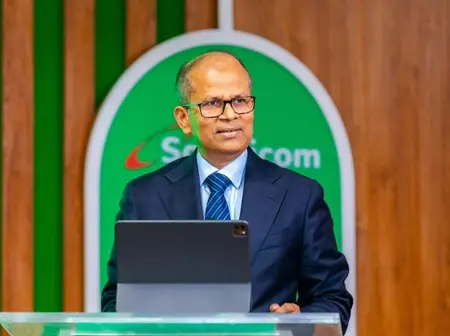
Safaricom reveals SMS use drops 22.9% as customers shift to internet messaging
Safaricom has recorded a 22.9 per cent decline in the average number of text messages sent by each customer, as more subscribers turn to internet-based platforms to communicate.
The telecommunications company’s half-year financial results, released on Thursday, November 5, 2026, show that messages per subscriber dropped to 98.94 during the six months ended September 30, 2026, reflecting changing communication habits among mobile phone users.
However, the number of active messaging customers continued to grow, rising by 8.8 per cent to 25.86 million during the reporting period.
The figures suggest that although more customers remain active on Safaricom’s messaging services, they are sending fewer traditional text messages.
Safaricom attributed the decline in SMS revenue to the growing popularity of internet-based communication platforms, commonly referred to as over-the-top (OTT) messaging services.
“Messaging revenue declined 8.6% YoY to KShs 5.01Bn, driven by the continued migration of customer communications to IP-based and over-the-top (OTT) messaging platforms, a trend observed across the global telecommunications industry. As a result, messages per subscriber fell 22.9% YoY to 98.94, the company stated in its financial report.
The shift reflects the growing use of applications that allow people to exchange messages through internet connections rather than relying on conventional SMS services.
Platforms such as WhatsApp, Telegram and Facebook Messenger have changed how mobile phone users communicate, offering text messaging alongside voice calls, video calls and multimedia sharing.
For customers with access to mobile data or Wi-Fi, these services provide alternatives to traditional text messaging.
The decline in messaging revenue highlights the pressure facing traditional telecommunications services as customer communication increasingly moves to internet-based platforms.
The 8.8 per cent growth in active messaging customers also shows that the decline in revenue was not caused by a shrinking number of customers using messaging services.
Instead, the reduction in messages per subscriber points to changes in how frequently customers use traditional SMS.
The results underline a broader shift in Kenya’s telecommunications market, where internet connectivity is becoming increasingly important in everyday communication.
Safaricom’s half-year performance therefore captures a changing relationship between mobile phone users and traditional text messaging, even as the company continues to serve millions of active messaging customers.
-

Oga Obinna accuses Kenyans of downplaying Wapendwa Muziki’s talent
Media personality Oga Obinna has accused Kenyans of deliberately finding reasons to undermine talented people, defending gospel music duo Wapendwa Muziki against criticism over their use of artificial intelligence (AI) in music production.In a video shared on Thursday, November 5, 2026, Obinna has challenged critics to stop dismissing the duo’s musical abilities and instead recognise their talent.
-

Vaccines don’t cause infertility, autism or ‘immune overload’
Breastfeeding’s protection fades, extra vaccines aren’t extra risk, and skipping your child’s shot because others got theirs still leaves them exposed.Every parent wants to make the best decisions for their child, but in a world where information spreads within seconds, separating fact from fiction has become harder than ever.
-

Tanzania secures Sh156 billion financing deal for railway expansion
Listen to articleTanzania has secured $1.2 billion (Sh155.94 billion) in commercial financing to construct a key section of its Standard Gauge Railway (SGR) in a deal backed by the African Development Bank (AfDB).The financing will fund the construction of the 411-kilometre electrified Tabora–Kigoma railway line, known as Lot 6, linking western Tanzania to the country's wider railway network and the port of Dar es Salaam.
-

Safaricom reveals how much data customers consume as cost per MB drops by 10.8%
Safaricom customers are consuming more mobile internet, with average data usage per subscriber rising by 9.4 per cent as the telecommunications company records a 10.8 per cent decline in its average rate per megabyte.
At the same time, the average rate per megabyte declined by 10.8 per cent to 5.03 cents, pointing to a reduction in the average rate charged for mobile data during the reporting period.
The figures highlight the changing patterns of internet consumption as more customers use digital platforms for video streaming, gaming, sports content and other online activities.
Safaricom recorded an 11.6 per cent increase in one-month active chargeable mobile data customers, reaching 27.86 million during the period under review.
The number of customers consuming more than 1GB of data per month also increased by 17.7 per cent to 15.21 million, suggesting that a growing proportion of subscribers are moving towards higher levels of internet consumption.
The company attributed the increase in usage to expanding digital activities and stronger engagement with online content.
“Usage momentum remained strong, with average data consumption per chargeable subscriber increasing 9.4% YoY to 5.31 GB. Growth was driven by expanding digital use cases and stronger content engagement, including increased consumption of video, gaming and sports content, alongside growth in giga users.
“Portfolio enhancements under the Patamore proposition further supported usage by delivering greater value and affordability to customers, contributing to increased internet penetration and engagement. As a result, the rate per MB declined 10.8% YoY to 5.03 cents,” Safaricom said in its results booklet.
The statement links the growth in data consumption to increased demand for digital content and the company’s efforts to make its data offerings more affordable.
Mobile data revenue increased by 12.2 per cent year-on-year to Ksh45.24 billion, supported by growth in the number of active customers and increased usage.
The performance makes mobile data an important contributor to the company’s connectivity business, which recorded revenue growth of 7.7 per cent to Ksh103.38 billion.
Mobile data accounted for 43.8 per cent of connectivity revenue, compared with 40.8 per cent for voice services, reflecting the growing contribution of internet services to the company’s network business.
Safaricom also linked the performance to increased penetration of 4G+ devices, alongside initiatives targeting affordability and customer usage.
The results point to two developments in Safaricom’s mobile data business: customers are consuming more internet, while the company’s average rate per megabyte is declining.
The increase in customers using more than 1GB monthly also indicates that data consumption is not limited to occasional browsing, with more subscribers using larger volumes of internet.
However, the 10.8 per cent decline in the average rate per megabyte should not automatically be interpreted as an equivalent reduction in the advertised prices of all data bundles. It is the company’s reported average rate per unit of data.
The half-year results therefore provide an indication of how mobile internet usage and revenue are changing as digital content and online services become a larger part of customers’ daily activities.
-
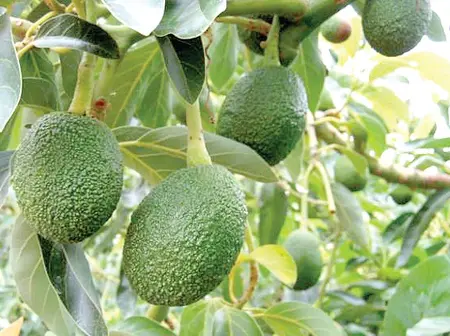
China-Africa trade hits Ksh40.6T as African avocado, peanut exports rise
Trade between China and Africa has grown to Ksh40.6 trillion in the first nine months of 2026, with agricultural exports from Africa recording strong growth following the introduction of China’s zero-tariff policy for African goods.
In a post shared on X on Thursday, November 5, 2026, the China-related trade update said trade between the two sides had increased by 22 per cent year-on-year to about Kssh40.6 trillion.
The update highlighted increased demand for African agricultural products in China since the policy took effect on May 1, including peanuts, frozen strawberries and avocados.
Peanut imports increased 4.4 times, while frozen strawberry imports rose by 113 per cent and avocado imports grew by 82 per cent.
“Mutually beneficial trade brings tangible gains to people on both sides!” the post stated.
The figures point to growing opportunities for African agricultural producers seeking access to China’s large consumer market.
According to the update, Africa accounts for 70 per cent of China’s sesame imports and 40 per cent of its coffee imports, highlighting the continent’s role in supplying key agricultural commodities.
The zero-tariff policy is intended to make eligible African goods more competitive in the Chinese market by removing import duties, potentially creating opportunities for farmers, exporters and agricultural businesses.
However, the reported growth figures cover trade between China and Africa as a whole and do not necessarily reflect export performance by individual African countries.
The reported increase in demand comes as Kenya’s avocado industry faces restrictions on sea exports because of low production volumes.
On Wednesday, October 28, 2026, the Agriculture and Food Authority (AFA) announced the suspension of sea shipments of Hass, Fuerte, Pinkerton and Jumbo avocado varieties from October 30.
The decision followed an assessment by the Horticultural Crops Directorate, which found that current production was insufficient to support sea shipments.
“The survey findings are that current production volumes are low and insufficient for sea shipment,” the authority stated in a notice signed by Calistus Efukho on behalf of the Director General.
Air shipments of the affected varieties are permitted to continue, subject to inspection and traceability requirements.
The authority also suspended avocado harvesting for oil processing during the restricted period and introduced verification requirements for existing oil stocks intended for export.
Processors must have their stocks verified before clearance, while imports of avocado fruit for oil processing have also been suspended during the closure.
The measures are intended to prevent the harvesting of immature local avocados under the pretext that the fruit was imported.
Exporters who violate the restrictions risk having their licences revoked, while permits will not be issued for consignments that breach the guidelines.
The developments highlight the opportunities presented by expanding international markets alongside the production and quality requirements Kenyan exporters must meet to benefit from rising demand.
-

CS Ogamba reveals what Kenyan universities must prove beyond awarding degrees
Education Cabinet Secretary Julius Ogamba has challenged universities to focus on the quality of education and the skills graduates acquire, saying institutions must look beyond student enrolment to the knowledge and values they impart.
“We must not only ask ourselves how many students enter universities, but also focus on what they learn. What problems they can solve, what values they carry, and what they give back after graduation,” Ogamba said.
Speaking on Thursday, November 5, 2026, at State House, Nairobi, during the award of a charter to International Leadership University (ILU), Ogamba said universities must demonstrate their contribution to Kenya, Africa and the world through quality teaching, relevant academic programmes, research and effective governance.
“The true measure of this charter will be reflected in the quality of teaching, the relevance of academic programs, the integrity of the governance in place, the value of research and the contribution of the university’s graduates to Kenya, Africa and the world,” he said.
Ogamba said private universities had widened access to higher education and created new academic pathways, contributing to research, innovation and human capital development.
“Your Excellency, Kenya currently has 41 private universities which have widened access to university education and created new academic pathways, contributing to research, innovation and human capital development,” he said.
The Cabinet Secretary said private universities had enrolled 153,999 students, representing 21.7 per cent of the country’s university student population.
“Currently, the private universities have enrolled a total of 153,999 students out of the 707,150,000 students in all our universities in Kenya, accounting for 21.7% of university students,” Ogamba said.
The figure of 707,150,000 in the supplied transcript appears inconsistent with the stated percentage and should be verified against the official speech before publication.
Ogamba cautioned that expanding university enrolment must go hand in hand with better education and improved learning outcomes.
“Well, the numbers are impressive. More students must also mean better education, not just more seats,” he said.
He described private universities as important partners in improving higher education and urged institutions to focus on equipping students with knowledge and values that would benefit society.
“Private universities are key partners in this effort,” he said.
The Education CS said quality assurance was essential in protecting the credibility of academic qualifications and maintaining public confidence in Kenya’s education system.
“Your Excellency, ladies and gentlemen, in this regard, quality assurance is indispensable. It protects the value of honest degrees and protects public confidence in our education system,” he said.
Ogamba said the award of the charter confirmed that International Leadership University had undergone the required assessment and met the established standards.
“Today’s charter tells every family that the International Leadership University has been through the process and has met the standards,” he said.
Ogamba’s remarks came as President William Ruto challenged universities to redesign their teaching around real-world problems and strengthen partnerships with employers to prepare students for the workplace.
During the same State House event, Ruto urged institutions to incorporate practical problem-solving into their academic programmes and ensure students gain workplace experience before graduation.
“I therefore challenge International Leadership University and every university in Kenya to make four commitments. First, teach through real challenges and problems,” Ruto said.
He proposed that counties provide students with urban planning challenges, hospitals share service delivery problems and cooperatives present post-harvest losses for students to investigate and solve.
“Let students apply their knowledge and give us results,” he added.
Ruto also highlighted demand for workplace experience after the government received 150,000 applications within 24 hours for 50,000 internship opportunities.
“Yesterday, we did announce, as Government of Kenya in internship opportunities for 50,000 students. The application will be on a digital platform. I am informed that by this morning we had 150,000 applicants within 24 hours,” he said.
The President urged universities to work more closely with employers to expand practical attachments and help students acquire experience before completing their studies.
The remarks by both leaders place renewed emphasis on the need for universities to produce graduates who can apply their knowledge to challenges in healthcare, agriculture, manufacturing and public service.
-
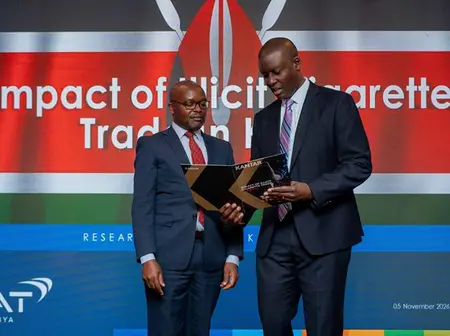
Illicit Cigarette Trade Cost Kenya Ksh 47 Billion In Revenue
Illicit cigarettes cost Kenya an estimated KSh 47 billion in lost excise duty and VAT revenue between 2021 and 2025, according to new research by global research firm Kantar.Illicit cigarettes cost Kenya an estimated KSh 47 billion in lost excise duty and VAT revenue between 2021 and 2025, according to new research by global research firm Kantar.