
Safaricom Group Chief Executive Officer Peter Ndegwa was left surprised after Streamer and content creator Vindee revealed that his Fuliza limit stood at just Ksh300.The exchange, which took place during a Safaricom event on Thursday, November 5, 2026, took an interesting turn when Ndegwa asked Vindee how much money he had and whether he used Fuliza, Safaricom’s mobile overdraft service.
Author: lincor
-

MPs warned against proposed internet law that could expose Kenyans’ browsing data
The National Youth Council (NYC) has warned Parliament against adopting proposed internet regulations that could expose Kenyans’ personal information, undermine online privacy, and make access to the internet more expensive.
The Council raised concerns over the Kenya Information and Communications (Amendment) Bill, 2025, which seeks to introduce consumption-based internet billing by requiring internet service providers (ISPs) to monitor customers’ usage, assign them unique meter numbers and generate invoices based on the amount of data consumed.
Appearing before the National Assembly Committee on Communication, Information and Innovation on Thursday, November 5, 2026, NYC Chief Executive Officer Gloria Wawira urged MPs to ensure the proposed law does not create opportunities for excessive collection of personal information or restrict Kenyans’ digital freedoms.
The Council said the Bill leaves important questions unanswered regarding the type of information internet providers would be required to collect, how long the records would be retained and what safeguards would prevent the data from being accessed or misused.
It warned that linking identifiable subscriber meter numbers to detailed internet usage records could expose personal information and discourage young people from freely researching, expressing opinions and participating in civic affairs.
“We support accountability in internet billing, but accountability must never become a platform for inordinate privacy intrusion. Consumers should be able to verify what they pay for without surrendering their privacy or having their browsing activities exposed,” Wawira told the committee.
The Council wants Parliament to restrict internet metering to the volume of data transferred for billing purposes, with an explicit prohibition on collecting browsing histories, search terms, communications, content viewed and destination-level information.
It argued that consumers should be able to confirm how much data they have used without having their online activities exposed through the billing system.
Beyond privacy concerns, the Council warned that mandatory consumption-based billing could increase the cost of internet access and make monthly expenditure less predictable for millions of users.
The proposed legislation seeks to require internet service providers to introduce systems capable of monitoring customer usage, converting the information into readable details and generating invoices based on consumption.
The Council cautioned that such a system could disadvantage students, freelancers, remote workers and digital content creators who depend on reliable internet connections for their studies and livelihoods.
It wants Parliament to retain existing prepaid bundles, capped packages and unlimited internet plans as available consumer choices.
Wawira said consumers should not be forced into one billing arrangement, proposing an opt-in system that would allow subscribers to choose packages according to their needs and financial circumstances.
“Our proposal is that we put in opt-in options so that we leave the consumer with a choice. In the interest of young people and their access to the internet, we believe an opt-in set-up is ideal,” she said.
The Council also proposed usage alerts, optional spending limits, transparent tariffs, itemised invoices and accessible mechanisms for resolving billing disputes.
It further called for an independent regulatory and human-rights impact assessment before the proposed changes are implemented, saying Parliament should establish their likely financial implications for different categories of internet users.
“The internet is no longer a luxury for young people. It is a classroom, an office, a marketplace and a gateway to opportunity. Any legislation that changes how Kenyans access or use the internet must protect these opportunities rather than restrict them,” Wawira said.
The concerns were raised as the National Assembly committee continued receiving submissions from stakeholders on the proposed legislation.
Mbooni MP Nzioka Kivasu said Parliament had a responsibility to protect consumers and would consider the Council’s recommendations alongside submissions from other stakeholders before making its final recommendation on the Bill.
“We are also here to protect the consumer. We have listened to a lot of submissions on this Bill, and we will consider your submission alongside the others before making our final recommendation,” Kivasu said.
The legislator also sought clarification on international best practices in internet billing, the performance of different billing models and the availability of fixed and non-fixed data packages.
Wawira maintained that consumers should retain the flexibility to choose between unlimited, weekly and monthly bundles rather than being compelled to adopt a consumption-based billing arrangement.
Isiolo South MP Tubi Mohamed also backed the need to recognise internet connectivity as an important platform for young people’s economic participation.
The Kenya Information and Communications (Amendment) Bill, 2025, also known as National Assembly Bill No. 9 of 2025, is sponsored by Aldai MP Marianne Kitany.
Its principal objective is to introduce metered internet billing based on consumption, with the stated intention of protecting consumers against exploitation and ensuring they receive value for the services they purchase.
Under the proposed framework, internet service providers would be required to develop systems capable of monitoring customer usage, assign subscribers unique meter numbers and issue consumption-based invoices.
The providers would also be required to submit information relating to their billing systems to the Communications Authority of Kenya (CA).
However, the proposal has attracted criticism from industry players and digital rights advocates, who have questioned its potential impact on privacy, affordability and consumer choice.
In October 2026, the Kenya Private Sector Alliance (KEPSA) urged Parliament to reject the Bill, arguing that mandatory metered billing could increase operational costs for internet providers and eventually push up prices for consumers.
The organisation also raised concerns over the collection and retention of identifiable subscriber usage records, warning that inadequate safeguards could expose sensitive information to misuse.
The Communications Authority also presented its position to the parliamentary committee on November 3, cautioning against making consumption-based billing mandatory across the sector.
The regulator argued that compulsory usage-based billing could undermine affordability, digital inclusion and consumer choice, particularly among low-income households, students, small businesses and communities in underserved areas.
Instead, it proposed measures such as mandatory usage alerts at 50, 80 and 100 per cent of consumption thresholds, free real-time usage dashboards, monthly expenditure caps and consumer-selected spending limits.
The Authority also recommended clearer itemised bills, independent audits of metering systems and affordable broadband packages for low-income households and students.
The Bill remains under consideration by Parliament and has not yet become law.
-
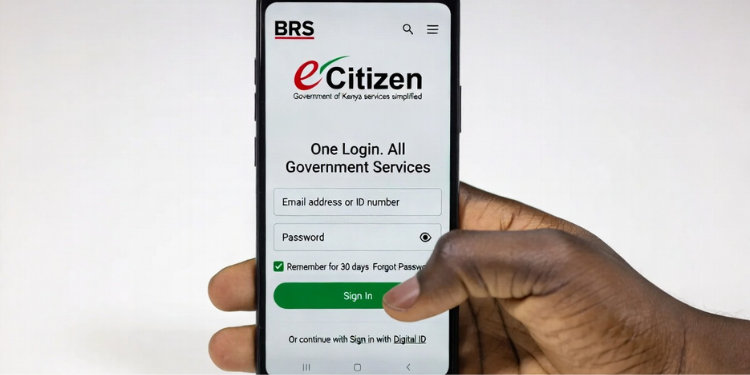
Kenyans to Experience e-Citizen Service Disruptions Twice in November
The National Treasury has announced two scheduled maintenance exercises on the e-Citizen platform that will temporarily affect access to government digital services in November 2026.In a notice dated November 5, the Government Digital Payments Department said the first maintenance exercise would take place from 10 pm on Saturday, November 7, to 5 am on Sunday, November 8, 2026.
-

Cristiano Ronaldo Bids Farewell: Inside His Record-Breaking Portugal Career
Cristiano Ronaldo announced his retirement from international football on Thursday, 5 November 2026, at age 41This brings an end to a 23-year Portugal career with 234 caps and 146 goals, both all-time men’s world records, plus 46 assists (192 goal involvements).
-

Bayern Munich vs Ajax: Govt reveals cheapest ticket prices for Talanta Stadium clash
Sports Cabinet Secretary Salim Mvurya has announced that tickets for the historic FC Bayern Munich versus AFC Ajax friendly match at Talanta Sports City will start at Ksh2,500.In a press statement issued on Thursday, November 5, 2026, Mvurya confirmed that ticket sales would officially open at 6.00 pm East Africa Time through the stadium’s official website.
-

Govt unveils plan to trace over 557,000 Kenyans over uncollected IDs
Principal Secretary for Immigration and Citizen Services Belio Kipsang has appealed to Kenyans who applied for national identity cards to collect their documents, saying 557,930 IDs remain uncollected nationwide.
Kipsang said the government had launched a nationwide mop-up exercise to trace applicants and ensure the identity cards reach their rightful owners.
Appearing before the National Assembly’s Departmental Committee on Administration and Internal Security on Thursday, November 5, the PS disclosed that the exercise would rely on local administrators to reach applicants who had not collected their documents.
“The Committee was briefed on the ongoing national ID mop-up exercise to facilitate collection of the 557,930 identity cards reported as uncollected in the Department’s submission,” the State Department stated.
Kipsang has further noted that chiefs and assistant chiefs had been enlisted to support the exercise.
“Chiefs and Assistant Chiefs are supporting public sensitisation, tracing applicants and facilitating collection to ensure the documents reach their owners,” the statement added.
The government is seeking to clear the backlog through community-level mobilisation, with local administrators helping identify applicants and facilitate the collection process.
The Principal Secretary also highlighted investments in live capture machines, noting that they had significantly shortened the time required to process and produce national identity cards.
He further explained that the validity period of identity cards allows periodic updates to their embedded technology and security features as technology evolves.
Kipsang also disclosed that the State Department was working with the Ministry of Health to integrate hospital management systems with the Civil Registration and Vital Statistics System.
“This will support the rollout of electronic birth notifications, enabling timely registration and more efficient access to civil registration services,” the statement noted.
The initiative is expected to streamline birth registration by improving the transmission of birth information from health facilities to civil registration authorities.
The PS also addressed concerns about excluding certain constitutional office holders and their spouses from eligibility for diplomatic passports.
He explained that the Kenya Citizenship and Immigration Regulations, 2012, prescribe the categories of individuals entitled to the documents.
The PS has further noted that the Cabinet Secretary for Interior and National Administration may authorise the issuance of diplomatic passports to individuals outside the prescribed categories where considered necessary.
-

Campus student left frustrated as study partner chooses boyfriend’s laundry over exam preparation
A university student has expressed frustration after visiting her classmate for a planned exam revision session, only to find her busy washing her boyfriend’s clothes.The student, who said the two were in the same study group, questioned why her classmate had to put their academic plans on hold to wash her boyfriend’s laundry.
-

KRA announces record-breaking October revenue as customs collections hit historic high
The Kenya Revenue Authority (KRA) has announced a record-breaking revenue performance after collecting Ksh260.63 billion in October 2026, with Customs recording its highest-ever monthly collections in the history of the tax agency.
KRA said on Thursday, November 5, 2026, that it had surpassed its October revenue target of Ksh258.304 billion, collecting Ksh2.327 billion above the target.
The October collections represented a growth of 15.5 per cent compared to the corresponding period in the previous financial year, with the Authority attributing the performance to improved collections from both Customs and Domestic Revenue.
The latest figures also pushed KRA’s cumulative revenue collection beyond the Ksh1 trillion mark, with the taxman reporting collections of Ksh1.010 trillion by the end of October.
“Kenya Revenue Authority (KRA) has surpassed the KES 1 trillion mark in revenue collection, after raising KES 1.010 trillion by the end of October 2026. This achievement reflects a positive trajectory in revenue mobilisation, with the Authority attaining the milestone a month earlier than in previous financial years,” KRA said in a statement posted on its official website.
“In addition to surpassing the KES 1 trillion revenue milestone, KRA also exceeded its October 2026 revenue target, collecting KES 260.630 billion against a target of KES 258.304 billion. This represents a performance rate of 100.9 per cent, translating into a surplus of KES 2.327 billion above the target. The October performance reflects a revenue growth of 15.5 per cent, compared to growth rates of 8.0 per cent and 6.5 per cent recorded in October 2025 and October 2024, respectively. The good performance is attributed to stellar performance by both Customs and Domestic Revenue.”
The Authority said it had attained the milestone a month earlier than in previous financial years, describing the development as evidence of a positive trajectory in revenue mobilisation.
Customs and Border Control emerged as one of the major drivers of the October performance after collecting Ksh94.793 billion, the highest monthly revenue collection recorded by the department in KRA’s history.
The collections represented a growth of 11.3 per cent compared to October last year and surpassed the monthly target by Ksh1.009 billion, translating into a performance rate of 101.1 per cent.
KRA attributed the strong performance largely to non-oil taxes, which recorded a surplus of Ksh7.243 billion and growth of 26 per cent.
The October figure surpassed the previous monthly record of Ksh92.527 billion, which was collected in July 2026.
The latest performance comes amid increased scrutiny of the role of imports and international trade in supporting government revenue.
In September 2026, Customs collections had also exceeded the monthly target, with KRA collecting Ksh90.053 billion against a target of Ksh89.088 billion.
“Customs recorded its highest-ever monthly revenue collection after collecting KES 94.793 billion in Oct 2026, the highest monthly collection in KRA history. Second best collection of KES 92.527 billion was realized in Jul 2026. Customs collected a surplus of KES 1.009 billion registering a performance rate of 101.1% and growth of 11.3% compared to the same period in the last financial year. The performance was driven by non-oil taxes which recorded a surplus of KES 7.243 billion and a growth of 26.0%,” KRA stated.
The September performance was partly supported by an increase in the value of imports, which rose by 25.6 per cent, according to figures reported by the tax agency.
Domestic revenue collection also exceeded expectations, reaching Ksh165.447 billion against a target of Ksh164.110 billion.
The department surpassed its target by Ksh1.337 billion, registering growth of 18.1 per cent compared to the corresponding period last year.
KRA attributed the performance to above-target collections across several major tax categories, including Domestic Value Added Tax (VAT), Domestic Excise Duty, Corporation Tax, Individual Income Tax, Capital Gains Tax and Stamp Duty.
Corporation Tax collections stood at Ksh23.932 billion against a target of Ksh20.077 billion, representing a performance rate of 119.2 per cent and a growth of 31.6 per cent.
Four sectors, electricity, manufacturing, transportation and wholesale, accounted for approximately 81 per cent of Corporation Tax collections during the month.
The sectors also recorded an average instalment tax growth of 38.1 per cent in October, according to KRA.
Domestic VAT collections reached Ksh33.367 billion, slightly exceeding the monthly target of Ksh33.323 billion by Ksh45 million.
The collections represented growth of 22.1 per cent compared to October last year.
Domestic Excise Duty recorded one of the strongest performances, surpassing its target for the first time in a long period.
KRA collected Ksh945 million above the monthly target, with the tax head registering growth of 54.1 per cent.
The increase was driven by higher remittances from manufacturers of alcoholic beverages and tobacco products.
According to the Authority, manufacturers of keg beer, premium beer, wine and spirits, and tobacco recorded respective growth rates of 0.3 per cent, 43.5 per cent, 110.8 per cent and 94.1 per cent.
The strong performance in wine, spirits and tobacco collections was attributed to increased product deliveries.
However, collections from manufacturers of soft drinks and bottled water declined by 4.8 per cent and 96.4 per cent, respectively, with KRA linking the sharp decline in bottled water collections to policy changes.
The October performance comes as the Authority pursues an ambitious revenue target of Ksh3.268 trillion for the 2026/27 financial year.
KRA’s latest milestone follows a record collection of Ksh2.844 trillion in total revenue during the 2025/26 financial year, representing growth of 10.6 per cent compared to the Ksh2.572 trillion collected in the previous financial year.
The previous financial year’s performance was supported by collections from key economic sectors, including manufacturing, energy, financial and insurance services, information and communication technology, and wholesale and retail trade.
However, the revenue mobilisation drive has faced challenges, with Treasury figures showing that ordinary revenue receipts fell short of the first-quarter target by Ksh58.2 billion in the three months to September 2026, despite recording year-on-year growth.
The October figures therefore mark an important improvement in the Authority’s monthly performance, although sustained collections will be necessary for KRA to meet its annual target.
The tax agency has continued to rely on improved tax administration, compliance measures and expansion of the tax base to strengthen revenue collection.
-

Attorney General’s Office Announces Pupillage Opportunities for Fresh Graduates: How to Apply
The Office of the Attorney General (OAG) has announced 70 pupillage opportunities for recent law graduates seeking practical legal experience.In a notice, the Office invited highly motivated Kenyans to undertake pupillage at the institution, in line with the Advocates Act and the Kenya School of Law Pupillage Guidelines 2023.
-
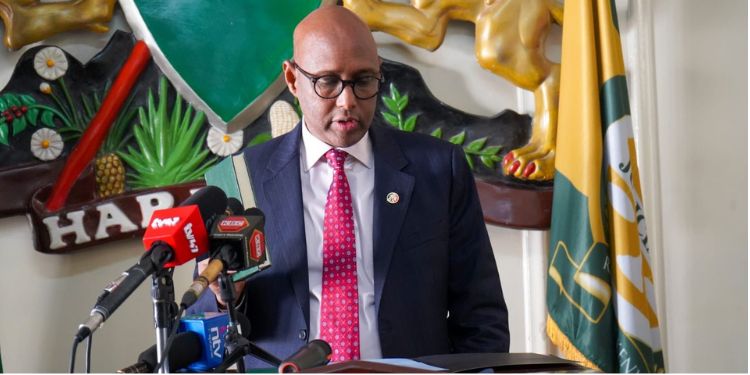
KRA Records Highest-Ever Monthly Revenue, Reveals How Much Kenyans Paid in October
KRA has revealed the amount Kenyans paid in taxes in October after recording its highest-ever monthly revenue collection and crossing the KSh1 trillion mark.The Kenya Revenue Authority (KRA) collected KSh1.010 trillion by the end of October 2026, surpassing the KSh1 trillion mark a month earlier than in previous financial years.