Allies of Jensen Huang are trying to rally support for the former Nvidia boss to get his job back after resigning last week over a scandal involving extramarital affairs, one involving an alleged Chinese spy.
SpaceX boss Elon Musk and Tim Sweeney, chief executive of Fortnite-maker Epic Games, are among those backing a campaign to get the AI chip giant's board to "Bring Jensen Back".
Huang resigned as chief executive of Nvidia after the emergence of two affairs, one of whom was with a woman suspected of spying for China and another allegedly with one of his employees.
It has created a crisis for one of the world's most valuable firms which is a key part of the AI industry and its huge expansion.
An open letter calling for Nvidia's board to give Huang his job back while an internal probe is conducted has received more than 175,000 signatures, including Musk and Sweeney, according to a website named "Stand with Jensen".
The campaign group said it is made up of current and former Nvidia employees, partners, shareholders and supporters.
"We write with gratitude for Jensen Huang and with a clear demand to the board: bring Jensen back while an independent investigation establishes the facts, unless and until you can provide compelling evidence that his removal is in NVIDIA's best interests," the letter said.
Allies of the ex-Nvidia boss wrote they were "concerned that Jensen was removed without meaningful due process".
Huang had been expected to weather the storm following the revelation of an affair involving Alice Huang, alleged to be a Chinese spy.
However, he resigned last Thursday after a second extra-marital relationship emerged, this time allegedly with an executive at Nvidia who reported to him.
The scandal-hit tech boss is now discussing a possible return to Nvidia with confidants, according to the Financial Times.
The newspaper quoted one ally saying that a "war room" of Silicon Valley executives was being convened to lobby for the former Nvidia boss's reinstatement.
A representative for Jensen Huang declined to comment on the report.
The so-called war room also wants to get support for Huang from the White House.
While President Donald Trump recently spoke in glowing terms about Huang, the scandal has created tensions between the US Treasury and Commerce departments over shipments of high-end Nvidia chips to Alice Huang's former firm, Megaspeed.
It has raised questions about the possibility that the chips may have ended up in China despite US export restrictions.
The former Nvidia boss has agreed to testify in Congress, including before the House Select Committee on China.
The BBC understands that the likelihood of Huang being reinstated is low while the Nvidia's internal investigations are ongoing.
The FBI is also investigating the affair between the former Nvidia boss and Alice Huang, according to Trump.
Musk claimed that "critical deals" involving Nvidia's technology would be lost following Huang's resignation.
"Jensen drove supply chain brilliantly at Nvidia but many of those deals were a handshake with Jensen, not a written contract.
"Without Jensen, at least some of those critical deals will be lost," he posted on X.
He later added: "If Jensen gave me his word about compute delivery or I asked for components to be accelerated, he always came through."
If Huang was reinstated, it would face scrutiny from Washington. Treasury Secretary Scott Bessent has called for Nvidia to hire its next chief executive from outside the company.
Shareholders in Nvidia also want Huang back at Nvidia's helm.
In an open letter to the board, Brad Gerstner, founder of Altimeter Capital and Atreides Management boss Gavin Baker called for management to leave "all options on the table, including the potential return of Jensen Huang".
Lord Sarfraz, a member of the UK's House of Lords, has also written to Nvidia's new chair, Harvey Jones, urging the firm's directors to give "serious consideration" to Huang's return following the investigation.
For the moment, Nvidia's chief financial officer Colette Kress is leading the firm and will present the company's results on Tuesday.
In the lead up to the annual 16 Days of Activism against Gender Based Violence, the global community prepares to unite under a familiar call to action: end physical abuse, dismantle systemic inequality, and protect the vulnerable. Yet, inside our legislative chambers, a much more silent, sophisticated form of violence is taking root. It does not carry a weapon, but it has the potential to cause unimaginable harm to millions of African women and girls.
For over two decades, the Maputo Protocol has stood as a progressive shield for the continent, explicitly recognzing safe abortion under specific conditions as a human right and guaranteeing bodily autonomy. Today, this fundamental shield is being systematically targeted by a well funded, foreign driven legislative push disguised as the Draft African Charter on Family, Sovereignty and Values. Under the alluring banner of protecting indigenous traditions, this document seeks to rewrite the rules of survival for African women.
To truly address gender based violence, we must look past physical battery and recognize that denying healthcare is itself an act of violence. True safety is impossible when a woman does not control her own body. Stripping away sexual and reproductive health rights is an institutional assault that forces women into cycles of forced pregnancy, unsafe backstreet abortions, and permanent economic dependency. It traps survivors of domestic abuse in toxic, dangerous environments by stripping them of their health choices and financial independence.
A close Inspection of this proposed charter reveals a devastating collision with basic human rights. Proponents of the draft advocate for provisions that position a fetus as entirely superior to the life and survival of the mother. It seeks to dismantle sexual and reproductive health access by framing basic medical care as a threat to national sovereignty. Furthermore, by restricting comprehensive sexuality education, the document blocks young people from receiving vital information on consent, safety, and reporting abuse. This effectively weaponizes the domestic sphere against vulnerable children.
The tragic Irony is that while the public faces of this movement claim to defend historic African heritage, the structural engineering behind the document is entirely foreign. The charter is spearheaded by European and American anti abortion organizations, heavily financed by matching funds from conservative donors thousands of miles away. This is a coordinated attack on African legal autonomy, utilizing local lawmakers as proxies to establish a regional policy that directly mirrors right wing strategies like the Geneva Consensus Declaration.
With legislators from nearly thirty African states already engaging with early drafts, the threat to domestic health policies is immediate and dangerous. We cannot remain quiet while foreign dollars dictate the boundaries of our healthcare systems and human rights frameworks. Ahead of this year’s 16 Days of Activism, our advocacy must challenge both immediate physical violence and institutional restrictions on bodily freedom. We must urgently sensitize our parliamentarians, engage our ministries, and demand that our leadership rejects this dangerous ideological trap. Guarding the Maputo Protocol is not just about defending a legal document; it is about protecting the absolute dignity, survival, and rights of every African woman.
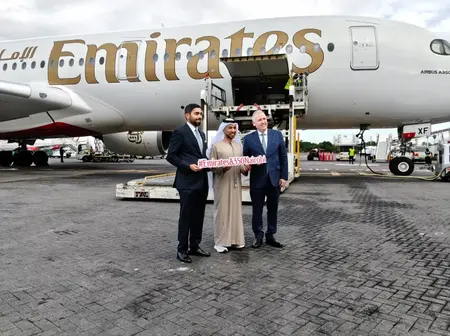
Emirates is deploying newer, fuel-efficient aircraft on its Nairobi route as the airline seeks to contain rising operating costs while responding to growing passenger demand between Kenya and its global network.
The Dubai-based carrier has introduced the Airbus A350 on the Nairobi-Dubai route, adding a new aircraft type to its Kenyan operations as it expands capacity and upgrades its passenger offering.
The move comes amid mounting pressure on airlines from rising global fuel prices, with carriers increasingly looking to modernise their fleets and improve fuel consumption to protect margins.
Rashid Al Arda, Emirates Vice President for Commercial Operations in Sub-Saharan Africa, said the A350 offers better fuel efficiency and lower unit costs compared with the larger Boeing 777, despite carrying fewer passengers.
“The A350, in terms of capacity, offers fewer seats than the 777, but we think it offers greater efficiency in terms of consumption and unit cost,” said Al Arda.
He said the aircraft's introduction was part of the airline's broader strategy to expand its operations in Kenya while improving efficiency and passenger experience.
Emirates has also increased its Nairobi operations to three daily flights, with the additional frequency aimed at meeting rising demand from passengers travelling to and from Kenya.
Kenya is among the airline's five largest markets in Sub-Saharan Africa and its second-biggest market in the region by capacity after South Africa.
The additional flight also strengthens connections through Dubai for travellers from Europe and the United States, making Nairobi an important part of the airline's international network.
Despite introducing the newer aircraft, Emirates says it does not intend to adjust ticket prices on the Nairobi route because of the change in aircraft.
Al Arda said the airline was instead relying on measures such as fuel hedging and other cost-management strategies to cushion itself against volatility in global fuel prices.
“The aviation industry as a whole is under a lot of pressure due to fuel prices globally. Emirates is no exception. We continue to try and mitigate these costs with strategies such as hedging fuel,” he said.
The aircraft deployment also forms part of Emirates' wider fleet modernisation programme, which includes a $5 billion investment to upgrade more than 200 Boeing 777 and Airbus A380 aircraft.
The refurbishment programme has already passed the 100-aircraft mark, with the airline targeting approximately 115 upgraded aircraft by the end of this year.
However, the programme has faced delays linked to global supply chain constraints, while delayed deliveries of Boeing's 777X aircraft have also affected the airline's fleet expansion plans.
Emirates is continuing to receive new A350 aircraft monthly, which it is deploying on routes capable of accommodating the aircraft.
On the Nairobi route, the airline will continue operating two Boeing 777 aircraft alongside the A350. The 777s will retain first-class cabins, while the refurbishment programme is expected to introduce refreshed interiors and premium economy seating.
The A350 brings Emirates' latest premium economy product to Kenya, alongside updated business and economy class cabins.
The airline expects the combination of newer aircraft, improved fuel efficiency and upgraded cabins to strengthen its competitiveness in the Kenyan market.
Al Arda said Emirates would continue evaluating opportunities to expand its African operations, although its immediate priority was to make the additional Nairobi frequency commercially successful.
The airline is also expanding A350 operations across African markets, including Ethiopia, Uganda and Cape Town, as it gradually introduces newer aircraft across its network.
Kiambu government has partnered with Mount Kenya University (MKU) to upgrade the academic qualifications of Early Childhood Development Education (ECDE) teachers through diploma and degree programmes.
Under the partnership, the county government will pay tuition fees for eligible serving ECDE teachers who were employed without higher academic qualifications.
Speaking during the signing of the partnership, Governor Kimani Wamatangi said the programme would be implemented in phases to allow teachers to pursue further studies and enhance e their professional qualifications.
“The county will pay tuition fees for teachers employed without higher education training in a programme to be implemented in phases,” he said.
Wamatangi said the initiative was aimed at strengthening teachers' skills and knowledge to improve the quality of early childhood education across the county.
He said the partnership builds on the county government's investment in ECDE infrastructure and learning resources.
Over the past four years, Kiambu has constructed 545 model ECDE centres and introduced feeding and learning support programmes.
“The county has built 545 model ECDE centres in the last four years and provides uji daily, three boiled eggs per week, milk every Thursday, and free learning materials. This has increased the population from 32,000 to over 50,000 pupils in three years,” he said.
Mount Kenya University vice chancellor Prof. Deogratius Jaganyi thanked Governor Kimani Wamatangi for the partnership, saying it would strengthen the professional capacity of ECDE teachers through further training.
He said MKU would provide additional support alongside county sponsorship to enable eligible teachers to pursue diploma and degree programmes.
“The partnership will see the county sponsor eligible teachers, with MKU providing additional support, in a joint commitment to strengthening teaching capacity and improving the quality of early childhood education,” he said.
The partnership comes a week after MKU's Institute of International and Development Law (IIDLAW) officially launched its Moot Court to strengthen practical legal training and advocacy skills among law students.
The launch coincided with a regional moot court competition that brought together universities to showcase their legal research, argumentation and courtroom advocacy skills.
The Kenya Veterinary Association (KVA) has raised concerns over bacterial contamination and growing antimicrobial resistance in raw chicken meat sold through some non-supermarket retail outlets in Nairobi County, warning that unsafe handling, poor hygiene and inadequate storage conditions could expose consumers to significant public health risks.
Former Deputy President Rigathi Gachagua has warned Nairobi residents against travelling to their ancestral villages during election periods to cast their votes, urging them instead to vote in areas where they live and earn their livelihoods.
Speaking during the opening of the Democracy for the Citizens Party (DCP) offices in Nairobi on Monday, November 16, 2026, the vocal politician urged city residents to remain in the capital and exercise their democratic right instead of travelling upcountry.
Gachagua further argued that Nairobi residents had enough voting numbers in their respective home areas to elect various leaders, including the president, and should therefore register and vote where they live.
“There is no need for you to live in Nairobi and travel to the village to vote. You live here, and you need services here. Can you elect the representative you would like to look after your welfare? You cannot be working and living in Nairobi, yet you want to travel to the village in Nyeri to vote”
“We do not need your vote there. Vote from here. The votes in Nyeri are enough to elect leaders there. When you are in Nairobi, you will elect me as President when you are in Nairobi’
“More than 2,000 people are registered in Mathira but, during polling days, they want to travel to the village and ask me for facilitation to cater for their transport expenses.”
He cited the 2022 General Election, claiming that more than 2,000 Mathira residents living in Nairobi were stranded in the city, unsure of how to travel to their home constituency to exercise their democratic right.
According to Gachagua, some of them approached him seeking financial assistance to cater for their transport expenses to travel to the village and cast their votes.
Gachagua further blamed the practice of leaving Nairobi during election periods to vote in rural constituencies for contributing to the deteriorating state of the city, arguing that residents were abandoning the places where they worked and earned their livelihoods.
He called on his supporters living in Nairobi to transfer their voter registration from their ancestral villages to the capital, insisting that they could still exercise their democratic right without travelling upcountry.
The remarks come months after Gachagua criticised Akamba voters living in Nairobi for registering as voters in the capital but travelling to their ancestral homes in the Ukambani region during elections.
He argued that the practice contributed to low voter turnout in Nairobi, weakening the voting numbers and electoral prospects of the Wiper Party leader.
He further urged Nairobi residents to register as voters in areas where they live and where they are certain they will be available to cast their ballots during elections.
We cannot become an agricultural export powerhouse by making production expensive. It is time to rethink taxation, investment incentives and the cost of doing business.
Kenya has an opportunity to strengthen its agricultural sector, create jobs, attract foreign investment and grow exports. However, achieving these ambitions requires a business environment that makes farming, processing and exporting more competitive.
We want farmers to produce more, exporters to access international markets and investors to put money into agribusiness. Yet, along the value chain, taxes, levies, permits, handling charges and administrative costs can increase the cost of doing business and make our products less competitive.
It is therefore worth reconsidering our approach. Agriculture should be treated as a strategic economic sector that deserves meaningful tax incentives and an enabling business environment.
Consider neighbouring Tanzania. Its agricultural development offers lessons that Kenya could examine. According to Tanzania's 2024 Economic Survey, food crop production reached approximately 22.8 million tonnes, an 11.8 per cent increase from 2023. Its food self-sufficiency ratio stood at 128 per cent.
Tanzania has also positioned itself to attract agricultural investment through targeted incentives. Qualifying agricultural investors can benefit from capital expenditure allowances, preferential treatment for eligible agricultural inputs and investment facilitation, including access to suitable land through designated arrangements.
This approach recognises that agriculture is not simply about growing food. It is also about attracting capital, creating employment, developing rural economies and earning foreign exchange.
Kenya has made provisions for tax relief in agriculture, but there is room to examine how effectively these measures translate into lower operating costs for businesses.
Take VAT, for example. Agricultural exporters may benefit from zero-rating on exports and recover eligible input VAT. However, businesses must first purchase inputs, pay VAT, maintain compliance records, submit claims and wait for refunds.
This process can tie up funds that businesses would otherwise use to purchase produce from farmers, buy packaging materials, pay workers or finance subsequent shipments.
For an agricultural business operating on tight margins, cash flow is critical. It can determine whether a business expands production or struggles to finance its next order.
There is a case for reviewing whether qualifying agricultural inputs could be made tax-free at the point of purchase, rather than requiring businesses to pay VAT and seek refunds later.
There is a fundamental difference between declaring agriculture tax-exempt and making production genuinely tax-free. Refunds are not the same as exemptions. They involve paperwork, compliance costs, delays and working capital requirements. Reducing these burdens would help businesses direct more resources towards production and expansion.
The same principle could apply to agricultural levies and export-related charges. Kenya should review government-imposed fees associated with production, inspection, certification, packaging, storage and export clearance. Charges that do not provide a necessary and measurable service could be reconsidered, while those covering essential services should be rationalised to ensure that their costs remain reasonable.
The cost of exporting is another area that deserves attention if Kenya is to maintain its competitive position.
Consider the following indicative comparisons between the Kenyan and Tanzanian airport export corridors:
Airport terminal handling in Kenya is approximately $0.12–$0.18 per kilogram, compared with Tanzania's $0.03–$0.075.
Cold storage overstay in Kenya is approximately $0.10–$0.20 per kilogram per day, compared with Tanzania's $0.05 and above.
Government inspection and permits in Kenya are approximately $0.004–$0.005 per kilogram, compared with Tanzania's indicative flat consignment charges of $15–$50.
These figures are indicative and require verification against current airport tariffs, commodity categories and service providers. Nevertheless, they point to cost differences that warrant further investigation.
A few cents per kilogram may appear insignificant. However, when multiplied across hundreds of tonnes of vegetables, fruits or flowers, the difference becomes substantial.
International buyers consider price, quality and reliability when selecting suppliers. Kenya must therefore ensure that its regulatory and operational costs do not undermine the competitiveness of its agricultural exports.
There is another important consideration. Kenya and Tanzania share broadly similar tropical climates, agricultural conditions and access to many of the same regional and international markets. They grow similar crops and enjoy comparable agricultural opportunities.
Kenyan products are not inherently inferior to Tanzania's. Nor does Tanzania enjoy an exclusive tropical advantage that Kenya cannot replicate.
The difference increasingly lies in how the two countries manage investment, taxation, production costs and export logistics. When two countries produce comparable-quality products but one makes it cheaper to grow, package, store and export, the commercial advantage becomes evident.
Kenya has agricultural expertise, established export markets, experienced farmers, private-sector capacity and infrastructure to compete. Maintaining these advantages will require continued attention to taxation, investment facilitation and the overall cost of doing business.
There is also a wider economic opportunity that Kenya should consider. Agriculture is not merely about feeding the country. It is an important source of foreign exchange.
When exporters receive dollars, euros or pounds from international buyers, the money supports foreign currency inflows. It also creates demand for local labour, stimulates transport, packaging, processing and financial services, and generates income for thousands of farmers.
Kenya should therefore consider establishing an Agricultural Production and Export Investment Incentive Programme.
Investors willing to establish commercial farms, aggregation centres, packhouses, cold-storage facilities, processing plants and export infrastructure could receive preferential access to suitable government land through transparent, long-term lease arrangements.
The country could also consider a programme targeting foreign agricultural investors, under which qualifying export proceeds are channelled through the Kenyan banking system. This would improve foreign currency inflows, strengthen foreign exchange liquidity and support the country's reserves, while respecting legitimate profit repatriation rights and foreign exchange regulations.
Several practical interventions could help advance this agenda.
First, qualifying agricultural inputs should be considered for tax exemption at source. These could include seeds, fertilisers, irrigation equipment, crop protection products, packaging materials and cold-chain equipment. This would reduce the burden of upfront VAT financing.
Second, national and county governments should review agricultural levies imposed on production, movement, aggregation and exports. The review should identify duplication and charges that do not provide measurable services, with a view to eliminating or rationalising them.
Third, Kenya could introduce meaningful export incentives, including rebates, investment allowances and time-bound tax incentives for businesses that demonstrate increased export volumes, local sourcing, employment creation and foreign exchange earnings.
Fourth, the government and relevant service providers should explore ways of reducing airport and cargo costs. Competitive handling, inspection, storage and cold-chain tariffs would help agricultural exporters. Jomo Kenyatta International Airport should be positioned as an export advantage rather than an additional cost centre.
Fifth, suitable government land could be made available to commercial agribusiness investors through long-term leases. Such arrangements should target investors willing to commit capital, create jobs, develop irrigation and supply local and international markets.
Sixth, where VAT exemptions are not possible, the government should consider predictable refund timelines and automated processes. This would reduce the time businesses spend financing government operations while awaiting refunds.
Finally, incentives should support both local consumption and exports. Businesses investing in local food production, processing, storage and distribution also contribute to food security, employment and reduced dependence on imports.
These incentives should be tied to measurable performance. They should also include safeguards against land speculation, tax abuse and investors who acquire concessions without delivering production.
The argument is not that the government should abandon taxation. Rather, the economic returns from enabling agricultural businesses to produce and export more could be substantially greater than the revenue collected from taxing their inputs and operations.
Kenya has the potential to strengthen its position as a leading agricultural producer and exporter. Realising this potential will require policies that make investment, production and access to international markets more attractive.
The government and its relevant agencies have an important role to play. The Ministry of Agriculture, the National Treasury, the Kenya Revenue Authority, the Kenya Investment Authority, county governments and export facilitation agencies should examine these issues collectively.
Agricultural competitiveness cannot be achieved by the Ministry of Agriculture alone. It requires coordinated economic policy and collaboration between government and the private sector.
As Kenya seeks to attract more investment and expand its export markets, the cost of doing business must remain a central consideration. A competitive agricultural sector will require more than favourable climate conditions and productive farmers. It will also depend on a policy environment that allows businesses to grow, invest and compete effectively.
We cannot tax our way into becoming an agricultural export powerhouse. We must first make it worthwhile to produce.
Mulumi Mwangi is an entrepreneur, marketing consultant and business strategist.
AcquisitionNigerian Exchange Group Plc (NGX Group) has acquired a 10 per cent equity stake in the Nairobi Securities Exchange (NSE) in a strategic investment aimed at expanding its presence in Africa.Nigerian Exchange Group Plc (NGX Group) has acquired a 10 per cent equity stake in the Nairobi Securities Exchange (NSE) in a strategic investment aimed at expanding its presence in Africa.
Kenya Breweries Limited (KBL), through its flagship brand Tusker, has continued its Festive season celebrations with a series of Beer Festivals across the country. Having kicked off the celebrations at Enkang in Kiserian and Nebraska in Ugunja, Siaya, Tusker took the experience to Space Next Door in Nakuru and Black Pearl in Kisumu this past weekend, treating attendees to live music performances and a celebration of local entertainment.
The National Transport and Safety Authority (NTSA) has issued guidelines on how motorists can apply for reflective number plates through the eCitizen platform, outlining the application process, charges and expected collection timeline.
In a post shared on its official X account on Monday, November 16, 2026, the authority encouraged motorists to use its online services to apply for the plates without making unnecessary trips to its offices.
“Get your reflective plate sorted the right way. Log into eCitizen, head to the NTSA portal,” the statement said.
The guidelines require applicants to log into their eCitizen accounts, select the new NTSA service portal and choose the motor vehicle for which they intend to apply for reflective plates.
The authority has provided a step-by-step process to help vehicle owners complete their applications and pay the required fees.
Motorists should first log into their eCitizen accounts and select the NTSA service portal (New). They should then select the relevant motor vehicle and click on the view option.
Under motor vehicle services, applicants should select reflective plate, choose their preferred plate type and counter collection office, and attach the required documents in a single PDF file.
Applicants must scroll down, tick the declaration box and click preview before submitting the application.
After submission, they should proceed to pay the applicable fee and click complete to finalise the process.
NTSA indicated that applicants would receive an SMS notification when their plates are ready for collection.
According to the guidelines, a single reflective number plate costs Ksh1,550, while a pair costs Ksh3,050.
The authority has given an estimated processing timeline of seven working days.
Motorists should therefore select the correct plate type and collection office when submitting their applications and ensure that the required documents are attached in the specified format to avoid delays.
The guidelines come as NTSA continues to urge motorists to collect number plates that have already been processed.
In a separate notice shared on Monday, the authority reminded vehicle owners that compliance requires having their number plates properly fitted on their vehicles.
“Fully compliant means having your plates where they belong, on your vehicle! If your plates are still resting on our shelves, it’s time to bring them home. Visit us to collect yours today,” NTSA stated.
Motorists who have already applied for number plates can check their application status through the authority’s online service-status portal at servicestatus.ntsa.go.ke before travelling to their designated collection centres.
Applicants are encouraged to confirm that their plates are ready and carry their national identification documents when collecting them.
The online services are intended to make the process easier for motorists while reducing unnecessary visits to NTSA offices.