PAY ATTENTION: Mark TUKO.co.ke as a preferred source, and our content will appear higher in your Google feed!
Kenyans in 41 counties have been warned to prepare for rainfall over the next five days, with thunderstorms also expected in several parts of the country.
The Kenya Meteorological Service Authority (KMSA) forecast rainfall between Saturday, October 31, and Wednesday, November 4, covering areas in the Coast, Central, Western, Rift Valley, Northern Kenya and Lake Victoria Basin regions.
According to the five-day outlook, most areas will experience light to moderate rainfall, while 19 counties are expected to receive showers accompanied by thunderstorms.
Along the Coast, Mombasa and Lamu are expected to receive showers on Saturday and Wednesday. Kwale and Kilifi will experience rainfall on Saturday, Sunday, Tuesday and Wednesday, while Tana River is forecast to receive rain on Saturday, Tuesday and Wednesday.
Kenya Met warns of rainfall in Nairobi and 45 other counties in next 24 hours, strong winds
PAY ATTENTION:TUKO is in WhatsApp Channels now! Subscribe and read news in your favourite messenger.
Taita Taveta is also expected to experience showers on Saturday, Sunday, Tuesday and Wednesday.
Nairobi is among the counties set for moderate afternoon showers on Saturday, Sunday, Tuesday and Wednesday. In Central Kenya, Nyeri is expected to receive moderate rainfall on Saturday and Tuesday, while Murang’a and Kiambu will also experience showers during the period.
Other affected counties include Bomet, Kericho, Kakamega, Kisii, Narok, Nakuru, Laikipia, Samburu, Uasin Gishu, Nandi, Baringo, Vihiga, Bungoma, Busia, Kisumu, Homa Bay and Migori.
In the South-Eastern region, Machakos and Makueni are expected to receive moderate showers on Saturday, with additional rainfall forecast for Sunday, Tuesday and Wednesday.
The weatherman has forecast thunderstorms in 19 counties, mainly across the Rift Valley, Western Kenya and the Lake Victoria Basin.
Residents in affected areas should prepare for changing weather conditions, particularly during the afternoons when showers and thunderstorms are expected.
Kenya Met warns of rain in 41 counties over next 5 days, with thunderstorms in 19
The forecast comes as Kenya enters the October-December short-rains season, with authorities monitoring changing weather patterns and issuing preparedness warnings.
It also follows overnight downpours that triggered flash floods and traffic congestion in Nairobi and neighbouring counties, including Kiambu, Kajiado and Machakos.
Kenya Airways has unveiled a completely refreshed Duty-Free experience, introducing Safari Duty Free as its new onboard retail partner.Launching on 1 November 2026, the new offering combines a mobile-friendly webstore, an expanded product catalogue and prices up to 15% lower than at airport Duty-Free shops, and a 5% launch discount on all webstore products until 30 November 2026.
Trans Nzoia Governor George Natembeya has expressed confidence that the Linda Mwananchi Movement will defeat President William Ruto in the 2027 General Election without having to challenge the presidential results in court.
Natembeya, who is leading the movement's presidential campaign, made the remarks during a political rally in Kwale County on Saturday, October 31, where he accompanied Nairobi Senator Edwin Sifuna and other proposed party officials on a grassroots mobilisation tour.
Addressing supporters, the governor declared that the movement would secure victory at the ballot and would not need the Supreme Court to determine the outcome of the presidential election.
Kenyan newspapers review: Rigathi Gachagua reveals when opposition will name presidential flagbearer
He claimed that the team would independently tally the votes before heading to State House in Nairobi, where they would wait for the Independent Electoral and Boundaries Commission (IEBC) to officially announce the winner.
Natembeya suggested that the movement had left the option of challenging presidential election results at the Supreme Court to the late ODM leader Raila Odinga.
He further declared that the days when presidential election victories were allegedly taken away through electoral malpractice were over, warning those planning to manipulate the 2027 results against attempting to do so.
During the engagement in Kinango area, Natembeya accused local political leaders of prioritising their personal interests while neglecting the challenges facing ordinary residents.
Kenyan newspapers review: ODM split over whether to back Ruto with or without written deal
He questioned why some leaders were aligning themselves with Ruto's administration instead of addressing the difficulties experienced by the people they represent.
The governor urged residents to support the Linda Mwananchi Movement, arguing that the country needed leadership that prioritised ordinary citizens.
Natembeya's remarks came a day after the movement formally unveiled its headquarters and proposed national leadership in Lavington, Nairobi, on Friday, October 30.
Sifuna was proposed as the party leader, while Natembeya was named chairperson of its board of trustees and the presidential campaign.
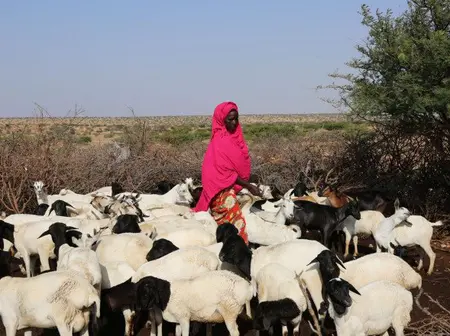
Mogadishu (HOL) — Somalia faces a growing risk of Rift Valley fever that could threaten livestock-dependent livelihoods, after the United Nations Food and Agriculture Organization (FAO) and the regional bloc IGAD identified the country among six facing the highest assessed risk of the disease.The warning, issued on October 30, comes as El Niño-related rainfall creates favourable conditions for the spread of the mosquito-borne virus across Eastern Africa.
PAY ATTENTION:TUKO is in WhatsApp Channels now! Subscribe and read news in your favourite messenger.
Homa Bay Governor Gladys Wanga served up one of the more memorable moments of the week when video footage captured her dancing on top of a moving vehicle as her convoy made its way through city streets.
The clip, posted on TikTok on October 31, 2026, shows Wanga perched atop the vehicle, laughing, waving and throwing some enthusiastic moves as crowds of onlookers lined the route near roadside storefronts.
The energy in the footage was unmistakably electric, with the procession taking on the feel of a victory lap rather than a simple commute.
Ida Odinga takes over event with sleek moves as she steps out in stunning fashion
The occasion was the Orange Democratic Movement's meeting at Jacaranda Grounds in Nairobi, which drew party supporters and officials from across the country.
PAY ATTENTION:TUKO is in WhatsApp Channels now! Subscribe and read news in your favourite messenger.
Wanga, one of the party's most prominent figures, arrived in style, riding the wave of excitement that had clearly gripped the convoy long before it reached the venue.
Adding a layer of symbolism to the moment, the governor wore a T-shirt emblazoned with the image of the late Raila Odinga, who served as ODM party leader until his passing.
Following Raila's death, leadership of the party passed to his elder brother, Oburu Oginga, who has since taken up the mantle.
The outdoor footage, filmed along what appears to be a busy urban street, captures the celebratory atmosphere of the political rally procession in full swing.
Wanga's willingness to abandon formality and simply revel in the moment resonated widely, with the clip spreading rapidly across social media platforms after it was posted.
George Ruto sparks worry after being spotted in arm sling
The governor's spirited display is a reminder that Kenyan politics, particularly within ODM circles, rarely lacks for colour and personality.
Watch Wanga's viral dance atop the moving vehicle here:
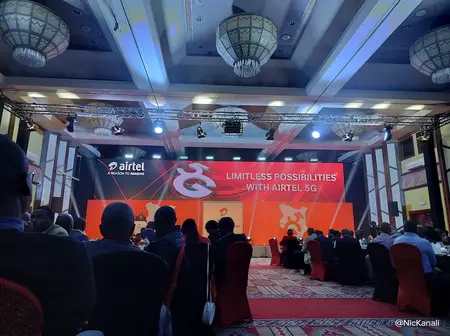
Airtel Kenya has paid $65 million (approximately Sh8.4 billion) for 100 MHz of spectrum in the 3500 MHz band, securing rights to use the frequency for 25 years as it strengthens its position in Kenya’s mobile broadband market.
Airtel Africa said its Kenyan subsidiary acquired the spectrum following approval from the Communications Authority of Kenya (CA), subject to standard conditions. The allocation gives Airtel additional capacity to expand its fifth-generation (5G) network, which competes with Safaricom’s services in a market where demand for high-speed connectivity is growing.
The 3500 MHz frequency range, commonly known as the C-band, is one of the principal bands used for commercial 5G deployments globally. According to the Global System for Mobile Communications Association (GSMA), the band has become a major platform for launching 5G services because of its capacity to support high-speed mobile broadband.
The 25-year spectrum allocation gives Airtel a long-term foundation for expanding its mobile network and serving customers who require higher data speeds and greater network capacity. The company will be able to use the additional frequency resources to support data-intensive applications, mobile broadband and other services running on its 5G infrastructure.
Spectrum is a critical resource for telecommunications operators because it determines the radio-frequency capacity available to transmit data between network infrastructure and connected devices. The 3.5 GHz band offers a balance between network capacity and coverage, making it particularly useful in urban and other locations with high data traffic.
Airtel’s acquisition comes after the company secured a separate 25-year operating licence in August 2026. Airtel Kenya managing director Djibril Tobe announced that the company had obtained the renewed authorisation after paying an undisclosed fee, ending a prolonged dispute over its operating permits.
The company’s original operating licence expired in 2015, after which Airtel relied on permits inherited from YuMobile, which it acquired in 2014. An out-of-court settlement with the CA in 2022 paved the way for renewal arrangements, followed by a temporary two-year authorisation running to January 2027 before the new long-term licence was announced.
The two 25-year authorisations give Airtel a longer planning horizon for its telecommunications operations and access to additional network capacity. The spectrum allocation covers the specific 3500 MHz frequency rights, while the operating licence provides the broader regulatory authorisation for its business.
The investment comes as Kenya’s 5G market records strong subscriber growth, with Communications Authority statistics showing that subscriptions increased to 2.1 million in June 2026 from 1.2 million a year earlier. This represents a 75 percent annual increase as operators expand their networks and more customers adopt compatible devices.
Data consumption figures also illustrate the commercial importance of the technology. According to figures reported by TechTrendsKE from the CA’s June 2026 statistics, average monthly data consumption among 5G subscriptions reached 64.4GB in the quarter ended June, compared with 15.8GB for 4G and 8.3GB for 3G.
The difference points to the heavier network demands associated with 5G users, who consume substantially more data than subscribers on older mobile technologies. For operators such as Airtel, additional spectrum capacity can help accommodate this traffic while supporting the delivery of high-speed services.
Kenya’s wider mobile market provides room for further growth. The CA recorded 52.26 million smartphone connections and 54.93 million mobile broadband subscriptions in June 2026, reflecting the substantial base of connected consumers and businesses that operators can target with broadband services.
Safaricom launched commercial 5G services in October 2022 following trials that began in March 2021 in Nairobi, Mombasa, Kisumu and other urban centres with high data traffic. Airtel Kenya entered the market in 2023, initially recording more 5G sites than its rival before Safaricom expanded its network to 803 sites in March 2024, against Airtel’s 690.
The two operators have since competed to expand their infrastructure and attract customers seeking faster mobile connectivity. Safaricom held 64.4 percent of Kenya’s mobile broadband market in June 2026, while its overall mobile subscription market share stood at 69.8 percent, according to CA figures reported by TechTrendsKE.
Airtel’s spectrum investment forms part of a wider strategy to serve Kenya’s home and business broadband market through different connectivity technologies. In April 2026, the company introduced Airtel Xstream Fibre packages for residential and business customers, with monthly prices starting at Sh1,999 for advertised speeds of 15 Mbps and reaching Sh4,999 for 100 Mbps.
The retail fibre service operates through Airtel Networks Kenya Limited, which is separate from Airtel Kenya Telesonic Limited, the company’s wholesale fibre subsidiary. Telesonic was established to sell fibre capacity and connectivity services to other operators, internet service providers, enterprises and institutions.
Airtel Kenya Telesonic recorded no revenue in 2024 and 2025, while its net loss increased to Sh16.1 million in 2025, according to its financial records reported by Business Daily. The subsidiary subsequently began voluntary winding-up procedures, with the company citing strategic, operational and commercial considerations.
The closure does not affect Airtel’s separate retail fibre operation. Airtel Networks Kenya Limited continues to operate the consumer and enterprise broadband business, giving the company a presence in the fixed internet market alongside its mobile network services.
Airtel Africa has also identified fixed wireless access (FWA) as part of its home broadband strategy, using 5G spectrum to deliver internet connections through compatible wireless routers. The approach allows operators to serve households and businesses through mobile network infrastructure, complementing fibre connections in locations where fixed-line deployment is less practical.
The wider infrastructure programme also includes Airtel Africa’s investment in terrestrial fibre and international connectivity. The group reported adding more than 3,250 network sites and 3,200 kilometres of fibre over the preceding year, while its Nxtra data centre project in Kenya is targeting completion in July 2027.
Airtel’s spectrum acquisition comes as Kenya’s telecommunications industry faces a wider debate over the cost of accessing radio frequencies. In October 2026, Safaricom secured permission from the High Court to participate in a legal dispute involving Jamii Telecommunications and the CA’s revised spectrum pricing framework.
The dispute centres on changes introduced in 2025 that replaced a previous spectrum fee structure based on the number of network transmitters with charges calculated according to the amount of spectrum allocated to an operator. The regulator said the revised framework accounts for inflation, technological developments, efficient spectrum utilisation and investment requirements.
Jamii Telecommunications challenged the revised charges, arguing that the framework could favour larger operators and weaken competition. The Communications and Multimedia Appeals Tribunal suspended implementation of the revised fees in April 2025 pending determination of the company’s application, while Safaricom sought to participate because the outcome could affect its regulatory obligations, financial expenditure and investment planning.
The dispute highlights the financial importance of spectrum allocation as operators seek additional capacity to support mobile broadband growth. Airtel’s purchase of 100 MHz for $65 million represents a long-term commitment to Kenya’s 5G market as it competes with Safaricom for mobile and fixed broadband customers.
Safaricom has also secured a new 25-year operating licence, although it did not disclose the amount paid for the renewal. Its financial statements for the year ended March 2026 showed Sh16.3 billion in licence expenditure in Kenya during the year, reflecting the scale of regulatory costs associated with operating telecommunications infrastructure.
Airtel’s spectrum acquisition adds another substantial investment to the company’s Kenyan operations, giving it access to additional 5G capacity as mobile data consumption grows and competition for broadband customers continues.
Go to TECHTRENDSKE.co.ke for more tech and business news from the African continent and across the world.
Follow us on WhatsApp, Telegram, Twitter, and Facebook, or subscribe to our weekly newsletter to ensure you don’t miss out on any future updates. Send tips to info@techtrendsmedia.co.ke
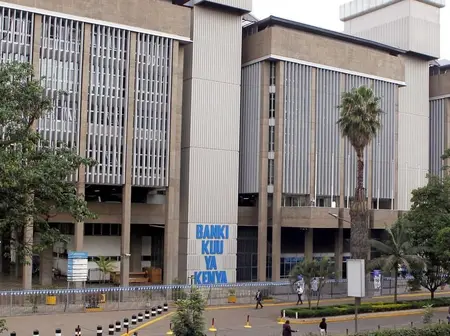
Central Bank of Kenya (CBK) Governor Kamau Thugge has called on the National Treasury to reduce government borrowing from the domestic market, arguing that monetary policy alone cannot deliver lower lending rates without support from fiscal policy.
Appearing before the National Assembly’s Finance and Planning Committee, Thugge said the government needed to reduce its fiscal deficit and domestic borrowing if Kenya was to achieve more affordable credit. He told lawmakers that monetary and fiscal policy must work together, warning that the two cannot operate in opposing directions while the Central Bank pursues lower interest rates.
The Governor’s remarks put the government’s financing requirements at the centre of the debate over borrowing costs. CBK can adjust its monetary policy instruments to influence interest rates, but government demand for financing also affects conditions in the domestic credit market, where banks and other investors allocate funds between public and private borrowers.
Thugge told the committee that monetary policy was insufficient on its own to achieve lower lending rates, adding that fiscal policy needed to support the Central Bank’s efforts.
“So we can’t have a situation where they are not working together,” he said, linking lower borrowing costs to a smaller fiscal deficit and reduced government borrowing.
The Governor argued that reducing the government’s financing requirements would help create conditions for lower interest rates and improve the affordability of loans. His position reflects the relationship between public borrowing and private-sector financing, since the government competes with businesses and households for funds available in the domestic market.
When banks and investors allocate a substantial share of their resources to government securities, less funding may be available for private-sector lending. Government borrowing can also influence the returns demanded by investors across the domestic market, affecting the wider cost of financing.
The Governor’s argument is that monetary easing needs to be accompanied by a reduction in the government’s demand for domestic financing if borrowers are to benefit from lower rates.
Thugge used the Treasury’s borrowing requirements to illustrate how government financing plans have changed during budget implementation.
He told lawmakers that the domestic borrowing requirement for the 2025/26 financial year initially stood at KSh634.8 billion before being increased to KSh994.8 billion through a supplementary budget.
The Governor also presented a domestic borrowing requirement of KSh987 billion in the figures he discussed, saying CBK hoped the amount would not change significantly through further supplementary budgets.
“We hope this 987 does not change very much in the event that there are supplementary budgets that will be coming,” Thugge told the committee.
His comments highlighted the effect of supplementary budgets on the government’s financing requirements, particularly when additional expenditure leads to higher domestic borrowing.
The Governor also reviewed CBK’s performance in meeting the borrowing targets assigned to it by the Treasury. He said the Central Bank had achieved 100% of its assigned targets for several years, with some exceptions where supplementary budget requests were submitted close to the end of the financial year.
Thugge said CBK had again funded 100% of the target in the previous financial year and expected to meet its allocation in the current year.
The Treasury’s 2027/28 budget projections provide further context to the Governor’s argument. The projected fiscal deficit stands at KSh1.353 trillion, equivalent to 5.9% of gross domestic product, while net domestic borrowing is projected at KSh929.1 billion.
These financing requirements make government borrowing an important consideration in the domestic interest rate environment. The amount the Treasury raises locally affects the pool of funds available to other borrowers and the returns investors expect from lending to the government.
For commercial banks, government securities provide an alternative to lending to households and businesses. Their allocation decisions are influenced by the relative returns, risks and capital requirements associated with different assets.
Thugge’s position is that reducing the government’s financing needs would help ease pressure on domestic funding conditions and support the transmission of monetary policy into lower lending rates.
The Governor’s comments build on CBK’s broader argument that lower interest rates depend on more than changes to the Central Bank Rate.
Monetary policy influences the cost of money in the economy, while fiscal policy determines how much the government needs to borrow to finance its expenditure. When government borrowing remains high, the effect of monetary easing on private-sector financing can be limited.
Thugge therefore wants the Treasury to reduce its fiscal deficit and domestic borrowing as the Central Bank works to improve credit affordability.
His intervention also places responsibility for lower borrowing costs across government institutions. CBK can influence monetary conditions, but the Treasury’s borrowing decisions shape the environment in which banks price and allocate credit.
Go to TECHTRENDSKE.co.ke for more tech and business news from the African continent and across the world.
Follow us on WhatsApp, Telegram, Twitter, and Facebook, or subscribe to our weekly newsletter to ensure you don’t miss out on any future updates. Send tips to info@techtrendsmedia.co.ke
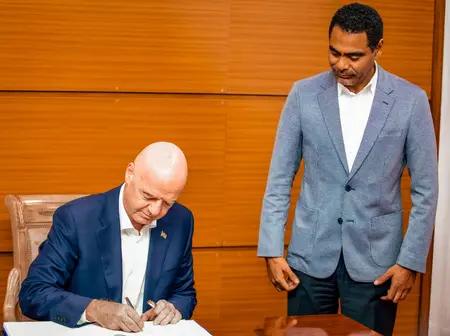
FIFA has raised concerns over the increasing number of football-related disputes involving the Football Kenya Federation (FKF) being referred to ordinary courts in Kenya, warning that the practice could attract disciplinary measures.In a letter dated October 5, 2026, addressed to FKF Acting General Secretary Dennis Gicheru, FIFA reminded the federation of its obligations under its statutes, which require member associations to manage their affairs independently and without undue interference from third parties.
The Central Bank of Kenya (CBK) is continuing to engage commercial banks over a KSh5 billion capital target for December 2026, with Governor Kamau Thugge saying one or two lenders could struggle to meet the requirement despite changes to the statutory timetable under the Finance Act 2026.
Appearing before the National Assembly’s Finance and Planning Committee this week, Thugge said the regulator had asked a small number of banks to explain how they intended to reach the KSh5 billion threshold. He also disclosed that CBK had written to the National Treasury explaining why it believes commercial banks need stronger capital bases.
The comments highlight differences in emphasis between the banking regulator and the Treasury over the pace of capital increases. The Finance Act 2026 changed the timetable for banks to reach KSh10 billion in minimum core capital, while CBK continues to press institutions over the earlier KSh5 billion target.
Thugge told lawmakers that CBK was engaging a few banks over their plans to meet the KSh5 billion capital target for the end of 2026.
He said the regulator wanted the institutions to explain how they intended to reach the threshold, adding that one or two could have difficulty meeting it.
“Only a few, maybe one or two, might struggle,” the Governor said, describing the engagement as part of CBK’s efforts to understand how the affected institutions planned to strengthen their capital positions.
The Governor did not frame the discussions as a general difficulty across the banking sector. Instead, he pointed to a small number of lenders whose capital plans required closer engagement with the regulator.
The KSh5 billion figure formed part of the phased increase in minimum core capital introduced through the Business Laws (Amendment) Act 2024, which raised the requirement from KSh1 billion towards KSh10 billion by December 2029.
The original framework introduced annual capital milestones intended to move commercial banks towards the KSh10 billion minimum. The milestones included a KSh3 billion threshold for December 2025 and KSh5 billion for December 2026, followed by further increases towards the final KSh10 billion requirement.
The Finance Act 2026 changed that implementation framework by removing the annual milestones and extending the deadline for banks to reach KSh10 billion in minimum core capital to December 31, 2032.
The revised timetable followed concerns about the pace of capital accumulation and its possible effect on credit access, particularly for smaller businesses and specialised lenders.
In a parliamentary presentation in June 2026, National Treasury Cabinet Secretary John Mbadi said the government supported the strategic objective of stronger bank capitalisation but wanted a transition that would minimise disruption to lending and financial services delivery.
The Treasury’s position emphasised the need to protect access to credit for micro, small and medium-sized enterprises and institutions serving niche markets while banks worked towards the higher capital requirement.
Thugge’s latest comments show that CBK continues to regard the earlier KSh5 billion threshold as an important target in its engagement with banks.
The Governor told lawmakers that stronger bank capital was necessary to help financial institutions withstand risks affecting the banking sector, including climate-related shocks and cybersecurity threats.
He said banks needed sufficient financial resources to invest in technology that could protect their operations against cyberattacks and other emerging threats.
Thugge argued that the financial system needed strong institutions capable of absorbing shocks without allowing difficulties at individual banks to spread across the wider sector.
He also linked stronger capitalisation to banks’ ability to finance larger projects, explaining that institutions with stronger capital bases would have greater capacity to support businesses and investments requiring substantial funding.
The argument places capital requirements within CBK’s broader financial stability responsibilities. Capital provides banks with a financial buffer against losses and supports their ability to expand lending while managing the risks associated with their assets.
Thugge disclosed that CBK had written to the National Treasury explaining why the regulator believes banks need to increase their capital bases.
The Governor said the Central Bank had engaged Treasury on the issue because it considers stronger capitalisation necessary in an environment where banks face cybersecurity risks, climate-related disruptions and demands for larger financing commitments.
The correspondence highlights the continuing engagement between the two institutions over how quickly banks should build their capital positions.
CBK’s wider capital framework also includes additional prudential measures. The regulator has proposed capital conservation requirements that would influence how much banks can distribute to shareholders, alongside a framework for identifying domestic systemically important banks and applying additional supervisory requirements to institutions whose failure could threaten financial stability.
These measures form part of the Central Bank’s broader approach to strengthening the resilience of Kenya’s banking sector as institutions adjust to the revised minimum capital timetable.
Go to TECHTRENDSKE.co.ke for more tech and business news from the African continent and across the world.
Follow us on WhatsApp, Telegram, Twitter, and Facebook, or subscribe to our weekly newsletter to ensure you don’t miss out on any future updates. Send tips to info@techtrendsmedia.co.ke
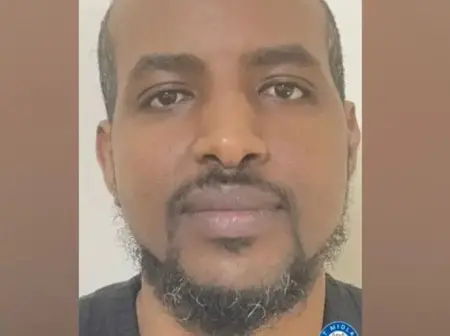
Abdillahi Farid Ali, 43, was fatally stabbed in Small Heath on WednesdayBirmingham, England (HOL) — A 46-year-old man has been charged with murder following the fatal stabbing of Abdillahi Farid Ali in Birmingham's Small Heath neighbourhood, as police increase their presence in the area and appeal for witnesses to assist the investigation.