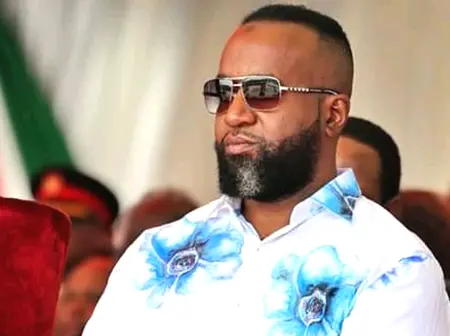
Cabinet Secretary for Mining Hassan Joho has issued strict regulations governing fireworks displays ahead of the three-day Diwali celebrations, scheduled to run from Friday, November 6, to Sunday, November 8, 2026.
In a directive issued on Tuesday, November 3, the Ministry limited fireworks displays to the hours between 7:00 PM and 11:00 PM across the three festival days, emphasizing that all activities must strictly adhere to national safety standards.
“The Hindu community is requested to ensure that fireworks displays are carried out within the requirements of the Explosives Act Cap 115 Laws of Kenya. Fireworks displays should be carried out in an orderly manner so that the general public are not inconvenienced,” CS Joho announced.
Organizers wishing to host fireworks displays must obtain official permits from the State Department for Mining at Madini House in Nairobi or through regional county mining offices prior to their events.
Under the new guidelines, displays are strictly confined to authorized venues, including:
Registered clubs, hotels, and sports grounds
Hindu temples
School compounds
Any alternative venue will require explicit written clearance from an Inspector of Explosives.
To prevent accidents in populated centers, the Ministry set technical limits and operational rules:
Calibre Restrictions: Aerial display shells are limited to a maximum of four-inch calibre in urban and built-up areas, unless granted a special exemption by an Inspector of Explosives.
Personnel Standard: Only qualified, experienced, and sober individuals will be permitted to ignite aerial shells and high-altitude fireworks.
Sales Restrictions: Fireworks dealers are strictly prohibited from selling fireworks to children under the age of 13—an offense under the Explosives Act that carries severe financial penalties.
Permit Verification: Dealers may only sell specialized aerial fireworks (such as shells, rockets, Roman candles, and cakes) to buyers presenting valid permits signed by an Inspector of Explosives.
Diwali, known as the Festival of Lights, marks a central period on the Hindu calendar symbolizing the victory of light over darkness and good over evil. The holiday is traditionally celebrated through prayers, family gatherings, oil lamps (diyas), exchanging gifts, and fireworks.
In Kenya, Diwali is recognized under the Public Holidays Act as a specific holiday for members of the Hindu faith rather than a national public holiday.
Although President William Ruto pledged in 2024 to formally declare Diwali a nationwide public holiday observed on November 1 annually, the proposal has not been enacted into law. As of November 2026, the celebration remains a designated public holiday exclusively for the Hindu community.
East African Legislative Assembly (EALA) MP Winnie Odinga has sent shockwaves through Kenya’s political landscape after teasing a major upcoming announcement, further fueling intense speculation surrounding her strategy for the 2027 General Election.
In a short video shared across her social media platforms on Monday, November 2, 2026, the lawmaker dropped a subtle hint about her political future, asking her audience a direct question: “Are you ready?”
While Winnie stopped short of confirming which political party or coalition ticket she will run on, the strategic timing of the teaser has sparked widespread conversation among analysts and supporters alike about how she plans to navigate the post-Raila political era.
The video teaser comes shortly after Winnie engaged her fanbase directly through an interactive Instagram poll, asking followers to weigh in on her political direction and party alignment ahead of 2027.
The results of the poll delivered a clear signal, with the “Linda Mwananchi” option securing a commanding 72% of the total votes. The strong showing has sparked questions over whether she might align with the newly launched political movement or forge an independent path.
Winnie’s latest move comes just weeks after she officially declared her candidacy for the Nairobi County Senate seat in 2027. She first made her intentions public during an October 2026 memorial service honoring her late father, former Prime Minister and long-time opposition leader Raila Odinga.
By entering the Nairobi senatorial race, Winnie steps up to fill the void expected to be left by incumbent Senator Edwin Sifuna, who has signaled intentions to pursue higher office in the upcoming election cycle. As political realignments continue to take shape across the capital, Winnie’s upcoming announcement is expected to outline her formal campaign platform and organizational structure.
Kenyan content creator and political aspirant Wilson Muirani Gathoni, popularly known as Jaymo Ule Msee, has apologised to Gen Z over his past political remarks while revealing that his political choices and financial mistakes have left him struggling financially.
In a lengthy statement shared with his followers, Jaymo admitted that he had lost direction while pursuing political ambitions, drifting away from the creative work that initially earned him popularity.
He acknowledged that he had used his platform to make political remarks that hurt some of the people who supported his content, particularly young Kenyans who had followed his work.
“I lost my way. Somewhere between the opinions, arguments, ego and political hallucinations, I lost touch with the creator you welcomed into your lives,” he said.
He specifically apologised to Gen Z over remarks he made on June 25, 2025, admitting that he had failed to appreciate the concerns and pain expressed by young people.
“To Gen Z: I sincerely apologise for my insensitive remarks on 25 June 2025. I failed to give your pain and concerns the respect they deserved. I should have listened. I was wrong.”
Jaymo also extended his apology to other followers who felt offended by his political videos, taking responsibility for his words and decisions.
“To everyone I hurt through my political videos: I am sorry. You deserved more care from me. I own my words and choices. Forgiveness is yours to give in your own time; changing my behaviour is my responsibility,” he added.
Beyond addressing his political past, Jaymo disclosed that he was going through a difficult financial period, which he partly attributed to his political decisions and personal financial mistakes.
“Today, I am super broke. My political choices and financial mistakes have cost me deeply. I cannot blame politics for everything when I made decisions too,” he revealed.
The content creator described the emotional difficulty of struggling financially while still being recognised by members of the public.
“There is a particular silence that comes when people recognise your face, but you are privately wondering how to put your life back together.
“I have been living in that silence,” he said.
Jaymo said he was now seeking financial support as he attempts to rebuild his life and return to content creation.
He appealed to well-wishers to contribute whatever they could comfortably afford towards his financial recovery and creative comeback.
He shared his M-Pesa details as follows:
However, he emphasised that financial contributions were not the only way people could support him, adding that followers could also help by watching and sharing his content and encouraging his comeback.
As part of his return to entertainment, Jaymo announced a new project titled Inside the Life of a Prodigal Creator, a 20-episode series exploring his personal experiences and lessons from life away from the camera.
The series is scheduled to premiere on Monday, November 9, 2026.
“Expect drama, ridiculous situations, uncomfortable truths and the humour we find while trying to survive ourselves. Stories about what happens after the smile, after the applause, after you press ‘stop recording’,” he announced.
He said the experiences had taught him important lessons about money, ego, influence and losing sight of one’s purpose, which he hoped to share with young people through the project.
Addressing critics who may still be unconvinced by his apology, Jaymo acknowledged that words alone would not restore the trust he had lost.
“To those who criticised me: I hear you. I understand that this appeal alone cannot restore your trust. Let me earn it through what I do next,” he said.
He concluded by asking his supporters to give him another chance as he attempts to rebuild his creative career.
M-Pesa has been named Kenya’s strongest brand for 2026, leading a consumer-voted ranking in which its parent, Safaricom, took second place. The results, released on 4 November by Superbrands East Africa from research run by Kantar, also suggest that Kenyan shoppers are rewarding trust and consistency more than discounts.
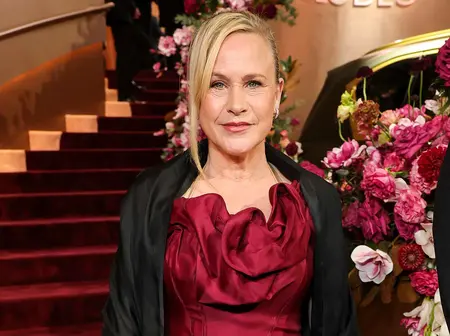
Patricia Arquette is an American actress and director with an estimated net worth of $24 million. She has built her fortune through a career spanning more than three decades in film and television. Her earnings come from acting roles, television projects, directing, and producing.
Nelly Furtado is a Canadian singer, songwriter and actress with an estimated net worth of $40 million. She built her fortune through music sales, songwriting, international tours, collaborations and other entertainment projects. Her career took off in the early 2000s with the release of her debut album, Whoa, Nelly!, which introduced her distinctive sound to audiences around the world.
Kenya’s 2027/28 budget is projected to reach Sh5.4 trillion, with recurrent expenditure exceeding Sh4 trillion and a fiscal deficit of Sh1.35 trillion, highlighting the pressure on government finances as revenue collection struggles to keep pace with spending commitments.
The National Treasury’s October 2026 Draft Budget Policy Statement projects total expenditure and net lending of approximately Sh5.416 trillion, against total revenue of Sh4.004 trillion. Recurrent spending is estimated at Sh4.021 trillion, leaving the government with a substantial financing requirement as it prepares for the financial year beginning July 2027.
The projections point to a difficult balancing exercise for Treasury, which must meet statutory obligations, fund public services and maintain infrastructure investment while managing borrowing requirements ahead of the August 2027 general election.
Churchill Ogutu, Head of Research at Capital Investment Bank, said the expenditure estimates had risen following adjustments made during the budget preparation process, including additional requirements from ministries, departments and agencies, as well as allocations for Parliament and the Judiciary.
The proposed expenditure represents a substantial increase from the Sh5.323 trillion projected in the earlier Draft Budget Review and Outlook Paper released in August 2026. Treasury has also raised its revenue expectations, with total collections projected at approximately Sh4 trillion.
Ogutu said expenditure estimates had increased by between Sh400 billion and Sh600 billion compared with the current financial year’s initial estimates, reflecting the additional requirements identified during consultations with government institutions.
He pointed to the budget preparation process, particularly the transition from the initial Treasury allocations to the requirements submitted by ministries, departments and agencies during the macro-sector working group consultations.
According to Ogutu, there was a variance of approximately Sh1.9 trillion between the requirements presented by government institutions and the allocations initially proposed by Treasury. Part of those additional demands was subsequently accommodated in the Draft Budget Policy Statement.
He also noted that the allocations for Parliament and the Judiciary were still preliminary, with further estimates expected from the Parliamentary Service Commission and the Judiciary Service Commission.
Ogutu described the Sh5.4 trillion expenditure projection as relatively conservative given the outstanding institutional requirements, even though the proposed spending level is already elevated.
Recurrent expenditure is one of the most important features of the proposed budget, with Treasury projecting Sh4.021 trillion in spending on government operations, salaries, debt-related obligations and other recurring commitments.
For the first time, recurrent expenditure has crossed the Sh4 trillion mark, according to Ogutu, who attributed the increase to several obligations that are difficult for the government to reduce.
He identified pension payments under the Consolidated Fund Services, the public-sector wage bill and collective bargaining agreements as major sources of pressure. Pension obligations are particularly difficult to adjust because they represent statutory commitments, while public-sector salary requirements continue to grow as government employees receive revised compensation.
Collective bargaining agreements across the public service could add further pressure to the wage bill as the government implements negotiated salary arrangements.
Ogutu also pointed to growth in discretionary expenditure, explaining that ministries and agencies have continued presenting additional funding requirements beyond the initial allocations made by Treasury.
The relationship between recurrent spending and revenue is particularly important. With projected revenue of approximately Sh4 trillion against recurrent expenditure of Sh4.021 trillion, the government is budgeting to spend slightly more on recurring obligations than it expects to collect through total revenue.
This leaves borrowing and other financing arrangements central to meeting development expenditure and the government’s wider budgetary commitments.
The proposed development expenditure allocation stands at approximately Sh915.8 billion, considerably smaller than the recurrent spending allocation. The composition of expenditure also reflects the government’s plans to finance major infrastructure projects through alternative arrangements.
The reduction in conventional development expenditure is partly connected to the government’s plans to move major infrastructure projects outside the traditional national budget through the National Infrastructure Fund and public-private partnerships.
Ogutu said the proposed fund could explain the significant reduction in development spending under the FY2027/28 framework, as large infrastructure projects are moved into financing arrangements outside the Exchequer.
The National Infrastructure Fund is part of a broader financing strategy associated with James Mworia, which envisages using investment capital to support commercially viable infrastructure projects while attracting participation from private investors and financial institutions.
The proposed model targets approximately Sh400 billion in annual infrastructure spending through the fund, with the intention of reducing the amount that must be financed directly through conventional budget allocations.
Public-private partnerships also form part of the government’s infrastructure financing approach, allowing private capital to participate in projects across sectors such as transport, energy, water and digital infrastructure.
However, the implications extend beyond the development expenditure figures presented in the annual budget. The financing arrangements will influence how infrastructure investment is structured, how project costs are recovered and how government obligations are distributed across different financing mechanisms.
For Treasury, the approach offers another channel for funding infrastructure while managing competing demands on the national budget.
The National Treasury projects a fiscal deficit of approximately Sh1.353 trillion for FY2027/28, equivalent to 5.9% of gross domestic product.
The government plans to finance the deficit through a combination of domestic and external borrowing, with net domestic borrowing projected at approximately Sh929.1 billion and net external borrowing at Sh423.8 billion.
Domestic financing would therefore account for the larger share of the borrowing requirement, maintaining the government’s dependence on the local debt market.
Ogutu said the financing composition had changed between the earlier Draft Budget Review and Outlook Paper and the Draft Budget Policy Statement, although domestic borrowing remained the dominant source.
He attributed the adjustment towards external financing partly to the identification of additional funding sources and the government’s efforts to diversify its borrowing options.
The Treasury is exploring several external commercial financing channels, including Eurobond issuance, liability management operations, Samurai bonds, Panda bonds and currency swaps.
Ogutu said the government appeared ambitious in its approach to external financing, with the success of the strategy depending heavily on timing and conditions in international capital markets.
He identified international interest rates and the availability of financing across different markets as important considerations when determining whether Kenya should pursue dollar-denominated borrowing or explore alternative currencies.
The government’s ability to access international markets will also influence how much pressure is placed on domestic investors to finance the budget deficit.
Kenya’s projected domestic borrowing requirement comes as the Central Bank of Kenya continues efforts to lower lending rates and improve access to credit for businesses and households.
CBK Governor Kamau Thugge has warned that heavy government borrowing from the domestic market could undermine the transmission of monetary policy, particularly when banks allocate significant portions of their resources to government securities.
The proposed Sh929.1 billion in net domestic borrowing for FY2027/28 therefore has implications beyond the government’s financing needs.
Commercial banks remain important buyers of Treasury bills and bonds, while also providing loans to businesses and consumers. Their exposure to government securities influences how they allocate capital across different investment opportunities.
Moody’s has also highlighted Kenyan banks’ exposure to sovereign debt, reporting that their government securities holdings stood at 1.7 times their equity as of December 2025.
Ogutu discussed the strong liquidity conditions supporting government borrowing, particularly the subscription levels recorded in Treasury bond switch auctions.
He attributed the improved demand partly to investors’ willingness to move from short-term securities into longer-maturity bonds offering higher coupons. The reopening of existing infrastructure bonds has also attracted investors seeking opportunities to lock in longer-term returns.
Ogutu said the government had front-loaded part of its domestic borrowing programme, with monthly issuance requirements averaging approximately Sh110 billion between August and January, compared with an average of about Sh60 billion during other auction periods.
He attributed the strong subscription of infrastructure bond reopenings partly to the availability of liquidity in the market and investors’ interest in the securities.
However, the government’s borrowing needs will continue to compete with private-sector financing requirements, making the balance between domestic debt issuance and commercial lending an important consideration for the economy.
The size of the proposed deficit also raises questions about Kenya’s medium-term fiscal consolidation plans and its engagement with the International Monetary Fund.
Ogutu said he did not consider a conventional IMF lending programme feasible before the August 2027 elections, arguing that the remaining period would make meaningful negotiations and implementation difficult.
He noted that IMF programmes typically run for three to four years, making the election calendar an important consideration in determining the timing of any new arrangement.
Kenya’s foreign exchange reserves have also improved compared with the period surrounding previous IMF programmes, while the government has built experience accessing international capital markets.
Ogutu nevertheless pointed to the possibility of a precautionary standby arrangement, which could help reinforce investor confidence without requiring the same type of financing associated with a conventional lending programme.
He said such an arrangement could provide an external anchor for the government’s fiscal consolidation commitments, particularly as investors assess the country’s medium-term financing requirements.
The anticipated Article IV consultations with the IMF are also important for evaluating Kenya’s debt sustainability.
Ogutu said the assessment would provide an opportunity to examine the country’s debt-carrying capacity and the implications of the IMF’s evolving debt sustainability analysis framework for low-income and frontier economies.
He highlighted the potential consideration of remittance inflows and improvements in fiscal transparency as part of the discussions.
Kenya is currently assessed within the medium debt-carrying capacity category, according to Ogutu, who said the authorities could make a case for stronger debt-carrying capacity based on developments in remittances and other economic indicators.
He also identified securitisation as an important issue in discussions about fiscal transparency and the assessment of government obligations.
The government’s ability to reduce the deficit will depend partly on whether revenue collections can meet the ambitious targets underpinning the medium-term fiscal framework.
Ogutu said Kenya’s Medium-Term Revenue Strategy had targeted revenue equivalent to 20% of GDP by June 2026 and 25% by June 2030, while the estimates he discussed placed the current position at approximately 14.3% of GDP.
He also raised concerns about the revenue growth assumptions built into the current financial year’s budget, noting that the government was targeting a significant increase in tax collections relative to nominal GDP growth.
According to Ogutu, ordinary revenue collections had grown by approximately 13% to 14% year-on-year during the first three months of the current financial year. However, the government was targeting revenue growth of approximately 20% for the full year.
This creates a difficult position for subsequent budget projections because a revenue shortfall in the current financial year would affect the base from which Treasury calculates its future collection targets.
The Kenya Revenue Authority’s digital tax administration initiatives, including electronic invoicing through eTIMS, integration with government payment systems and efforts to capture more transactions through M-Pesa merchant channels, form part of the wider revenue mobilisation strategy.
The government’s tax policy decisions will also influence how much additional revenue can be collected without placing excessive pressure on households and businesses.
Ogutu discussed the anticipated income tax amendments, including proposals to remove PAYE obligations for workers earning below Sh30,000 and eliminate personal relief for the affected category.
He referred to approximately 403,000 workers earning below that threshold, while also discussing the implications of reducing the VAT rate on petroleum products from 16% to 8%.
According to Ogutu, the Treasury’s Draft Budget Policy Statement put tax expenditure at approximately Sh260 billion, equivalent to 1.4% of GDP, for calendar year 2025.
He said the proposed tax relief measures would need to be considered alongside the government’s efforts to reduce tax expenditure and strengthen revenue mobilisation.
The next round of tax amendments is therefore relevant to the FY2027/28 budget because changes to personal income tax, petroleum VAT and other tax measures will influence the revenue available to finance public expenditure.
With the budget process accelerated ahead of the August 2027 general election, Treasury faces a compressed timetable for finalising expenditure estimates, tax proposals and parliamentary approvals.
The resulting fiscal framework will determine how the government balances recurrent obligations, infrastructure investment and debt financing while pursuing its medium-term revenue and deficit reduction targets.
Go to TECHTRENDSKE.co.ke for more tech and business news from the African continent and across the world.
Follow us on WhatsApp, Telegram, Twitter, and Facebook, or subscribe to our weekly newsletter to ensure you don’t miss out on any future updates. Send tips to info@techtrendsmedia.co.ke
Jason Mraz is an American singer, songwriter and guitarist with an estimated net worth of $5 million. He built his fortune through album sales, hit singles, songwriting royalties, live performances and other entertainment projects. He rose to national prominence in the early 2000s before achieving international success with songs such as “I’m Yours,” “I Won’t Give Up” and “The Remedy (I Won’t Worry).”
The World Bank has warned that corruption and collusion are worsening Kenya’s public finances, estimating that the practices widen the country’s fiscal deficit by approximately two percentage points of Gross Domestic Product (GDP).
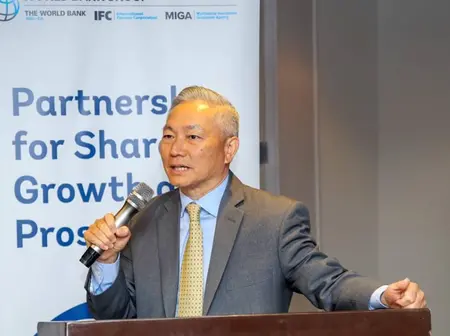
Qimiao Fan, the World Bank Division Director for Kenya, Rwanda, Somalia and Uganda, said weak governance was among the fundamental constraints holding back Kenya’s economic growth and job creation.
Speaking on Wednesday, November 4, 2026, during the launch of the 34th edition of the Kenya Economic Update, Fan said corruption was increasing the cost of government operations and limiting resources available for development.
“With corruption and collusion in this report, we estimate that corruption and collusion actually widens fiscal deficit by about two percentage points of GDP,” Fan said.
The report, which focuses on governance constraints to economic growth and job creation, identifies corruption as a major economic challenge, with consequences extending beyond public finances.
Fan explained that weak governance also raises the cost of essential services, including electricity and logistics, making it more expensive for businesses and households to operate.
According to the World Bank official, these costs are estimated to be more than double those recorded in countries in other parts of the world.
He further noted that corruption was affecting businesses, particularly medium-sized firms with the potential to expand and employ more people.
” In the surveys of companies, 39 per cent of firms identifying corruption as a major constraint,” Fan said.
The warning comes as Kenya continues to grapple with a widening budget deficit, high public debt and rising interest payments.
Fan said Kenya’s fiscal deficit reached 6.8 per cent of GDP in the last financial year, against a target of 4.7 per cent, largely because of higher government spending and lower-than-expected revenue collection.
He attributed some of the additional expenditure to supplementary budgets, which increased pressure on public finances.
Public debt had also reached approximately 70 per cent of GDP by the middle of 2026, with interest payments consuming about one-third of government revenue.
This leaves the government with fewer resources to finance essential public services and development priorities.
Beyond the fiscal challenges, Fan warned that the quality of employment remained a major concern despite growth in the number of jobs.
He said nearly 84 per cent of jobs in Kenya were informal, often characterised by lower wages, limited worker protection and low productivity.
The World Bank director noted that close to one million young people enter Kenya’s labour market every year, yet the economy creates an average of only 120,000 to 150,000 formal-sector jobs annually.
He argued that Kenya needed to focus not only on managing fiscal pressures but also on creating more productive and better-paying employment opportunities.
Fan said addressing governance weaknesses could deliver substantial economic benefits, including higher GDP, more jobs and a reduction in public debt.
According to the report’s modelling, moderate governance reforms could raise Kenya’s GDP by nearly 9 per cent relative to the current economic path, while more ambitious reforms could increase it by more than 20 per cent compared with a scenario without reforms.
Ambitious reforms could also support the creation of approximately 7.7 million additional and better-quality jobs while helping to reduce public debt as a share of GDP by 2035.
Fan said the potential benefits of improving governance extended beyond strengthening public institutions, directly affecting economic growth, employment, government finances and household living standards.
A police officer attached to an elite operations group died after sustaining a gunshot wound while returning to a security camp in Lamu East Sub-County, Lamu County.The officer, identified as Police Constable Frederick Okelele Shikuku, was shot in the groin area, with the bullet passing through his upper right thigh.