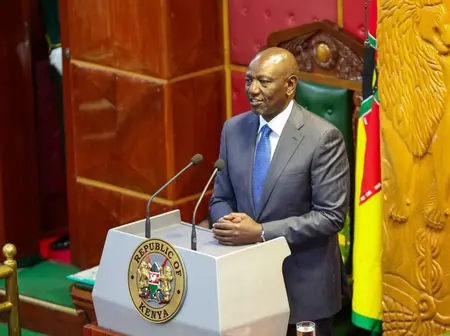
The constitutionally mandated address arrives days after the World Bank released its November 2026 Kenya Economic Update, which identified corruption and collusion as key binding constraints limiting national growth.
According to the lender, graft widens Kenya’s fiscal deficit by approximately two percentage points of gross domestic product annually, inflating public project costs, increasing borrowing needs, and starving essential public services of vital funds.
Simultaneously, the Okoa Uchumi coalition—comprising over 50 civil society organizations—has demanded the immediate publication of the final International Monetary Fund (IMF) Governance and Anti-Corruption Diagnostic Report.
Requested following the 2024 youth-led anti-Finance Bill protests and submitted to the government in June 2026, the report remains unpublished by the National Treasury.
The matter has also reached the National Assembly, where Tetu MP Geoffrey Wandeto formally sought answers from the Finance and National Planning Committee regarding the delay.
Beyond fiscal accountability, human rights defenders and the Kenya Human Rights Commission (KHRC) have published a shadow assessment warning of democratic backsliding, citing police brutality, enforced disappearances, arbitrary arrests, and shrinking civic space ahead of the 2027 General Election.
Under Article 132 of the Constitution, the President is required to report on measures taken to realize national values and ensure national security.
Observers note that Kenyans will be watching closely to see whether President Ruto offers concrete timelines for releasing the IMF audit and enforcing accountability for human rights abuses.
What are your thoughts about this article? Share your reactions in the comment section and don't forget to share and follow for more updates.
https://peopledaily.digital/inside-politics/ruto-faces-tough-questions-as-corruption-human-rights-crisis-cloud-state-of-the-nation-address
Leave a Reply