The National Police Service (NPS) has renewed calls for a review of specialised allowances paid to police instructors, citing the demanding nature of their responsibilities and the need to improve the welfare of officers tasked with preparing recruits for frontline security duties.
The matter was raised during a high-level engagement involving the National Police Service, the Salaries and Remuneration Commission (SRC) and a joint parliamentary committee at Bunge Tower in Nairobi.
The meeting, chaired on the NPS side by Inspector-General of Police Douglas Kanja, focused on addressing long-standing concerns over the remuneration of police training personnel, whose specialised allowances have reportedly remained unchanged for the past 20 years.
The discussions provided an opportunity for the police leadership to explain why instructors deserve special consideration, given the extensive physical demands, operational risks and technical responsibilities associated with training law enforcement officers.
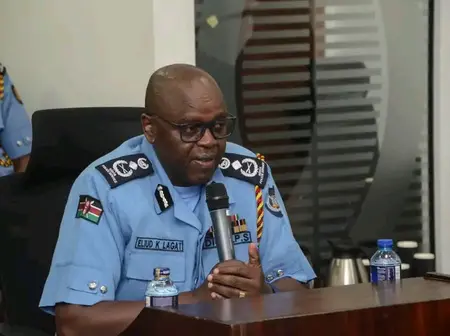
Among the senior NPS officials who attended were Deputy Inspector General of the Kenya Police Service Eliud Kipkoech Lagat, Director of Human Capital Management at NPS Headquarters Dr Julius Olayo, and Secretary for Administration and Accounting Officer Bernice Sialaal Lemedeket.
The SRC delegation was led by Director of Remuneration Services Dr Hilary Patroba, who represented the Commission's Chief Executive Officer. He was accompanied by the Commission's Head of Human Resources and Administration, James Muthinja.
In its presentation to the parliamentary committee, the National Police Service outlined the demanding working conditions experienced by instructors in police training institutions across the country.
The service explained that training officers are responsible for equipping recruits with the discipline, professional skills, physical fitness and tactical knowledge required to handle complex security assignments. Their responsibilities extend beyond conventional classroom instruction to include practical exercises conducted in challenging environments.
DIG Lagat told the meeting that police instructors often work for extended hours because of the nature of the programmes they supervise. He noted that some specialised exercises require instructors to remain available outside normal working schedules.
"Normal police training programmes run between 2am and 10pm. Special programmes such as night navigation, ambushes, defence, night driving and, among others, demand unlimited working hours," Lagat stated.
He further explained that preparing officers for operational duties requires extensive field exercises and realistic simulations conducted at police training camps.
According to the deputy inspector general, such activities expose instructors to occupational hazards while demanding high levels of physical endurance, tactical competence and constant vigilance.
The NPS leadership maintained that the responsibilities should be considered when determining appropriate compensation for instructors, particularly given the specialised nature of their work.
The engagement comes amid broader discussions on personnel welfare, remuneration structures and the need to ensure that officers serving in specialised departments receive compensation that reflects their responsibilities.
A review of the allowances would address a compensation concern that has persisted for two decades. However, the meeting's outcome and any decision by the SRC or Parliament on the proposed adjustment had not been announced in the information provided.
https://www.facebook.com/100069169660599/posts/1444647127850929/?app=fbl
Leave a Reply