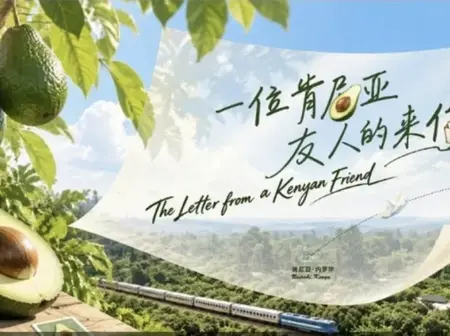
Kenyan avocado exporters are targeting a bigger share of the Chinese market after Beijing scrapped import tariffs for Kenya and 52 other African countries, creating fresh opportunities for agricultural trade.
The opportunity was highlighted at the ninth China International Import Expo (CIIE) in Shanghai, where Kenya showcased avocados, tea and fresh-cut flowers as it seeks to strengthen its presence in the Asian market.
China extended zero-tariff treatment to all 53 African countries with which it maintains diplomatic relations on May 1, 2026. The move brought another 20 countries, including Kenya, Ghana and South Africa, under the arrangement.
The expanded policy is expected to make African products more competitive in China by reducing the cost of accessing the market. For the newly covered countries, the arrangement is set to remain in place until April 2028.
According to the Chinese Embassy in Nairobi, 6.9 tonnes of fresh Kenyan avocados arrived at Guangzhou Port on May 1, while another 320 tonnes of Kenyan crude avocado oil docked at Dalian Port on May 9.
The shipments formed part of the inaugural exports flagged off on March 24 at the Standard Gauge Railway terminus in Nairobi by Chinese Vice President Han Zheng and Kenya’s Deputy President Kithure Kindiki.
China Ambassador to Kenya Guo Haiyan noted that the initiative is expected to deepen trade cooperation between the two countries while increasing earnings for Kenyan farmers and exporters.
The policy removes tariffs on selected products from African countries, making them more competitive in the Chinese market and encouraging higher exports.
China has also upgraded its green channel for African agricultural and food products, streamlining quarantine procedures to facilitate imports.
The benefits are already being felt by other African exporters. China Daily reported that tariffs on South African citrus imports had fallen from between 10 and 12 per cent to zero.
Chinese fruit importer Joy Wing Mau said its imports of South African citrus had increased by 50 per cent year-on-year since the policy took effect.
Beyond fresh produce, the expanded trade arrangement is opening opportunities for African businesses to explore new markets and develop partnerships with Chinese companies.
The ninth CIIE has provided a platform for exporters to showcase their products, meet potential buyers and pursue business partnerships. Kenya's pavilion features agricultural products, including avocados, tea and fresh-cut flowers.
The broader trade relationship is also expanding. China-Africa trade reached 312.11 billion US dollars in the first nine months of 2026, representing a 22.3 per cent increase year-on-year. China's imports from Africa rose by 18.5 per cent to 109.14 billion dollars over the same period.
For Kenyan exporters, the zero-tariff arrangement offers an opportunity to grow shipments, reach more consumers and strengthen the country's agricultural export market in China.
According to Beijing, the policy demonstrates China’s commitment to deepening economic cooperation with Africa and supporting the continent’s exports through easier market access.
This makes China the first major economy to voluntarily extend such broad tariff exemptions to African states.
For Kenya, the development is being viewed as a major boost for exporters who have been pushing for better access to the Chinese market to help narrow the long-standing trade imbalance between Nairobi and Beijing.
President William Ruto is among African leaders who have welcomed the initiative, seeing it as an opportunity for African products to become more competitive in China.
African Union Commission Chairperson Mahmoud Ali Youssouf also praised the move, describing it as ‘very timely’ and calling it a ‘brotherly gesture.’
Kenya’s avocado sector is expected to be among the immediate beneficiaries of the policy.
With tariffs now removed, Kenyan avocados could gain a stronger pricing advantage, potentially increasing demand among Chinese consumers.
Industry stakeholders say the policy could also create new export opportunities for Kenyan tea, macadamia nuts, coffee, flowers and seafood if producers meet China’s strict quality and phytosanitary requirements.
Chinese authorities say the zero-tariff policy is accompanied by other trade facilitation measures aimed at making it easier for African products to access Chinese markets.
These include upgraded ‘green lanes’ for African agricultural imports, with quarantine clearance procedures made simpler.
China has also committed to risk-based customs management systems intended to reduce delays at ports.
The measures are particularly important for the country’s fresh produce exporters whose products require fast clearance to maintain quality.
Faster customs processing and lower import costs are believed to improve profitability for Kenyan exporters while making African goods more attractive to Chinese buyers.
The initiative also comes as Kenya seeks to diversify export destinations and strengthen economic ties with Asian markets.
China remains one of Kenya’s biggest trading partners, although the country still heavily imports manufactured goods from China.
Kenya is being rallied to increase production capacity, improve value addition and strengthen logistics systems to fully benefit from the preferential access.
Leave a Reply