Kenyans who cannot raise hospital deposits during medical emergencies could soon receive treatment without first proving they can pay, while families struggling with medical debts may no longer have to fight to retrieve the bodies of deceased relatives from public health facilities.
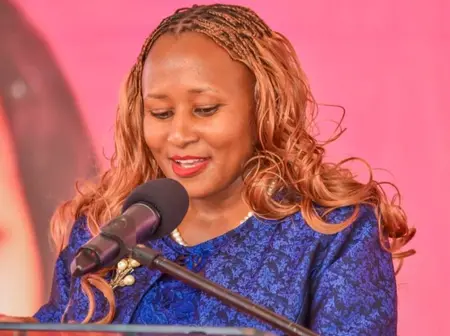
These are among the proposed changes in the Health (Amendment) Bill, 2024, sponsored by Kirinyaga Woman Representative Jane Njeri Maina, which was passed by the National Assembly on Wednesday, November 11, 2026.
The Bill seeks to amend the Health Act to strengthen access to emergency medical treatment and prevent public healthcare facilities from detaining patients or bodies of deceased persons over unpaid medical bills.
For ordinary Kenyans, the proposed changes would affect what happens when a patient arrives at a public hospital in a critical condition without money, when a family cannot clear a medical bill, or when relatives need to collect a loved one’s body for burial.
One of the Bill’s key proposals is to stop public health facilities from demanding payment before providing emergency medical treatment.
This means a patient who arrives at a public hospital with a life-threatening condition should receive the necessary initial medical attention without first being required to produce cash, make a deposit or demonstrate their ability to pay.
The Bill also seeks to broaden the definition of emergency medical treatment to cover necessary care provided at the scene of an injury or illness, during transportation to a health facility and through emergency departments and early inpatient care.
The proposed change is intended to prevent financial requirements from delaying treatment when a patient’s condition requires immediate medical attention.
Public health facilities that demand prepayment before providing emergency treatment could face fines of up to Ksh3 million under the proposed amendments.
The legislation also targets the practice of detaining patients who have been medically discharged because they cannot settle outstanding hospital bills.
If enacted, public health facilities would no longer be allowed to keep a medically discharged patient in hospital solely because of unpaid charges.
It also seeks to make it an offence for public healthcare facilities and the officers responsible for them to detain the bodies of deceased persons as a way of forcing families to clear medical debts.
Public officers who authorise or facilitate the detention of bodies over unpaid bills could face fines of up to Ksh2 million.
For families, the proposed protection would mean that inability to clear a hospital bill should not prevent them from collecting a deceased relative’s body and proceeding with burial arrangements.
However, the Bill does not cancel medical debts. Hospitals would still be entitled to pursue payment through lawful means, but would not be permitted to use the detention of patients or bodies as a debt-recovery measure.
An important distinction in the Bill is its scope.
During the Second Reading on February 11, 2026, Maina told MPs that although the initial proposal sought to cover both public and private facilities, consultations with the Departmental Committee on Health resulted in the amendments applying to public facilities.
The legislator questioned the limitation, saying it did not fully address the need to protect all Kenyans equally.
This means the proposed protections should not be presented as a blanket prohibition covering every private hospital and mortuary. The scope agreed upon during parliamentary consideration is public healthcare facilities.
Maina’s push for the amendments was informed by her experience representing families unable to retrieve the bodies of relatives because of outstanding medical bills.
During the February 11 parliamentary debate, she cited the case of Kelvin, a former medical student who turned to boda boda work after struggling to find employment.
Kelvin died in a road accident, and his body was reportedly held at a funeral home for nearly a year over an outstanding hospital bill of Ksh1.42 million.
Maina told MPs that she represented the family on a pro bono basis and witnessed the pain of a mother who could not give her son a dignified burial.
“This Bill is not mere rhetoric or politics. It is a crucial step towards addressing the profound suffering faced by many Kenyans,” she said.
Dagoretti South MP John Kiarie also questioned the practice of demanding payment before attending to patients in emergency units.
“The emergency unit of any hospital should live up to its name. Today, instead of checking a patient’s vitals, we check their ability to pay,” Kiarie told the House.
The legislation now proceeds to the Senate for consideration before it can be presented to the President for assent.
If it completes the legislative process and becomes law, public healthcare facilities will be required to comply with the new provisions.
For Kenyans, the central question is whether a medical emergency will be treated as a matter of urgency rather than an opportunity to demand payment first, and whether families will be able to bury their loved ones without having to secure the release of their bodies by clearing hospital debts.
Leave a Reply