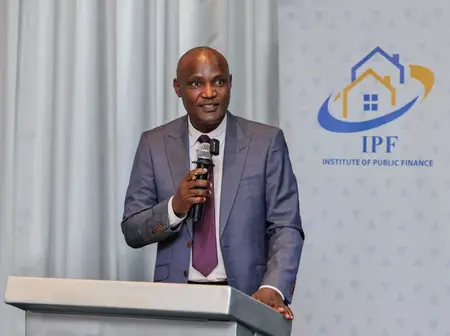
The government awarded contracts worth Sh19 billion in the first quarter of the current financial year through the electronic government procurement (e-GP) system, according to National Treasury Cabinet Secretary John Mbadi.
This he said, surpasses the value of tenders processed for the entire previous financial year.
The National Treasury says the platform is gaining traction following its nationwide rollout in July 2025, with 4,950 contracts awarded in the first three months compared with about 4,000 contracts worth Sh18.2 billion recorded in the whole of the 2025/26 financial year.
The growing uptake comes amidst increased resistance from individuals’ national treasury says are cartels
The e-GP system project manager for the e-GP system, Lawrence Kanyinyi, said the platform was recording increased activity, with between 700 and 900 tender notices available to suppliers on a daily basis.
“We are looking at having 4,950 contracts currently after our first quarter, and in terms of the amount, we are looking at approximately Sh19 billion,” Kanyinyi said.
The system, which became mandatory for government procuring entities from July 1, 2025, digitises the procurement process from supplier registration and tender advertising to bidding, evaluation, contract awards and contract management.
Treasury cabinet secretary John Mbadi said so far they have registered approximately 50,000 suppliers and is targeting 100,000 by the beginning of the next financial year, in a move expected to widen participation in government tenders.
“I am encouraged by the strong progress recorded, with overall system adoption standing at 78.8 per cent as at 31st July 2026. The respective adoption rates across institutions are Ministries, Departments and Agencies (MDAs) are at 96.75 per cent, County Governments have adopted 100,” said Mbadi.
He added that State Corporations, SAGAs and Funds are at 94 adoption and TVETs, Tertiary Institutions and TTCs are at 81.9per cent
However, the CS noted that government is still working to address technical and institutional challenges, including integrating the platform with the Integrated Financial Management Information System (IFMIS).
Kanyinyi said development and testing of the integration had been undertaken, with the remaining step being deployment within the IFMIS environment.
The integration is expected to link procurement plans with approved budgets, reserve funds before procurement begins and connect purchase orders, invoicing and asset management to government financial records.
The Treasury has partnered with the Institute of Public Finance (IPF) through a memorandum of understanding to strengthen implementation, capacity building and resource mobilisation for the digital procurement reforms.
IPF chief executive Daniel Ndirangu said the success of the platform should not be measured solely by the number of suppliers registered or contracts processed, but by whether it delivers better value for public money.
“The second one is that there's value for money through stronger competition, lower cost and fewer opportunities for inflated prices, collusion or waste,” Ndirangu said.
Ndirangu said IPF would support the Treasury through institutional capacity building, supplier sensitisation, procurement governance research and technical assistance.
Mbadi said the government was working with development partners to address weaknesses that could undermine the system's effectiveness, including cybersecurity, data integrity, system reliability and inadequate capacity in some public institutions.
“Procurement information must be accurate, must be secure, and must be accessible to authorised users only, with appropriate safeguards for confidential information,” Mbadi said.
He noted that some county governments faced staffing and technical capacity constraints, which had affected the onboarding of personnel responsible for operating the platform.
The government is seeking technical assistance in cybersecurity, systems integration, data quality and performance monitoring, alongside training for procurement professionals, accounting officers, county officials and suppliers.
Mbadi also acknowledged resistance to the transition from the manual procurement system, saying some individuals who benefited from the old arrangement were still attempting to frustrate implementation.
He said some public entities had continued seeking exemptions from procurement requirements, particularly as the country approaches an election period, when pressure to fast-track spending could increase.
The government is also developing a second phase of the platform that will introduce electronic auctions, e-catalogues, an e-marketplace and performance ratings for suppliers and procuring entities.
Leave a Reply