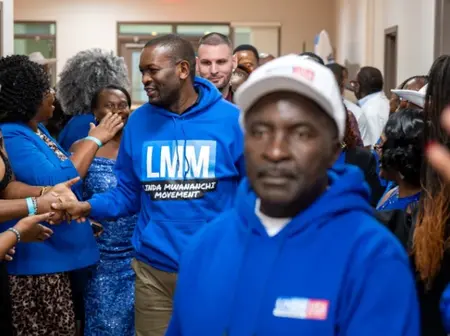
Speaking during his tour of the United States in Dallas, Texas, Sifuna argued that choosing the opposition's flagbearer should not be left to a small group of politicians meeting behind closed doors in hotels and boardrooms.
The Linda Mwananchi movement leader maintained that the selection process should involve direct engagement with citizens, adding that the coalition's presidential candidate must emerge through a process that reflects the wishes of ordinary voters.
"My firm belief is that the conversation about who will be the presidential flagbearer will happen largely with the people and not in hotel rooms or boardrooms," Sifuna said.
He also expressed confidence that his political support would continue growing, claiming that even some leaders who oppose his presidential ambitions were facing pressure from their own family members who supported his political movement.
Sifuna said his team would continue reaching out to Kenyans, including those who disagree with its position, to explain its agenda and persuade more people to support the movement.
The Nairobi senator further suggested that the debate surrounding his suitability for the opposition's presidential ticket would make significant progress by February, partly through financial contributions from Kenyans living abroad.
"By February, especially after the money you are giving us here, we will have concluded this argument," he said, mixing English and Kiswahili.
He also promised to expand the Linda Mwananchi movement's grassroots mobilisation, saying its supporters would take their political message to villages across the country.
"You will see us in every single village in Kenya to make the argument that we represent, as Linda Mwananchi, the best option for the United Opposition," he stated.
Sifuna's remarks come as opposition leaders continue debating how to identify a single presidential candidate capable of challenging President William Ruto in the 2027 General Election.
The question of whether the coalition should settle on its flagbearer through negotiations among party leaders or a broader public participation process has emerged as a major point of discussion.
Former Interior Cabinet Secretary Fred Matiang'i, People's Liberation Party leader Martha Karua, former Deputy President Rigathi Gachagua and Kiharu MP Ndindi Nyoro have also expressed reservations about relying on closed-door political negotiations.
Matiang'i has previously called for a scientific, transparent and inclusive process, arguing that political agreements made privately could create divisions if supporters of unsuccessful candidates reject the eventual decision.
Karua has similarly advocated for an objective selection mechanism that considers the views of Kenyans rather than allowing a few political leaders to determine the opposition's presidential candidate.
Gachagua, on his part, has emphasised the importance of grassroots mobilisation, arguing that political leadership should be built through engagement with citizens rather than extended meetings in hotels and boardrooms.
With the 2027 elections approaching, the debate over the opposition's presidential ticket is expected to remain a central issue as different leaders and political movements position themselves for the contest.
Source
Leave a Reply