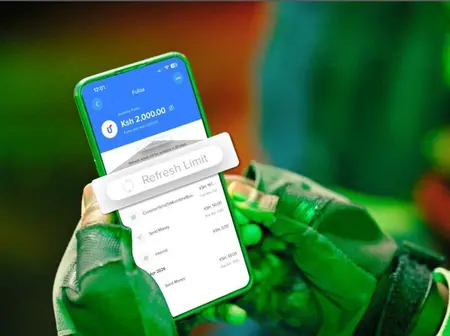
Safaricom has advised customers seeking higher Fuliza limits to increase their use of M-PESA and other mobile services over the next 30 days, while maintaining consistent transaction and repayment habits.
In a response to a customer who had complained about a persistently low borrowing limit, the telecommunications company outlined several activities it says could improve the chances of qualifying for a higher limit.
Safaricom asked the customer to dial *334#, select option 00 for Fuliza M-PESA and choose the “Refresh My Limit” option to request a review.
The company further advised the customer to increase the frequency of SMS usage, mobile data consumption, calls and airtime top-ups.
It also recommended more frequent M-PESA transactions, including withdrawals, deposits and sending money, while considering the amounts transacted.
The customer was also advised against opting out of Fuliza during the next 30 days while awaiting a limit review.
“Hello Kidungiii11, kindly dial *334#>00.Fuliza>refresh my loan limit, then increase your frequency on SMS usage, data usage, calls and top up frequency. Increased frequency of M-PESA transactions, withdrawals, deposits, send money transactions, amounts transacted and avoid opting out of the Fuliza facility for a limit review within the next 30 days,” Safaricom stated.
The guidance offers customers a clearer picture of the activities Safaricom considers when assessing their eligibility for increased borrowing limits, although the company has not promised that following the recommendations will automatically result in an increment.
Customers seeking a review can use the following steps:
Safaricom has previously explained that customers can request a limit refresh once every 30 days.
However, requesting a review does not mean a customer will automatically receive a higher borrowing limit. The final decision depends on the assessment conducted by the lending bank.
The latest advice comes amid complaints from M-PESA users who say their Fuliza limits have remained low despite frequent use of their mobile numbers.
In a separate response on November 27, 2026, Safaricom explained that regular M-PESA transactions alone do not guarantee an increase in a customer’s borrowing limit.
The company said the assessment also considers credit scores, savings habits and loan repayment patterns.
Safaricom further advised customers to check whether they have outstanding loans or negative listings with Credit Reference Bureaus (CRBs), as these may affect their credit assessment.
It also identified repayment of other credit facilities, including Okoa Jahazi, and savings through products such as M-Shwari as relevant considerations.
The company has previously said that customers should maintain regular use of Safaricom services and repay outstanding loans on time to improve their chances of qualifying for higher limits.
Customers have also been cautioned against opting out of Fuliza in an attempt to trigger a higher borrowing limit.
In September 2026, Safaricom explained that customers who leave the facility and later rejoin may be treated as new applicants and subjected to a fresh assessment.
The company warned that the new assessment could result in a lower limit or even a zero borrowing limit.
This means customers attempting to manipulate the opt-in and opt-out process could end up losing access to a facility they previously enjoyed.
Fuliza is an M-PESA overdraft facility that allows eligible customers to complete transactions when their mobile money balances are insufficient.
The service was introduced in 2019 through a partnership involving Safaricom, NCBA Bank and KCB Bank.
Under the published Fuliza terms and conditions, a customer’s overdraft limit and continued access to the facility are determined through credit scoring.
The terms also give the service providers room to review and vary individual borrowing limits from time to time.
Fuliza can be used for eligible M-PESA transactions, including sending money, making payments and purchasing goods and services.
The facility attracts applicable charges, including interest and daily administrative fees while an outstanding balance remains unpaid.
Customers should therefore consider the cost of borrowing and ensure they repay outstanding amounts rather than relying on a higher limit as a source of additional income.
Leave a Reply