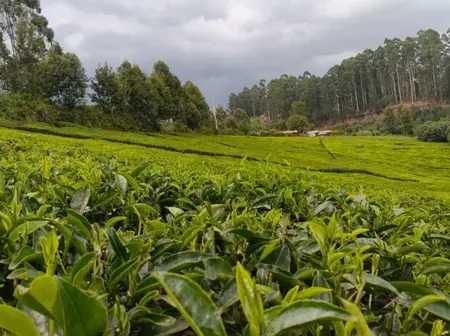
Kenya’s tea farmers could earn more from their produce if the country invested in processing, packaging and branding to capture greater value from the global market, Cabinet Secretary for Investments, Trade and Industry Lee Kinyanjui has said.
Kinyanjui called on lawmakers to expedite the passage of the Geographical Indications Bill, which seeks to protect the identity, reputation and distinctive qualities of Kenyan products.
In a post shared on X on Friday, November 27, 2026, Kinyanjui said much of Kenya’s tea leaves the country unprocessed and without a strong Kenyan identity, limiting the value retained by local farmers and businesses.
“Our farmers have done their part by producing some of the world’s finest tea and coffee,” Kinyanjui said.
He urged the country to invest in processing, packaging, branding and marketing so that farmers and local enterprises can benefit more from the final products sold in international markets.
Kinyanjui said tea and coffee carry stories linked to the communities and landscapes where they are grown, adding that stronger branding could improve their competitiveness in the global marketplace.
He made the remarks during the Equity Group Trade and Investment Roadshow 2026, where he highlighted the importance of supporting smallholder farmers.
The proposed Geographical Indications Bill seeks to protect products whose qualities, reputation or characteristics are linked to their geographical origin, helping strengthen their identity and market value.
Kinyanjui thanked Equity Group for partnering with the Ministry to advance the agenda and urged lawmakers to fast-track the proposed legislation.
The push for better returns comes as Chai Trading Company Limited (CTCL), a subsidiary of Kenya Tea Development Agency Holdings, pursues a five-year strategy aimed at reducing warehousing costs and expanding tea trading opportunities.
The plan, unveiled in October 2026, prioritises technology and infrastructure investments intended to improve storage and trading efficiency while increasing returns to farmers supplying KTDA-managed factories.
A key project is the Mega Warehouse Complex in Miritini, Mombasa, which was scheduled for completion in 2027. The facility is expected to lower warehousing costs and improve tea handling and storage.
CTCL also plans to expand its trading operations and reach new markets to improve the commercial value of tea.
The two initiatives focus on different parts of the value chain: CTCL’s strategy targets operational costs and market access, while the proposed legislation seeks to protect the identity and reputation of Kenyan products.
For farmers, the impact will ultimately depend on whether improved branding, lower costs and access to better markets translate into higher returns from their tea.
Leave a Reply