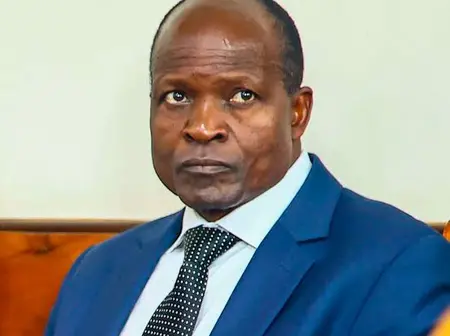
Zachary Okoth Obado’s journey from a classroom teacher to Migori County’s first governor is one of Kenya’s most remarkable political stories. However, his rise to power, family life, political controversies and lengthy legal battles have now taken a dramatic turn following his conviction and imprisonment over the murder of university student Sharon Otieno.
Obado began his professional career in education, working as a teacher at Rapogi Secondary School before becoming a school principal. He later studied at Kenyatta University, earning a Bachelor of Arts in Education and a master's degree in Strategic Management.
His entry into politics followed his involvement in the sugar industry. He served as a director and later chairman of the Kenya Sugar Board, building networks that helped him establish himself as an influential political figure.
In 2013, Obado made history by becoming Migori's first governor. He won the election on a People's Democratic Party ticket despite the strong influence of ODM in the region. In 2017, he secured a second term after returning to ODM and defeating his political rival, Ochilo Ayacko.
Away from politics, Obado is married to Hellen Odhiambo, and the couple has four children. However, his family also attracted public attention when some of his children were named in corruption-related investigations involving alleged transfers of public funds.
His political career was increasingly overshadowed by corruption allegations and disagreements within ODM. In 2015, the Ethics and Anti-Corruption Commission linked him to alleged irregular procurement involving more than KSh600 million. In May 2026, a plea agreement led to the withdrawal of corruption charges after assets valued at approximately KSh235.6 million were surrendered.
However, the most serious legal battle involved Sharon Otieno, a 26-year-old Rongo University student who was murdered in September 2018 while seven months pregnant.
Obado, his former personal assistant Michael Juma Oyamo and former Migori County clerk Caspal Ajwang Obiero were convicted of her murder on July 23, 2026. The High Court found that Obado played a central role in the crime, providing the motive and financial support, while his co-accused helped execute the plan.
On November 27, 2026, Justice Cecilia Wairimu Githua sentenced Obado to 25 years in prison. Oyamo also received 25 years, while Obiero was sentenced to 18 years. The judge rejected Obado's request for a non-custodial sentence.
His journey from the classroom to the governor's office and now prison raises difficult questions about leadership, accountability and justice.
What lessons do you think Kenya's political leaders should learn from Okoth Obado's rise and fall?
https://www.facebook.com/share/18Y5uRjgYP/
Leave a Reply