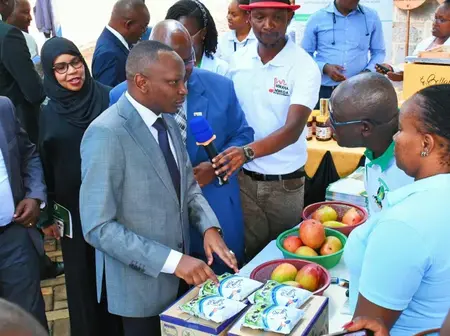
Murang’a county is targeting to reduce childhood stunting from 10 per cent to below five per cent by 2030 through a new nutrition strategy.
The strategy seeks to improve household diets and strengthen preventive healthcare.
The county has rolled out its Second County Nutrition Action Plan (CNAP II), covering 2026 to 2031, to address malnutrition through coordinated interventions across health, agriculture, education, water, trade and social services.
Deputy Governor Stephen Munania said the strategy would integrate nutrition into agricultural and education programmes while strengthening efforts to prevent malnutrition among children and other vulnerable groups.
He identified the expanded school feeding programme, scheduled to begin in January 2027, as one of the key interventions, with public primary schools, Junior Schools and Early Childhood Development (ECD) centres expected to benefit.
The county plans to provide meals at Sh15 per plate, targeting more than 250,000 plates daily to improve children's nutrition, school attendance and concentration.
“We want to create an economy around food, an economy around nutrition and an economy around education while ensuring our farmers benefit more,” Munania said.
He explained that the programme would source food, including vegetables, mangoes and milk, from local farmers, creating a dependable market for agricultural produce while improving learners' access to nutritious meals.
County Nutrition Coordinator Nancy Mwangi said the new strategy builds on the first nutrition action plan implemented between 2020 and 2025, which helped reduce childhood stunting from 19.2 per cent in 2014 to 10 per cent.
She noted that the county was seeking to bring the rate below five per cent by 2030 through improved maternal and child nutrition, increased nutrition awareness and better access to diverse diets.
However, Mwangi warned that malnutrition remained a concern across different population groups, with 43 per cent of adolescent boys being too thin for their age, compared to 12 per cent of girls.
She added that 27 per cent of women were overweight or obese, while 17 per cent of men were underweight. Among children, six per cent were underweight, while 10 per cent were experiencing stunting.
Mwangi urged households to diversify their meals by incorporating at least five of the 10 recognised food groups daily, explaining that balanced diets were essential in preventing nutritional deficiencies and diet-related illnesses.
“Food is medicine. If we don't take food as medicine, we will take medicine as food,” she said.
She added that the county would intensify grassroots nutrition education to help families identify locally available nutritious foods, adopt healthier food preparation methods and make informed dietary choices.
Nutrition International representative Dr Elijah Mbiti said poor feeding practices and limited nutrition knowledge continued to undermine efforts to combat malnutrition, even in households that produced sufficient food.
He observed that some families sold nutritious farm produce without reserving enough for their children's consumption, leaving them with inadequate diets despite having access to the food.
“Some households produce eggs but sell all of them, yet the children in those homes also need these eggs for their nutritional needs,” Mbiti said.
He urged families to balance the need to earn income from agricultural produce with the nutritional requirements of household members, particularly growing children.
The six-year strategy brings together county departments, development partners and communities to address malnutrition through improved access to nutritious foods, stronger healthcare services and public education.
It also seeks to shift attention towards prevention by addressing poor feeding habits, limited dietary diversity and gaps in household nutrition awareness, rather than relying solely on increased food production.
The county hopes the coordinated approach will improve nutrition outcomes while strengthening the link between agricultural production, household food security and the health of children.
Leave a Reply