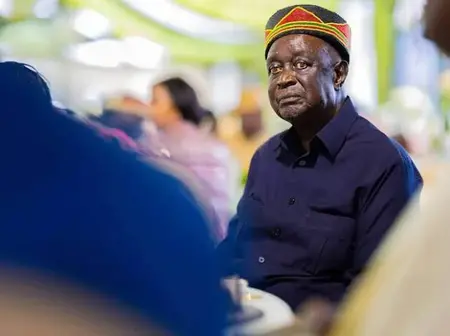
Oburu explained that Raila spoke to Moi regularly and appeared to have a strong relationship with the former Head of State. However, despite their close political engagement, Moi eventually settled on Uhuru Kenyatta as his preferred successor, leaving Raila disappointed.
The political developments took place during Moi’s final years in power, when he was constitutionally required to leave office after serving two terms under the multiparty system.
At the time, Raila had made a major political decision by bringing his National Development Party (NDP) into the ruling Kenya African National Union (KANU) in 2002. The merger strengthened KANU and gave Raila a senior position as the party’s secretary-general.
Raila also joined Moi’s government as Energy Minister, a move that showed how closely the two politicians were working together at the time.
However, expectations surrounding the succession changed when Moi publicly endorsed Uhuru Kenyatta as KANU’s presidential candidate. The decision surprised several senior politicians who had expected to be considered for the country’s top position.
Raila strongly opposed the decision and eventually left the government and KANU. His departure contributed to the formation of the Rainbow Alliance, which later played an important role in the opposition coalition that defeated KANU in the December 2002 General Election.
Mwai Kibaki eventually won the election, ending KANU’s long hold on power.
Oburu’s latest recollection brings attention to the political relationship between Raila and Moi and the events surrounding the controversial succession decision.
The 2002 developments remain an important chapter in Kenya’s political history, particularly because they shaped alliances and rivalries that continued to influence national politics for many years.
Leave a Reply