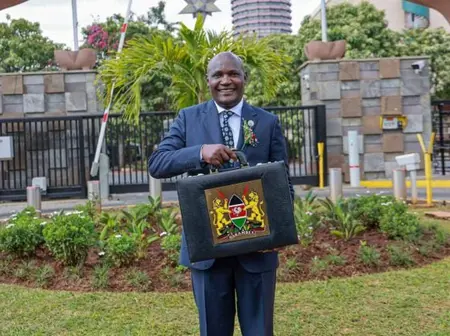
Salaried Kenyans could pay less income tax in 2027 if proposed changes to the Pay As You Earn (PAYE) system are approved by Parliament.
National Treasury Cabinet Secretary John Mbadi says the government is reviewing the tax framework as part of preparations for the Finance Bill, 2027, and the Second Medium-Term Revenue Strategy (MTRS), which will guide revenue collection from the 2027/28 financial year.
Speaking on November 24, 2026, after opening a stakeholder workshop organised by the National Treasury and the African Economic Research Consortium (AERC), Mbadi said the government was seeking ways to raise revenue without placing excessive pressure on households or discouraging investment.
The proposed PAYE changes are part of wider efforts to establish a tax system that is fair, efficient and predictable while ensuring the government has enough resources to finance public services.
The proposed reforms seek to increase the monthly tax-free income threshold from Ksh24,000 to Ksh32,333.
This means employees earning up to Ksh32,333 per month would no longer pay PAYE if the proposal is passed into law.
The government also intends to replace the existing lower tax bands with a single zero-rated band covering the first Ksh32,333 of monthly employment income.
However, the proposal includes the removal of the current Ksh2,400 monthly personal relief, which employees presently receive when calculating their income tax.
President William Ruto first announced the proposed changes during the Mashujaa Day celebrations on October 20, 2026.
Treasury estimates indicate that the adjustment could remove an additional 362,846 formal-sector workers from the PAYE bracket, increasing the number of employees exempt from the tax from approximately 1.32 million to 1.69 million.
Those earning above the proposed threshold would also have their PAYE calculations adjusted, although the actual savings would depend on their income and applicable tax bands.
The proposed changes would not affect other statutory deductions, including Social Health Insurance Fund contributions, the Affordable Housing Levy and National Social Security Fund contributions.
The proposed changes are yet to become law and will require parliamentary approval before they can be implemented.
Earlier in November 2026, Mbadi said the proposed PAYE tax relief Bill had been finalised by the Treasury and forwarded to the Attorney General for further processing.
He expected the legislation to reach Parliament before the December recess. However, the parliamentary calendar could affect the timeline for its passage.
Parliament was expected to proceed on recess in the first week of December 2026 and resume in February 2027, potentially delaying the implementation of the proposed changes.
This means employees should not assume that the higher tax-free threshold will automatically apply from January 2027. The existing PAYE framework remains in force until the necessary legislation is enacted.
Beyond providing relief to salaried workers, the Treasury is seeking to balance revenue collection with the cost of living and the need to support businesses.
During the November 24, 2026, workshop, Mbadi said the government needed to broaden the tax base, improve compliance and ensure the tax burden was distributed fairly.
The discussions are expected to inform the Finance Bill, 2027, the PAYE review and the Second Medium-Term Revenue Strategy.
Mbadi also emphasised that increasing revenue collection must be accompanied by prudent management of public resources.
He said Kenyans should see the benefits of their tax contributions through better public services and development projects, adding that government spending must be transparent and accountable.
The proposed PAYE reforms will therefore be considered alongside wider measures intended to improve revenue collection while protecting household purchasing power and creating an environment in which businesses can grow.
Leave a Reply