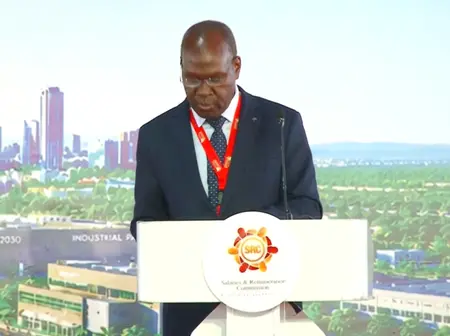
The Salaries and Remuneration Commission (SRC) has outlined a five-year strategy to introduce productivity-linked rewards and recognition mechanisms across Kenya’s public service as part of efforts to improve employee performance and service delivery.
In its Strategic Plan 2025/2026–2029/2030, the commission identifies productivity and performance as one of its key result areas, proposing measures to strengthen the recognition of employees’ contributions and link remuneration more closely to productivity.
SRC targets increasing the number of public-sector institutions implementing productivity and performance-linked rewards from 22 to 1,009 by the end of the five-year plan.
The commission says the strategy is intended to promote a more productive public service while ensuring that remuneration decisions reflect performance, fairness and the country’s economic realities.
Under its first key result area, SRC identifies strengthening the recognition of productivity and performance as a priority.
The commission also proposes implementing productivity-linked reward and recognition mechanisms and promoting national productivity dialogue to build capacity in measuring productivity.
It further identifies the need to strengthen institutional capacity in productivity measurement to ensure public-sector organisations can assess and recognise performance.
SRC’s strategy also seeks to improve the relationship between remuneration and employee output, addressing one of the challenges identified in its assessment of public-sector pay.
Beyond performance-based rewards, SRC has outlined plans to progressively harmonise remuneration structures across the public service.
In the strategic plan, the commission identifies historical disparities in remuneration as one of the challenges affecting public-sector pay.
It targets increasing harmonised public-service salary structures from 14 per cent to 44 per cent by the end of the plan period.
SRC also proposes regularly reviewing salary structures and developing wage-bill forecasting and analytics to improve the management of public-sector remuneration.
The commission targets to increase compliance with its remuneration guidelines from 86 per cent to 95 per cent by 2030.
The strategic plan also identifies employee satisfaction as an important component of improving productivity and institutional performance.
SRC targets increasing employee satisfaction from 61.8 per cent to 85 per cent during the five-year implementation period.
The commission further proposes developing staff and succession-management systems, aligning organisational structures with strategic objectives and implementing performance management as part of its institutional strengthening agenda.
On public finances, SRC targets reducing or maintaining the wage-bill-to-ordinary-revenue ratio at 35 per cent by the end of the plan.
The commission’s broader objective is to promote fair and equitable remuneration while ensuring that public-sector pay remains fiscally sustainable.
The five-year strategy runs from 2025/2026 to 2029/2030 and provides the roadmap through which SRC intends to strengthen remuneration management, productivity and performance across the public service.
Leave a Reply