Medical practitioners have been urged to embrace AI in oncology to enhance early cancer diagnosis and treatment.
According to estimates by the Global Cancer Observatory, 2024, Kenya records about 35,867 new cancer cases annually, while 22,888 people succumb to the disease every year.
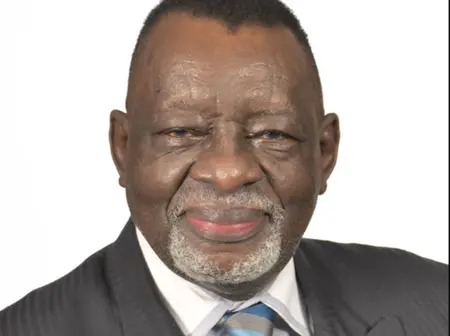
Joseph Aluoch, a veteran physician with 58 years of experience, said AI was poised to transform medicine and improve lives, urging healthcare professionals to embrace the technology.
He spoke in Mombasa during the 9th Kenya International Cancer Conference, organised by the Kenya Society of Haematology and Oncology.
Aluoch said AI plays a critical role in enhancing diagnostic accuracy, enabling early detection of diseases and minimising medical errors.
He said unlike human practitioners, AI does not experience burnout and can efficiently handle repetitive tasks over extended periods.
“What most people don’t realise is that AI is just a tool; it’s not going to replace doctors; it’s going to help doctors work better," Aluoch said.
"What is obvious is that in the near future AI will not replace doctors, but those doctors who do not embrace AI will be replaced by doctors who are familiar with AI.”
He said AI relies on data generated by healthcare systems and cannot independently create the information required for effective analysis.
“AI is very important, but what you don’t realise is that it cannot translate. It’s not like a big computer that you bring from London and you sit here" Aluoch said.
"AI’s main work is to analyse data; it doesn’t do anything; it doesn’t create the data, so you have to produce your data yourself.”
He challenged healthcare facilities to strengthen their Electronic Health Records (EHR) systems to facilitate the effective use of AI and improve interoperability across health institutions.
“You may have your data in Mombasa; the next time you go to Kisumu, you will be seen by another doctor, which is typical of Kenya," Aluoch said.
"If no system can transfer the data in Mombasa or connect the data in Mombasa to Kisumu, then AI is not going to be very useful.”
Aluoch said AI-powered pathology and predictive analysis systems could play a significant role in detecting cancer at its earliest stages.
He cited cervical cancer as an example, explaining that AI can analyse cells and blood samples collected through Pap smear tests to identify abnormalities earlier than conventional visual examinations.
He also called for the ethical application of AI in healthcare, emphasising the technology should support rather than replace medical professionals in making critical decisions.
He likened AI to a navigation system that provides alternative routes, but leaves the final choice to the user, cautioning that its growing application in healthcare also raises important ethical concerns.
“There are two roads you can follow. We are going to Bamburi. You can take this one or take the other one, but you decide which one you take. It doesn’t force you to make any decision. But there are a lot of so-called challenges. I talked about opportunities in AI, but there are also ethical challenges,” stated Aluoch.
Kesho president Gladwell Kiarie echoed the sentiments, saying AI had become an important component of modern medical practice, helping to improve diagnostic accuracy and reduce turnaround times.
“AI is being used in multidisciplinary team meetings; it is being used in diagnostics; it’s being used in treatment, and all this is keeping up with the times,” said Kiarie.
Leave a Reply