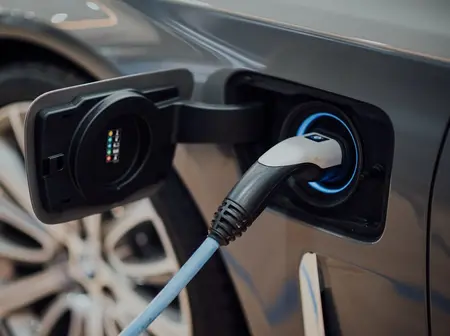
South Africa’s electric vehicle market is expanding faster than its public charging infrastructure, putting greater emphasis on residential electricity generation as motorists look for affordable ways to run rechargeable cars.
New Energy Vehicle (NEV) sales reached 22,389 units between January and September 2026, surpassing the 16,703 recorded during the whole of 2025, according to the Automotive Business Council (Naamsa). Yet the country has approximately 445 public electric vehicle charging locations against an estimated 4,600 conventional petrol and diesel service stations, according to GoSolr’s Electric Vehicle Light Paper.
The difference is particularly relevant for motorists considering battery electric vehicles and plug-in hybrids, whose ownership economics depend partly on access to affordable electricity. GoSolr’s research puts residential solar generation at the centre of that calculation, with the company’s chief technology officer, Dr Patrick Narbel, reporting substantially lower running costs after switching from petrol to an electric SUV powered largely by his household solar installation.
The composition of new energy vehicle sales is changing alongside the growth in overall volumes. Naamsa reported that rechargeable vehicles, comprising battery electric vehicles (BEVs) and plug-in hybrids (PHEVs), accounted for 50.5% of cumulative NEV sales by September 2026. Traditional hybrids represented the remaining 49.5%.
September also produced a notable sales milestone, with one in every nine new vehicles sold being an NEV, according to the industry body.
The figures indicate a growing contribution from vehicles that require external electricity charging, placing additional attention on the infrastructure needed to support ownership. Naamsa also reported early adoption across light and medium commercial vehicle categories, extending electrification beyond private passenger transport.
The market’s expansion is creating opportunities across vehicle distribution, charging services and energy supply. However, the geographical distribution of charging facilities remains uneven.
GoSolr estimates that 78% of South Africa’s public charging points are concentrated in Gauteng and the Western Cape. Motorists travelling through other provinces face fewer charging options, particularly along some of the country’s longer intercity routes.
South Africa is targeting its 1,000th public EV charging station by the end of 2026, according to the report.
Residential electricity generation offers another route for EV owners seeking to manage charging expenses. GoSolr CTO Dr Patrick Narbel’s experience provides a practical illustration of how solar panels, battery storage and intelligent charging equipment can work together.
After driving 7,000km in a mid-size electric SUV with a 68kWh battery and approximately 400km of practical range, Narbel reported average consumption of 13.3kWh per 100km. His household installation comprises a 12kW hybrid inverter, 15kWh of battery storage and slightly more than 8kW of solar panels.
The system allows him to charge the vehicle primarily from electricity generated at home. Narbel said approximately 60% of his charging came directly from solar during winter, with an estimated annual contribution of 70%. He expects the share to approach 100% during high summer with careful charging schedules.
His experience also demonstrates the importance of managing household electricity demand. An ordinary wall socket initially proved inadequate for routine charging, returning approximately half the vehicle’s battery capacity after 10 hours. A dedicated home charger improved charging speed, but operating it alongside appliances such as the geyser and oven repeatedly overloaded the household supply.
Narbel subsequently installed a dynamic charger that monitors electricity consumption across the house and adjusts the vehicle’s charging rate when other appliances draw power.
The financial comparison is substantial. According to Narbel, a full 68kWh charge using electricity from his Cape Town grid tariff costs approximately R280. With around 70% of his charging supplied by rooftop solar, the effective cost falls to roughly R85.
His previous Volkswagen Polo averaged 5.5 litres per 100km. At R25 per litre, covering 400km cost approximately R550 in petrol. A similarly sized petrol SUV such as the Hyundai Creta, using around eight litres per 100km, would require approximately R800 in fuel for the same distance.
Public charging remains more expensive than his residential solar arrangement. GoSolr puts public charging prices at between R5 and R8.50 per kWh.
Narbel said he had needed to alter his route to accommodate charging only once during his 7,000km of driving, on a longer journey covering Cape Town, De Hoop, the Karoo and Calitzdorp.
South Africa’s charging network is being expanded by operators including Rubicon, GridCars and Zero Carbon Charge. The latter is planning solar-powered charging hubs approximately 150km apart along national routes.
The spacing is intended to improve charging access for motorists undertaking longer journeys, particularly on routes where existing infrastructure is limited.
One example identified by GoSolr is the approximately 300km stretch of the N1 between Beaufort West and Three Sisters, which lacks public charging facilities. Such gaps complicate long-distance travel for EV owners who depend on the public network.
Infrastructure costs are also affecting the pace of expansion. GoSolr estimates that extending a reliable electricity connection to a remote charging location along the N1 can cost up to R2 million for a single site.
This adds a substantial infrastructure expense to the installation of charging equipment, particularly in areas with limited existing electricity distribution networks.
The company argues that residential charging can reduce dependence on public facilities for routine journeys. Its CEO, Andrew Middleton, said: “The charger that matters is the one on your own roof, and once that’s in place, the everyday range anxiety and the forecourt queue fall away.”
He added that long-distance journeys still depend on the public charging network.
Developments in Kenya provide a regional example of how fuel retailers and electricity companies are participating in electric mobility infrastructure.
In July 2026, EcoNews reported that BasiGo and Rubis were expanding their charging partnership, including a 100kW DC fast-charging installation at Rubis Sabaki in Athi River. The installation supports CCS2 and GB/T charging standards, with the companies identifying additional locations in Meru, Nanyuki and Nyeri for expansion.
Rubis operates more than 300 service stations in Kenya, giving the partnership access to an established fuel retail network.
Kenya Power has also reported growth in electricity sales to the e-mobility sector. According to figures reported by EcoNews, cumulative EV charging revenue reached KSh382 million between July 2023 and April 2026, while monthly revenue increased to KSh35 million.
The commercial transport market is also attracting financing. Co-operative Bank committed KSh1.5 billion over 12 months to electric public service vehicle financing in November 2026, according to EcoNews. Its programme covers vehicle acquisition and associated charging infrastructure.
These developments illustrate the different businesses involved in building an EV charging ecosystem, from established fuel retailers and electricity utilities to commercial lenders.
Electric vehicle charging will add to electricity demand as more rechargeable vehicles enter the market. The availability of generation, storage and distribution infrastructure will therefore remain relevant to both public charging operators and residential consumers.
Kenya’s electricity storage investment provides another example of the infrastructure requirements associated with renewable energy integration. EcoNews reported in November 2026 that KenGen had secured KSh10.5 billion in financing for a planned 100MWh battery energy storage system across Olkaria, Kipevu, Embakasi and Muhoroni.
The project is intended to store surplus renewable electricity for use during periods of higher demand.
South Africa’s charging operators face a more immediate site-level challenge in connecting remote locations to reliable electricity supplies, while residential EV owners are exploring solar generation and household battery storage to manage their own consumption.
For Naamsa, sustained growth in the NEV market will require policy support, charging infrastructure expansion and local manufacturing investment. The industry body also sees commercial vehicle electrification as an opportunity to extend the transition into logistics and fleet operations.
As South African rechargeable vehicle sales continue to expand, the economics of ownership will depend on more than the purchase price of the car. Access to charging, electricity costs and the investment required to supply power at home and along national routes will increasingly influence the market.
Leave a Reply