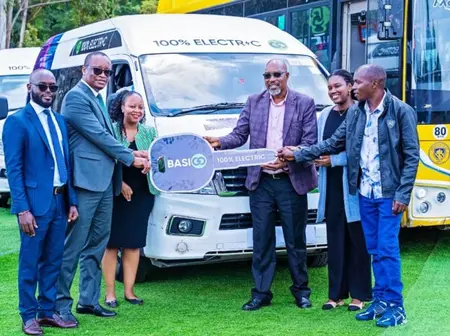
The growing fleet, assembled largely in Kenya using technology and components sourced from China, is introducing a new option for public service vehicle operators seeking alternatives to traditional diesel-powered buses.
The Chinese Embassy in Kenya highlighted the development on Monday, November 23, describing the vehicles as part of efforts to reduce transport-related emissions and noise while improving passenger experience.
The deployment is being spearheaded by local electric mobility company BasiGo, which works with Kenya Vehicle Manufacturers to assemble the buses at its facility in Thika, Kiambu County.
BasiGo Managing Director Moses Nderitu told Xinhua that between 70 and 80 per cent of the buses are assembled locally using Completely Knocked Down kits imported from China.
The partnership is also creating opportunities for local employment and technical skills development while supporting Kenya’s vehicle manufacturing industry.
What the Electric Buses Mean for Matatu Operators
For SACCOs and individual transport businesses, electric buses offer an alternative to vehicles that depend on diesel, whose prices can fluctuate and affect operating costs.
The buses can cover approximately 190 to 230 kilometres during a normal working day before returning to charging depots. A full charge takes about two hours.
Drivers have also reported differences in comfort when operating the battery-powered vehicles.
Johnson Kamau Wanja, who spent 17 years driving diesel buses before switching to electric models, told Xinhua that the experience was more comfortable.
He attributed the difference to the quieter operation of electric vehicles compared to conventional buses.
Financing and Infrastructure Remain Key Challenges
Despite the growing fleet, high purchase prices remain a major obstacle to wider adoption. Charging facilities, availability of spare parts and access to technicians trained in electric vehicle maintenance are also important considerations.
Financing could help more PSV operators acquire the vehicles. On November 13, Co-operative Bank of Kenya launched an e-mobility financing programme targeting matatu SACCOs.
Kenya's electricity mix, which includes geothermal, wind and solar power, also offers an opportunity to support the expansion of electric transport.
The deployment of 102 buses marks progress in introducing electric mobility into the matatu industry. However, wider adoption will depend on whether operators can afford the vehicles and whether charging and maintenance infrastructure can keep pace with demand.
https://peopledaily.digital/business/how-102-chinese-technology-electric-buses-are-transforming-kenyas-matatu-industry-and-public-transport
Leave a Reply