Even presidents are not spared when dry taps and power blackouts strike across Africa.
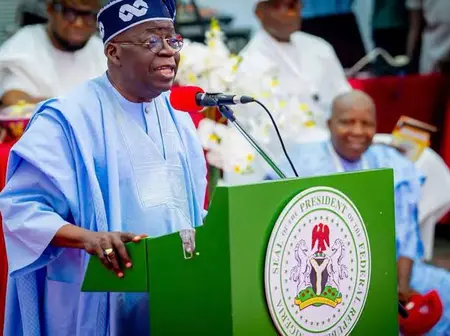
Nigerian President Bola Tinubu revealed on Sunday, November 22, that the water supply at the Presidential Villa in Abuja suddenly cut off while he was shaving last week. Speaking at a special family prayer session at the Yoruba Tennis Club in Onikan, Lagos, Tinubu used the awkward domestic moment to highlight the daily infrastructure struggles facing his nation.
"If I stay too long in Lagos, I will not want to rush back to Abuja," Tinubu told the gathering, drawing laughter from the crowd. "On the Wednesday of last week, I was shaving, and the water went off in the Villa. You won't know punishment there too."
In Nigerian street slang, "punishment" refers to the severe daily inconvenience and hardship caused by failing public utilities. By admitting that Aso Rock—Nigeria's heavily guarded seat of power—suffers the same utility failures as ordinary neighborhoods, the president sought to show that he understands citizen frustrations.
Tinubu immediately tied the bathroom mishap to his administration's broader development promises ahead of his re-election push. "The water went off. So we will correct all this. No light, no water, no electricity, no development," he declared. "We have just started. We can do it, and we will do it for Nigeria."
The candid confession quickly spilled onto East African social media, sparking lively banter among Kenyans online. Many Kenyan netizens poked fun at the situation while drawing sharp comparisons to their own daily experiences with water rationing in Nairobi estates and frequent Kenya Power blackouts.
However, critics and ordinary citizens in both countries point out that presidential empathy does not fill empty jerrycans. Across Nigeria, millions still rely on private boreholes and expensive fuel generators after decades of stalled power sector reforms. According to Nigeria's latest Demographic and Health Survey, only 38 percent of households have clean drinking water directly on their premises.
Back home in Kenya, residents in major towns regularly endure days without piped water from local utility companies, forcing families to buy water from vendors at inflated prices. Critics argue that when top leaders experience these failures firsthand, it should trigger urgent accountability rather than campaign-trail jokes.
Government defenders maintain that fixing decades-old water pipes and national power grids takes sustained investment and time. Tinubu noted that his team is actively working to overhaul basic infrastructure, echoing similar promises made by leaders across the continent.
If top government leaders in Kenya regularly experienced the same dry taps and blackouts as ordinary citizens, how fast do you think our water and power problems would be fixed?
Leave a Reply