A heated debate has erupted over whether President William Ruto's latest development slogan is actually delivering equal projects across Kenyan counties.
During Monday morning's Sema na Citizen broadcast on Citizen TV, panelists dissected the politics behind the government's "Usawa ni Sawa" campaign. The studio discussion brought together Democracy for Citizens Party (DCP) National Coordinator Njeri Kahiga and education activist Okoth Obondo to examine whether state funds are truly reaching historically marginalized areas.
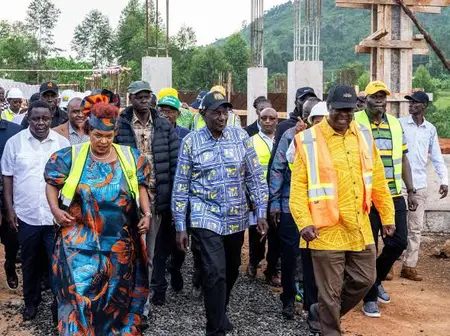
Under the broad-based government, President Ruto and Deputy President Kithure Kindiki have framed "Usawa ni Sawa"—a Swahili phrase meaning "equality is right"—as a policy to end regional exclusion. Speaking during recent development tours in Nyamira, Nakuru, and Western Kenya, the two leaders insisted that roads, housing, and electricity projects are now distributed fairly regardless of how a region voted in 2022.
"We are putting money in their pockets because we have removed brokers, and we have increased their earnings," Ruto stated while defending the initiative, pointing to over one million housing jobs, digital work programs, and support for coffee, tea, milk, and sugarcane farmers.
However, opposition figures and civil society voices on the Citizen TV panel questioned whether the slogan matches reality on the ground. Critics argued that since the 2010 Constitution introduced devolution, true fairness requires transparent budget allocations and empowering county governments rather than launching national tours ahead of the 2027 elections.
Skeptics also pointed out that many citizens are still struggling with high living costs, stalled local projects, and heavy taxation despite the government's promises of shared prosperity. To opposition allies, branding state projects under a catchy political theme risks turning taxpayer-funded infrastructure into an early campaign tool.
Ordinary Kenyans following the broadcast echoed this divide, with many arguing that visible improvements in local hospitals, schools, and roads matter far more than political slogans. Others maintained that breaking traditional ethnic voting blocs to share national resources evenly is long overdue if implemented transparently.
With billions of shillings earmarked for infrastructure and social programs across all 47 counties, citizens are closely watching how funds are spent in their own backyards. Looking at the roads, schools, and clinics in your own ward today, do you feel the "Usawa ni Sawa" promise is reaching your community or remaining just another political slogan?
Leave a Reply