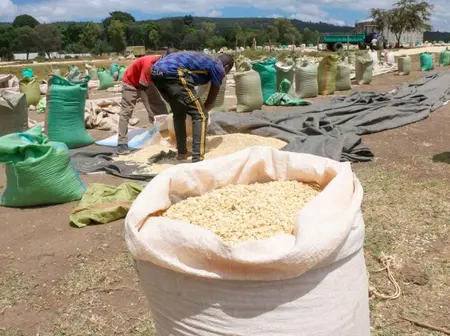
Kenyans could continue facing elevated maize prices into 2027 despite forecasts of above-average rainfall associated with El Niño, as a poor harvest, expensive transportation and tight market supplies threaten to keep food costs high.
The Famine Early Warning Systems Network (FEWS NET) projects that wholesale maize prices in Nairobi will remain approximately 16 per cent above the five-year average through May 2027, even as improved rainfall is expected to support agricultural recovery in several parts of the country.
The warning comes after Kenya recorded a disappointing 2026 long-rains maize harvest, with production estimated to be 22 to 28 per cent below average.
In its October 2026 Kenya Food Security Outlook, FEWS NET attributes the production shortfall to poorly distributed rainfall during April and May, followed by severe rainfall deficits between June and September.
The assessment identifies El Niño conditions as one of the factors associated with the rainfall deficits, raising concerns about how weather patterns could affect Kenya’s food supplies and household budgets in the coming months.
For millions of households that depend on maize flour to prepare ugali, the concern is whether improved rains will translate into more affordable food before the middle of 2027.
Kenya is entering a different phase of the weather outlook, with El Niño and a positive Indian Ocean Dipole (IOD) expected to bring above-average rainfall across much of the country from November 2026.
FEWS NET says the two weather phenomena are expected to offset earlier rainfall deficits and improve cumulative rainfall during the October-December short-rains season.
However, the anticipated rainfall could also create new challenges for farmers and food supply chains.
The report identifies an elevated risk of flooding in several river basins, including Tana, Nyando, Nzoia, Ewaso Ng’iro and Athi.
Major urban centres, including Nairobi, Nakuru, Mombasa and Kisumu, are also identified as areas facing elevated flood risks.
In agricultural areas, excessive rainfall and waterlogging could damage crops, disrupt planting activities and affect transport infrastructure.
This creates a complicated outlook for Kenya’s food sector. While improved rainfall could support future harvests and increase food availability, flooding could damage crops and interrupt the movement of agricultural produce to markets.
FEWS NET nevertheless expects the favourable rainfall conditions to support recovery in several agricultural and pastoral areas.
The immediate concern for consumers is the combination of below-average domestic maize production and elevated transportation costs.
According to FEWS NET, the 2026 long-rains harvest was particularly poor in the North Rift and western Kenya, two important maize-producing regions.
The reduced production has tightened market supplies, increasing the country’s reliance on maize imports from neighbouring Tanzania and Uganda.
The organisation projects Nairobi wholesale maize prices to remain “near to 16 percent above the five-year average”, citing tight market supplies and high transportation costs associated with elevated fuel prices.
However, the outlook also identifies factors that could ease pressure on consumers.
FEWS NET expects increased maize imports and above-average short-rains harvests in the central highlands and western Kenya to improve market availability between January and March 2027.
These additional supplies are expected to “gradually ease upward price pressure through May”.
The improvement will depend on the performance of the short-rains harvest, the availability of imported maize and the ability to move supplies from production areas to consumption markets.
The next several months will be important in determining whether Kenya’s improved rainfall outlook translates into lower maize prices.
FEWS NET forecasts above-average rainfall during the March-May 2027 long-rains season, although it cautions that uncertainty remains because of the long-range nature of the forecast.
If agricultural production improves and imports remain available, market supplies could strengthen, potentially easing wholesale maize prices.
However, flooding, crop losses and disruptions to transportation could slow the recovery.
For consumers, the distinction between wholesale maize prices and retail maize flour prices is also important. The projected 16 per cent premium does not mean a packet of unga will automatically cost 16 per cent more.
Retail prices will also depend on milling, distribution, transport and other business costs.
The central question is whether the expected El Niño rains will deliver stronger harvests quickly enough to ease the pressure on maize supplies and household food budgets.
For now, FEWS NET’s projections suggest that even with improved rainfall, Kenyans should not assume that maize prices will return to their five-year average before May 2027.
Leave a Reply