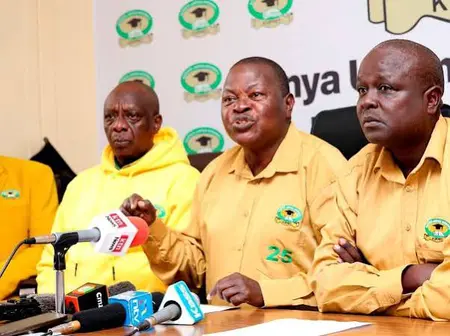
Speaking at the close of the union's 28th Annual Delegates Conference in Diani, Kwale County, union leaders demanded full administrative independence for Junior Secondary Schools (JSS) and warned of legal action if the government pushes ahead with the changes.
A Clash Over School Leadership
The standoff follows President Ruto’s November 11 directive to the Ministry of Education to prepare legal amendments within 90 days to anchor the "comprehensive school" model in law. Under the government's proposal, pre-primary, primary, and junior schools sharing a compound would be managed by a single primary school headteacher.
KUPPET Secretary General Akelo Misori dismissed the plan as unworkable, arguing that primary school headteachers lack the training to supervise a secondary-level curriculum.
"Making a primary school headteacher the person administering a secondary-level curriculum is in itself a terrible mistake," Misori stated. He maintained that sharing physical compounds to save on infrastructure costs should not strip junior schools of their own principals and management.
Constitutional Questions and Legal Threats
KUPPET also challenged the legal foundation of the proposed merger. Misori pointed to Schedule Four of the Constitution, which categorizes education into distinct levels: pre-primary, primary, secondary, tertiary, and universities.
He argued that running a combined administrative structure without changing the Constitution amounts to "trial and error". Deputy Secretary-General Moses Nthurima backed the stance, warning that existing education laws do not recognize comprehensive schools and signaling that the union is ready to go to court to block the plan.
More Demands on Teacher Promotions and Exam Marking
Beyond the governance dispute, the 2,000 delegates attending the Diani conference issued fresh demands over teacher welfare.
National Chairman Omboko Milemba urged the government to fulfill its pledge to double the teacher promotion budget in 2027. He also demanded better pay for teachers marking national examinations, warning that KUPPET could advise members to boycott marking if the Kenya National Examinations Council (KNEC) ignores collective bargaining talks.
Additionally, the union urged Parliament to reject proposals that would classify exam marking as an essential service, arguing it would strip teachers of their right to strike.
What Do You Think?
Should Junior Secondary Schools have their own independent principals as KUPPET demands, or is President Ruto’s single-administration model better for saving costs and managing resources? Share your thoughts in the comments below!
Leave a Reply