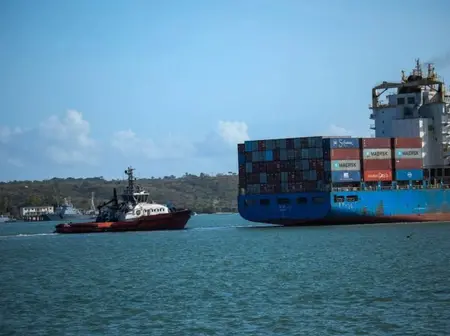
Kenya spent a staggering Ksh344.2 billion importing goods in September 2026, yet the value of goods it exported during the same month stood at just Ksh129.2 billion.
The difference? A Ksh214.9 billion trade deficit, a gap that raises an uncomfortable question about the country’s dependence on foreign goods: why is Kenya buying so much more from the rest of the world than it is selling?
Fresh figures in the Kenya National Bureau of Statistics (KNBS) September 2026 Leading Economic Indicators report show that the country’s merchandise trade deficit widened sharply from Ksh166.7 billion in August to Ksh214.9 billion in September.
In simple terms, Kenya’s import spending is growing faster than its export earnings. And the figures offer a revealing snapshot of the pressure facing local production, manufacturing and the country’s ability to earn foreign exchange.
The KNBS report says the total value of merchandise trade increased from Ksh402.8 billion in August to Ksh473.4 billion in September.
But the movement in imports and exports tells two different stories.
Exports rose from Ksh118 billion to Ksh129.2 billion. That is an increase of Ksh11.2 billion. Imports, however, jumped from Ksh284.8 billion to Ksh344.2 billion, an increase of Ksh59.4 billion in just one month.
The result was a wider trade deficit.
The report states: “Consequently, the merchandise trade deficit widened from KSh 166.7 billion in August 2026 to Ksh214.9 billion in September 2026.”
That is a monthly increase of Ksh48.2 billion in the deficit.
The numbers do not mean Kenya produces nothing or that every imported product could immediately be made locally. They do, however, highlight the scale of the country’s spending on foreign goods compared with what it earns from exports.
One country stands out in Kenya’s import figures: China.
Kenya imported goods worth Ksh113.2 billion from China in September, making it the country’s largest source of imports. India followed with Ksh51.8 billion, while the United States accounted for Ksh21.9 billion.
The China figure is particularly striking because imports from that country increased by 35.9 per cent from Ksh83.3 billion in August.
This raises an important question for local businesses: what are Kenyans and Kenyan companies buying from abroad, and why are local manufacturers not supplying more of those goods?
The KNBS report offers another clue through its breakdown of imported goods. Industrial supplies that are not food accounted for 40 per cent of total imports.
Fuel and lubricants represented 22 per cent, while machinery and other capital equipment accounted for 13.6 per cent. Transport equipment contributed 9.8 per cent.
These categories matter because imports are not simply consumer luxuries. Some are inputs used by factories, farms, transport companies and other businesses. Replacing them locally would require investment, reliable production capacity, competitive prices and access to technology.
Kenya’s export performance also deserves attention.
The United States was the leading destination for Kenyan exports in September, receiving goods worth Ksh27.9 billion. Uganda followed at Ksh13.2 billion, while Pakistan accounted for Ksh6.4 billion.
Food and beverages made up the largest share of domestic exports, at 36 per cent. Machinery and other capital equipment accounted for 22.9 per cent, while non-food industrial supplies represented 18.2 per cent.
The figures show that Kenya has export strengths. The challenge is whether the country can expand production, diversify what it sells and reach more markets.
A persistent trade gap can increase the country’s need for foreign currency to pay for imports. It does not, by itself, prove that the shilling will weaken, but it underlines why export growth and competitive local industries matter.
For households, the issue goes beyond economic statistics. Imported goods, fuel and industrial inputs are part of everyday business costs and consumer supply chains.
The big question raised by the KNBS figures is simple: what would it take for Kenya to manufacture more of what it currently imports—and earn more from what it sells?
Until that gap narrows, the Ksh344 billion import bill will remain a powerful measure of the country’s dependence on the global marketplace.
Leave a Reply