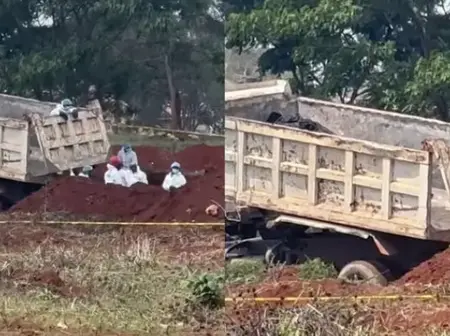
The mass burial was conducted on Thursday, November 19, 2026, following court approval after the county exhausted the required public notice period and attempts to trace the deceased's relatives.
County Chief Officer for Public Health Tom Nyakaba said the bodies were collected from three public health facilities, with the largest number coming from Nairobi Funeral Home, formerly City Mortuary.
Of the 465 bodies buried, 381 were from Nairobi Funeral Home, 58 from Mama Lucy Kibaki Hospital and 35 from Mbagathi Hospital.
The burial came as Nairobi's public mortuaries were holding more than 600 unclaimed bodies, putting pressure on facilities already struggling with limited storage capacity.
Nairobi Funeral Home, for instance, is designed to accommodate 189 bodies, meaning the number of remains being handled has significantly strained its capacity.
Some of the bodies had remained in mortuaries since 2024. Most were men, while others were unidentified after being recovered by police.
Why Nairobi opted for mass burial
The county's decision to bury hundreds of bodies together was driven by overcrowded mortuaries, limited cemetery space, financial constraints and the need to comply with legal requirements governing unclaimed remains.
Public mortuaries continue receiving bodies from road accidents, crime scenes and other incidents, even as relatives of some deceased people remain difficult to trace.
Keeping bodies for extended periods has placed additional pressure on facilities, creating logistical and sanitation concerns for staff responsible for handling and preserving the remains.
The county also faces a shortage of public burial land, with existing cemeteries struggling to accommodate the rising demand.
Burying hundreds of bodies individually would require additional land, coffins, labour and logistical arrangements. Mass burial therefore became one of the options available to authorities managing the growing number of unclaimed remains.
The exercise proceeded after public notices seeking relatives expired, post-mortem examinations were completed and court authorisation was obtained.
Cultural and religious concerns over mass burial
The burial of unrelated individuals in common graves has also raised concerns about cultural and religious traditions surrounding death and the dignity of the deceased.
In many Kenyan communities, burial is an important rite of passage involving family participation, ceremonies and the preservation of a known burial site where relatives can return to remember their loved ones.
Individual graves are particularly important to families seeking to conduct memorial ceremonies, honour the deceased and maintain a connection with their lineage.
Mass burial, however, can make it difficult for relatives to identify or locate the exact resting place of a loved one, especially where the deceased's identity was never established.
Authorities are often left facing difficult decisions when relatives cannot be traced, balancing cultural expectations and respect for the dead against public health concerns, limited resources and legal obligations.
Nairobi faces growing shortage of burial space
The mass burial also highlights Nairobi's wider cemetery space crisis, with county authorities exploring alternative arrangements to accommodate the growing demand for burial land.
Officials have considered converting six community cemeteries into public burial facilities to ease pressure on existing cemeteries.
The city's growing population, limited availability of land and rising demand for burial services continue to place strain on cemetery facilities.
With more than 600 unclaimed bodies previously held in public mortuaries, the county faces continued pressure to find solutions that uphold the dignity of the deceased while addressing the practical realities of managing public health facilities.
Source
Leave a Reply