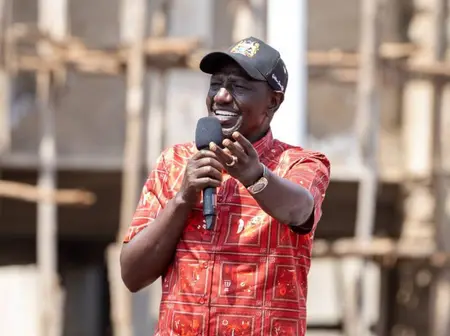
The Head of State has increasingly taken government activities to different parts of the country, using project launches, inspections and public engagements to showcase his administration's development record.
His latest engagements have covered Western Kenya, following similar tours in Ukambani and the Rift Valley, as he seeks to strengthen his political support beyond regions traditionally associated with his political base.
Under the Bottom-Up Economic Transformation Agenda (BETA), the government has been highlighting investments in road construction, electricity connections, affordable housing, modern markets and water infrastructure.
The administration has also been pursuing the revival of major sugar factories, including Mumias, Nzoia, Sony Sugar and Muhoroni, alongside investments in coffee, tea and industrial parks.
Ruto's supporters believe the approach demonstrates his commitment to distributing development across the country, regardless of how different regions voted in previous elections.
However, the strategy faces questions over whether the projects being showcased have significantly improved the economic circumstances of ordinary Kenyans.
The cost of living, unemployment, taxation and public debt remain major concerns, with critics questioning the value of some government investments and their impact on household incomes.
The 2024 anti-government protests, largely triggered by opposition to the Finance Bill, also demonstrated the extent of public dissatisfaction with the government's economic policies.
Meanwhile, opposition leaders are attempting to organise a formidable political movement capable of challenging Ruto.
Former Deputy President Rigathi Gachagua, through his Democracy for the Citizens Party (DCP), has intensified grassroots mobilisation while criticising the government's treatment of the Mount Kenya region.
Other potential contenders include Wiper leader Kalonzo Musyoka, former Interior Cabinet Secretary Fred Matiang'i and Nairobi Senator Edwin Sifuna.
A TIFA Research survey published on November 12 placed Ruto and Sifuna at 31 per cent each in presidential preference, pointing to a competitive race.
However, the opposition still faces the challenge of agreeing on a common candidate and presenting a convincing alternative programme.
As the election approaches, Ruto will be judged not only by the number of projects launched but also by whether Kenyans experience meaningful improvements in their daily lives.
For the opposition, turning public dissatisfaction into a coordinated political campaign could prove equally difficult.
https://peopledaily.digital/inside-politics/why-rutos-relentless-county-tours-complicate-the-oppositions-2027-arithmetic
Leave a Reply