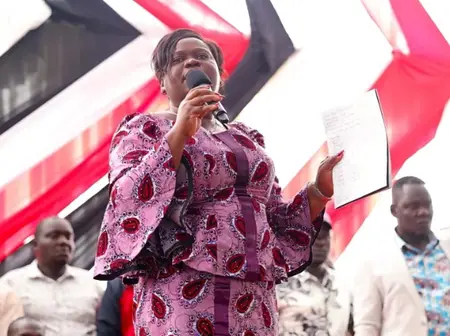
Wanga said engaging politicians from both the opposition and the broad-based government was an important step towards building confidence in the electoral process and addressing concerns before the country heads to the polls.
Speaking in Ndhiwa, Homa Bay County, the governor welcomed the commission's decision to meet different political groups, arguing that such consultations should be encouraged rather than discouraged.
She said the IEBC should be given room to listen to candidates, party leaders and political formations, regardless of their political affiliations.
"I'm happy that IEBC has created a forum to meet every candidate, to meet every formation. Nimeona wanakutana na wale wa upinzani na ni sawa kabisa," Wanga said.
The governor added that leaders aligned with the broad-based government should also have an opportunity to engage the electoral commission and present their views on the preparations for the upcoming elections.
According to Wanga, the ultimate goal should be ensuring that Kenyans participate in an election that is free, fair and credible.
"Siku ingine kuja na sisi pia wa broad-based ni sawa kabisa kwa sababu sisi tunataka IEBC ifanye uchaguzi wa haki na huru," she said.
Her remarks come amid growing political debate over the commission's preparedness to conduct the 2027 elections, with opposition leaders recently expressing dissatisfaction following a consultative meeting with IEBC officials in Nairobi.
The leaders, including former Deputy President Rigathi Gachagua, Wiper Party leader Kalonzo Musyoka and Nairobi Senator Edwin Sifuna, reportedly walked out of the high-level meeting with IEBC chairman Erastus Ethekon.
The opposition leaders cited concerns over electoral reforms, including the voters' register, election technology and the presidential results tallying process. They argued that the commission had not adequately addressed the issues they wanted discussed.
The walkout sparked a response from the electoral commission, which criticised the leaders for leaving before substantive discussions could take place.
IEBC chairman Erastus Ethekon maintained that the commission remained willing to engage political parties and receive formal submissions on issues affecting the electoral process.
He argued that sustained dialogue was a more productive way of addressing electoral concerns than abandoning consultations.
"Walking away from dialogue before substantive discussions begin does not advance the resolution of electoral concerns," Ethekon said.
The chairman also urged political leaders to approach future meetings in good faith and exercise restraint as the country prepares for the August 10, 2027, General Election.
IEBC has also pointed to its experience conducting 32 by-elections as part of its preparations, saying the exercises have helped strengthen its readiness for the national polls.
The governor urged political formations to use the available consultation platforms to raise their concerns, saying engagement with the electoral commission could help strengthen the process ahead of the 2027 elections.
Source
Leave a Reply