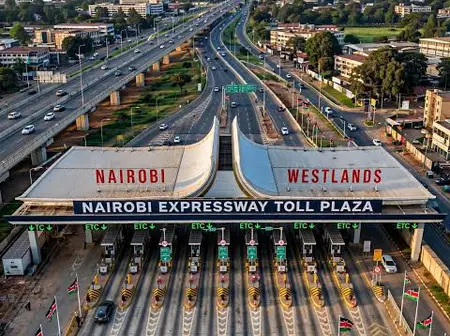
Thousands of Nairobi motorists pay toll fees every day, yet the company running the elevated highway just posted a massive Sh5.1 billion loss.
On Saturday, November 21, President William Ruto’s Chief Economic Advisor, David Ndii, stepped forward to explain the puzzling financial numbers. Speaking via a statement shared on his social media channels, Ndii attributed the deficit to the heavy cost of repaying construction loans during the early years of the project.
The public uproar began earlier in the week after the National Treasury released its Fifth Annual Report on the State of Public-Private Partnerships. The official document showed that Moja Expressway Company Limited collected Sh9.63 billion in toll revenue in 2025, yet spent Sh14.73 billion.
Many Kenyans struggled to understand how a brand-new 27-kilometre road could swallow nearly Sh15 billion in just twelve months. Dismissing the online skepticism as premature panic, Ndii replied directly to critics on X using blunt Swahili slang.
"Hii ni kiherehere," Ndii wrote, using the local term that translates to unnecessary fuss or overexcitement. He added, "Most infrastructure projects take 5 to 10 years to break even. Investors usually recoup their money in the latter half of the concession."
According to the economist, a huge chunk of the Sh170 to Sh500 toll fees motorists pay goes straight into servicing the loans used to build the road. He also pointed out that the Nairobi Expressway has no provision for viability gap funding, meaning the private Chinese investor bears the commercial risk alone rather than passing the bill to taxpayers.
Treasury Cabinet Secretary John Mbadi echoed a similar defence during a Tuesday night television interview. Mbadi assured Kenyans that the operator's red ink poses zero financial risk to the national budget.
Still, economic commentators and journalists have raised sharp questions about the transparency of the reported expenses. Veteran business journalist Jaindi Kisero and NTV host Eric Latiff publicly questioned how routine maintenance, lighting, and toll booth operations on a relatively new highway could add up to Sh14.73 billion in one year.
Critics also note that the Treasury report lumped all expenses under "direct costs" without breaking down how much went to loan interest, currency exchange losses, or actual road maintenance. For daily commuters already stretched by high fuel prices and toll rates that jumped in early 2024, the math feels hard to swallow.
As the government plans to build more major roads like the Rironi-Mau Summit highway using similar private-investor deals, the Nairobi Expressway has become a major test case.
Do you believe the Nairobi Expressway is genuinely making losses, or should the government make the operator's full financial records public?
Leave a Reply