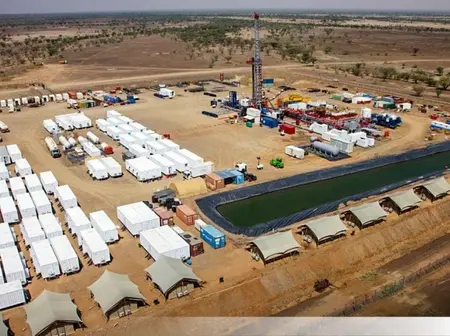
Kenya is preparing to join the ranks of oil-producing countries in East Africa, with commercial production from the South Lokichar Basin in Turkana County expected to begin on December 1, 2026.
The project, operated by Gulf Energy, follows more than a decade of delays since oil was discovered in the basin in 2012. Its progress marks a major step towards turning Kenya’s oil resources into commercial revenue, with the government and local communities expecting economic benefits from the development.
The South Lokichar project covers Blocks T6 and T7 and has estimated recoverable resources of about 326 million barrels. Its first phase, running from 2026 to 2032, targets production of 20,000 barrels per day from the Ngamia, Amosing, Twiga and Ekales fields, collectively known as NEAT.
Production is expected to increase to 50,000 barrels per day in a subsequent phase, while Gulf Energy has indicated plans to invest about $6 billion in capital and development.
Projections put the government’s potential share of revenue over the project’s lifetime at between $1.05 billion and $2.9 billion, equivalent to approximately Ksh136 billion to Ksh371 billion. The actual amount will depend on international oil prices, production volumes and the recovery of development costs.
Oil exports could also provide Kenya with an additional source of foreign exchange, alongside earnings from agriculture, tourism and other services.
The country currently spends significant amounts importing petroleum products, making the development of domestic crude resources an important part of its energy sector.
However, producing crude oil does not automatically mean Kenya will stop importing refined fuel. The Turkana oil will initially be transported for export, while the country continues to rely on imported petroleum products for its domestic fuel needs.
The project is also expected to create employment opportunities, particularly for residents of Turkana County.
Local workers and businesses are expected to benefit from activities linked to drilling, construction, transportation and other support services. The government has emphasised local participation, including giving priority to residents of the oil-producing region.
Infrastructure development is another area expected to benefit from the project. Roads, water facilities and other supporting services are part of the wider development activities around the oil fields.
The government is also working on revenue-sharing arrangements and community programmes intended to ensure that residents benefit from oil production.
These measures will be important in addressing local expectations, particularly after years of exploration and development delays.
Moving the oil from Turkana to the export market presents another major undertaking.
The crude, which is light and has low sulphur content, also has a high wax content. This means it requires heating to maintain its flow during transportation.
Initial production will be moved by insulated trucks to Mombasa, where the oil will be stored and handled before export. Rail transport is planned for a later phase, while a pipeline remains a longer-term option.
The Kenya Pipeline Company is expected to support storage and handling arrangements at the coast.
Kenya is also preparing a commercial name for its crude to distinguish it in the international market. Four options have been shortlisted: Great Rift Light, Great Rift Intermediate, Great Rift Blend and Great Rift Sweet.
Energy Cabinet Secretary Opiyo Wandayi has said President William Ruto will unveil the selected name during the December 1 flag-off of the first consignment.
The project’s economic returns will depend on production targets being achieved, international oil prices, reliable transportation and the terms governing revenue distribution.
Leave a Reply