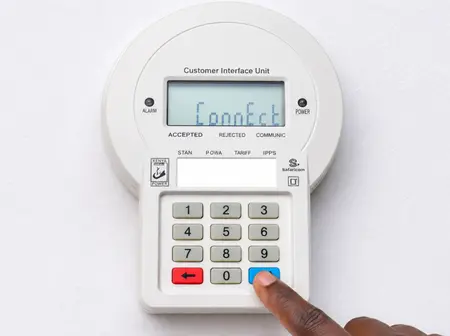
Millions of Kenya Power customers could eventually feel the effects of Kenya’s changing electricity market, but not necessarily through an immediate reduction or increase in their monthly bills.
The bigger question is whether allowing large consumers to buy electricity directly from private generators will reduce power costs without shifting the expense of maintaining the national grid to households and smaller businesses.
The National Assembly Committee on Delegated Legislation, chaired by Ainabkoi MP Samuel Chepkonga, conditionally endorsed the Energy (Electricity Market, Bulk Supply and Open Access) Regulations, 2026, following discussions with Energy and Petroleum Regulatory Authority (EPRA) Director-General Edward Kinyua on Thursday, November 19, 2026.
Gazetted in May as Legal Notice No. 79 of 2026, the regulations establish a framework for electricity market participants, bulk power supply and third-party access to transmission and distribution networks. They provide for direct electricity supply arrangements between licensed market participants and eligible consumers, with electricity transported through existing infrastructure.
The regulations also provide for wheeling or use-of-system charges, energy accounting, supply agreements and performance security. Their purpose is to make it possible for eligible buyers to negotiate electricity purchases outside traditional supply arrangements while paying for the use of the national grid.
The reforms primarily target large electricity consumers, including manufacturers, that could negotiate supply contracts directly with independent power producers (IPPs).
Instead of relying entirely on Kenya Power’s conventional supply arrangements, eligible buyers could compare offers from generators and negotiate prices and contractual terms. The electricity would still travel through the national transmission and distribution networks, meaning access to the grid would not be free.
“For a very long time, our market has been monopolised. The reforms will create competition, drive operational efficiency, and lower power tariffs to make Kenya a competitive manufacturing hub,” Kinyua told MPs.
However, ordinary households should not expect to start choosing electricity suppliers immediately. Eligibility requirements, licensing, technical arrangements and network access conditions determine who can participate.
The biggest unanswered question is how much eligible buyers will pay to transport electricity through the national grid.
That issue is particularly important because EPRA was still examining different approaches to setting wheeling tariffs during a technical workshop held on November 16 and 17 in Machakos, according to RES4Africa. The discussions considered whether charges should be based on electricity capacity or actual energy consumed, as well as differences arising from voltage levels, time and geographical location.
These decisions will influence whether direct purchases genuinely become cheaper and how fairly network costs are shared.
Kenya Power reported revenue of Ksh238.24 billion and electricity purchase costs of Ksh152.65 billion in the financial year ended June 2026. The company also recorded a Ksh24.99 billion profit after tax.
Chief Executive Joseph Siror said: “Going forward, the Company will focus on translating its improved financial position into better service delivery and sustained shareholder value.”
The utility must still maintain its infrastructure even if some large customers purchase electricity elsewhere. If it loses significant sales revenue while retaining network responsibilities, regulators will need to ensure that wheeling charges adequately recover legitimate costs without unfairly burdening customers who cannot switch.
That is a risk requiring scrutiny, not proof that household electricity bills will rise.
Cheaper electricity for factories does not automatically mean cheaper electricity for households or lower prices for manufactured goods.
The final cost of power also depends on network charges, transmission losses, balancing services, backup supply and contractual obligations. The savings manufacturers achieve could improve their competitiveness, but whether consumers benefit through lower product prices will depend on business decisions and market competition.
Electricity Sector Association of Kenya Chief Executive George Aluru said: “The sector needs more investments in generation and transmission and we as the private sector are ready to commit the necessary resources.”
He added: “We have seen policy changes that are calling for us to reimagine the sector. The sector needs are clear- from generation to transmission lines- and we as the private sector are ready to partner to move the electricity market to what these regulations envision.”
Kenya’s Transmission Master Plan requires approximately 9,600 kilometres of additional transmission lines over 20 years, at an estimated US$5.2 billion. At the Central Bank of Kenya’s November 19 rate of Ksh129.99 per US dollar, that is approximately Ksh675.95 billion.
During the November 19 scrutiny, MPs questioned Regulation 11, which deals with performance security. Kathiani MP Robert Mbui sought clarity on how the requirement would apply to suppliers and consumers. Kinyua explained that the provision was intended to protect buyers when suppliers fail to deliver contracted electricity.
Members also sought clearer definitions of technical terms, including open access and ancillary services, as well as evidence that public participation requirements had been met. EPRA was asked to incorporate the committee’s recommendations.
Chepkonga had previously defended Parliament’s supervisory role during debate on the regulations.
“Parliament cannot abdicate its supervisory and oversight role.”
Ultimately, the success of the reforms will depend on more than the number of private electricity suppliers entering the market.
The test will be whether manufacturers obtain competitively priced electricity, network operators recover legitimate infrastructure costs, and households are protected from unfair cost transfers.
Until the wheeling tariff framework and implementation safeguards are clear, the effect on ordinary Kenya Power bills remains uncertain.
Leave a Reply