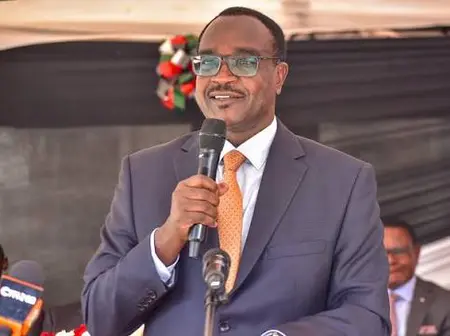
Education Cabinet Secretary Julius Ogamba has outlined proposed changes to government student loan repayment, saying graduates who remain unemployed will not be required to begin repaying their loans until they secure jobs.
Under the proposed arrangement, beneficiaries who find employment will receive an additional 12 months before repayment begins. They will then be expected to clear their loans over a period of 10 years.
Ogamba explained the arrangement while addressing graduates during the second graduation ceremony at Bureti National Polytechnic in Kericho on Friday, November 20, 2026.
"If you do not get a job, you don't pay. If you get a job, then we have a grace period of one year. You work for a year, then your payment will be for 10 years," he stated.
The proposed changes are contained in the Tertiary Placement and Funding Bill, which seeks to change how students are assessed and supported when accessing government funding for higher education.
According to the CS, the existing arrangement considers the financial ability of parents to meet tuition and upkeep costs. The proposed framework would instead place the student at the centre of the funding process, taking their career path into consideration.
"Up to the present, funding of students has been based on the capacity of their parents to support them for tuition and for upkeep. This Bill moves away from funding parents to funding students," Ogamba explained.
The proposed model also provides for college students to access loans of up to KSh100,000 per semester. The amount is expected to cover tuition estimated at KSh67,000 and upkeep of approximately KSh38,000.
The government anticipates that the revised repayment arrangement will improve loan recovery from the current 75 per cent to 85 per cent, a move Ogamba said would help make the funding programme financially sustainable.
He argued that the current system can disadvantage students from families with limited financial resources, including those seeking admission to demanding professional courses such as medicine, engineering and law.
The government expects the new funding model to become operational in 2027. Students who recently completed their Kenya Certificate of Secondary Education examinations are expected to be among its first beneficiaries.
The Bill has already undergone public participation in different parts of the country, where students, parents and other education stakeholders were invited to give their views and propose changes before Parliament considers the legislation.
However, the proposed arrangements are not yet in force. Their implementation will depend on the legislative process and the eventual provisions adopted in the law.
Source
Leave a Reply