Highlighted on Sunday, November 22, 2026, the move is framed around expanding equitable access to higher education and directing state support more effectively to vulnerable learners.
The announcement builds on Kenya’s shift away from uniform block capitation toward need-based financing implemented through the Higher Education Financing (HEF) framework, the Universities Fund, the Higher Education Loans Board (HELB), and placement agency KUCCPS.
According to the Universities Fund, more than 400,000 students have received scholarships since the student-centred funding rollout began in 2023—with the first cohort set to graduate in 2027—while over 159,000 applicants completed funding applications via the HEF portal by August 2026 for the 2026/2027 cycle.
Despite those numbers, higher education financing has faced recurring friction over household means-testing accuracy, funding shortfalls for high-cost programmes, student loan burdens, and court and parliamentary scrutiny.
By advancing new legislative proposals and refined targeting mechanisms, the Ministry of Education seeks to recalibrate how scholarships, loans, and institutional resources reach needy students without locking out deserving learners.
What are your thoughts about this article? Share your reactions in the comment section and don't forget to share and follow for more updates.
The proposed changes are expected to shift the focus from parents' financial abilities to the individual needs of students, ensuring that learners from low-income households have a better opportunity to pursue higher education.
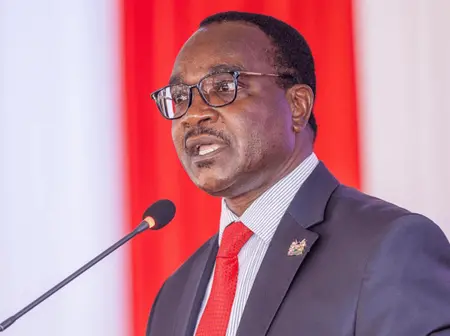
Speaking on Sunday, November 22, 2026, during the second graduation ceremony at Bureti National Polytechnic in Kericho County, Ogamba said the government was preparing the Tertiary Education Funding Bill of 2026 to address challenges affecting access to higher education.
The CS explained that the proposed legislation would change how students are assessed for financial assistance, with support determined by their economic circumstances rather than their parents' income or ability to pay.
Under the proposed arrangement, university and college graduates would be given a one-year grace period after securing employment before beginning to repay their student loans.
The repayments would then be spread over 10 years, giving graduates more time to establish themselves financially before meeting their loan obligations.
Ogamba said the new approach would also help the government attract additional funding from individuals and institutions willing to support students pursuing higher education.
He noted that expensive courses, including medicine, often require substantial financial resources, making it difficult for some families to support their children's education.
The CS argued that treating education funding as an investment in individual students would make it easier to mobilise resources and ensure that deserving learners are not denied opportunities because of their family backgrounds.
He added that the government wanted to create a system in which students could concentrate on their studies without constantly worrying about how to raise school fees.
During the same event, the Education CS also celebrated Kenya's achievement in printing national examinations locally.
Ogamba said the country had depended on foreign printing facilities for 63 years, despite having local capacity to undertake the work.
He explained that relying on overseas printing companies had resulted in money leaving the country while local industries missed out on business opportunities.
The CS welcomed the shift to local production, noting that the examinations had been successfully printed within Kenya and administered.
He described the development as an important step towards strengthening local industries while reducing dependence on foreign service providers.
The proposed university funding reforms and local examination printing initiative are part of broader efforts by the government to improve education financing and strengthen the country's education sector.
Outlining the legislative push, Ogamba stated that the proposed law seeks to expand access to higher education by ensuring public resources are targeted more equitably toward learners with the greatest financial need.
The announcement signals a renewed effort by the Ministry of Education to strengthen the legal and operational foundation of higher education financing in Kenya.
Under the existing Student-Centred Funding Model—administered through the Higher Education Financing (HEF) portal alongside the Universities Fund, the Higher Education Loans Board (HELB), and the Kenya Universities and Colleges Central Placement Service (KUCCPS)—student support has been structured around a combination of government scholarships, loans, and graduated household contributions determined through a Means Testing Instrument (MTI).
However, the rollout of university financing reforms over recent academic cycles has faced intense public debate, legal scrutiny, and complaints from families over banding classifications, household contribution assessments, and delayed disbursements to institutions.
By anchoring a revised model in the Tertiary Education Funding Bill of 2026, the government aims to establish clearer statutory parameters for evaluating student need, distributing scholarships and loans, and safeguarding access for learners from low-income backgrounds.
For thousands of students preparing to join universities and Technical and Vocational Education and Training (TVET) institutions, affordability remains one of the biggest hurdles to completing higher education.
As the proposed Bill moves toward parliamentary consideration and stakeholder engagement, students, parents, and university administrators will be watching closely to see how the revised framework improves financial support for needy learners while keeping public universities financially sustainable.
What are your thoughts about this article? Share your reactions in the comment section and don't forget to share and follow for more updates.
Suba North MP Millie Mabona and her husband had an unexpected surprise when they went to collect their granddaughter, Palesa, after she completed her 2026 Kenya Certificate of Secondary Education (KCSE) examinations.
Palesa completed her final examination paper on Friday, November 20. However, instead of returning home with only her personal belongings, she arrived carrying two live rabbits.
Mabona shared photographs of the family reunion on Facebook, giving followers a glimpse of how they welcomed the young girl after her final days in secondary school.
One of the pictures showed the legislator posing alongside her husband and granddaughter, with flowers also visible in the photograph.
Another image captured the two rabbits inside a cardboard box, with vegetables placed beside them.
The animals were linked to Palesa's Agriculture project at school. Her decision to bring them home added an unusual touch to what was already a special occasion for the family.
For Mabona and her husband, collecting their granddaughter marked an important family moment as she brought her secondary school journey to an end.
Palesa's experience also highlighted the practical side of Agriculture lessons, where learners get an opportunity to work with animals and develop skills beyond classroom instruction.
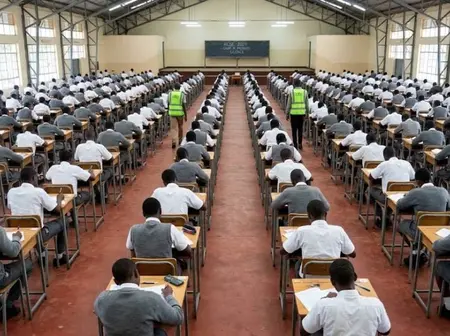
Her homecoming comes as thousands of candidates across the country celebrate completing their KCSE examinations.
According to the examination figures announced by Education Cabinet Secretary Julius Ogamba, 1,048,355 candidates registered for the 2026 examinations in 10,693 centres.
The government is targeting January 2027 for the release of the results.
Meanwhile, Palesa's reunion with her grandparents will remain memorable, particularly because she arrived home with two unexpected companions from her school project.
Education Cabinet Secretary Julius Migos Ogamba says the Competency-Based Education (CBE) system is set to transform sports development in Kenya by providing learners with structured opportunities to nurture their talents and progress to professional careers.Ogamba said the education reforms had elevated sports and the arts from extracurricular activities to recognised pathways, creating a framework through which gifted learners can develop their abilities while pursuing their education.
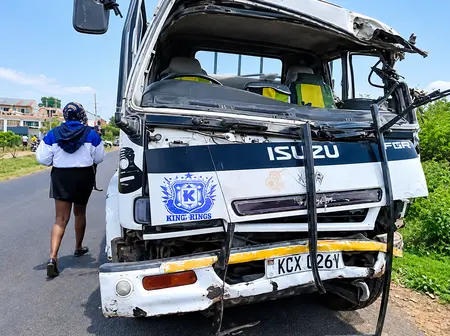
Two candidates who had just completed their Kenya Certificate of Secondary Education (KCSE) examinations are nursing injuries after their school bus was hit by gunfire during a police confrontation in Samburu County.
The students, from PCA Tum Girls High School, were injured on Saturday, November 21, 2026, when their school bus came under gunfire along the Baragoi-Maralal road as police officers engaged suspected bandits.
Samburu County Police Commander David Nkoroi confirmed the incident, saying the confrontation occurred in the Murijo area towards Multi.
The bus was carrying four students who had completed their KCSE examinations. Two other learners on board escaped without injuries.
The circumstances surrounding the shooting, including the extent of the injured students’ wounds, were not immediately clear.
Nkoroi confirmed that two students sustained injuries during the incident, which occurred as police officers confronted the attackers along the route.
The shooting raises fresh concerns about the safety of learners travelling through areas affected by insecurity, particularly in regions where schools and candidates may be exposed to security operations.
Further details on the incident, including whether the students were taken to hospital and the condition of the injured learners, were not available in the initial report.
The incident comes a day after the 2026 KCSE examination season officially ended, with candidates across the country completing the national assessment.
In a post shared on its X account on Friday, November 20, 2026, the Ministry of Education announced the conclusion of the examination period, thanking stakeholders who supported the exercise.
“It’s a wrap for the 2026 national assessments and examinations. Thank you all for the support,” the ministry said.
Education Cabinet Secretary Julius Ogamba said marking of KCSE answer scripts would begin promptly, with the government targeting the release of results in January 2027.
According to Ogamba, 1,048,355 candidates registered for the 2026 KCSE examinations, which were administered in 10,693 examination centres countrywide.
The examination exercise ran for 24 days, with materials distributed daily from 646 distribution centres. About 34,170 examiners are expected to participate in marking across 41 centres.
The government deployed a multi-agency team involving the Ministry of Interior and National Administration, the Teachers Service Commission and other agencies to oversee the examinations.
During the examination period, authorities reported security challenges in several areas, including Moyale, Isiolo, Garissa and parts of Turkana.
The government also used helicopters and alternative transport methods to deliver examination materials to areas affected by insecurity and flooding.
The incident in Samburu highlights the risks that learners may face when travelling in areas experiencing security challenges, even as the country shifts its attention to marking examinations and preparing candidates for the next stage of their education.
Lumakanda is in Lugari Sub-County, Kakamega County.
Lumakanda MCA Mulama confirmed the incident. He said it was not immediately clear whether the deceased was among the candidates.
He said he was deeply saddened by the accident, which happened in his ward, and offered condolences to those affected.
According to reports, details on the cause of the crash and the identities of the victims were not immediately available.
The accident comes as thousands of candidates travel home after completing the 2026 Kenya Certificate of Secondary Education (KCSE) examinations.
Education Cabinet Secretary Julius Ogamba earlier disclosed that three candidates had died during the year, reports indicate.
The Eldoret-Webuye Highway has seen several crashes involving matatus and trailers.
The busy highway links Eldoret to Webuye and carries trucks heading towards the Malaba border, reports indicate.
In December 2025, reports indicate seven people were killed when a matatu rammed into a trailer in the Munalo area of Kakamega County. Another report said the 14-seater matatu veered out of its lane and hit a stationary trailer carrying fertiliser. Another report put the death toll at eight.
In June 2026, three people died when a log-laden trailer lost control and overturned onto a matatu at Chomoi along the same highway, The Star reported. The matatu was carrying 11 passengers, police said. Rescuers evacuated the injured to hospital, police said, as investigations began.
Reports reviewed did not include an official police statement on the crash at the time of writing.
The Teachers Service Commission (TSC) has announced 7,720 vacancies for teachers in public schools across Kenya.
The recruitment is intended to replace teachers who have left the public service. Successful applicants will therefore fill existing positions rather than automatically increase the total number of teachers in schools.
This distinction is important because schools continue to face pressure from growing student numbers and the demands of the Competency-Based Education system.
Filling the vacant positions will help schools replace lost staff, but it does not mean that the country will have 7,720 additional teachers.
The 7,720 vacancies are distributed across three levels of public education.
The breakdown is as follows:
Primary schools account for the largest share of the available positions.
The 25 vacancies in junior schools are also worth noting. They represent replacement positions included in this particular recruitment exercise, not the total number of junior school teachers the government intends to employ.
The government has announced separate plans to recruit more teachers for junior schools.
On October 7, 2026, Education Cabinet Secretary Julius Ogamba addressed teacher recruitment and staffing issues during a session in the Senate.
He told senators that the government had provided funding to recruit 20,000 junior school teachers on permanent and pensionable terms, with the recruitment expected to take effect from January 1, 2027.
Ogamba also explained that the government intended to seek additional resources to gradually absorb another 24,000 junior school interns into permanent employment.
The absorption of these interns would depend on the availability of funding.
These commitments are separate from the 7,720 vacancies announced by the TSC. They should therefore not be treated as part of the same recruitment exercise.
The difference between the two recruitment plans is important when assessing the number of teachers available in public schools.
Filling the 7,720 vacancies will replace teachers who have left their positions. It will help prevent staffing levels from falling further, but it will not represent an equivalent increase in the national teacher workforce.
The proposed recruitment of 20,000 junior school teachers is different because it is intended to add teachers to the existing workforce.
The planned absorption of 24,000 interns could also change staffing levels if the government secures enough money to implement it.
However, the two additional commitments should not be presented as completed recruitment. Their implementation will depend on the government's plans, funding and subsequent recruitment arrangements.
The demand for teachers is influenced by more than the number of vacant positions.
One important factor is student enrolment. When more learners join schools without a corresponding increase in teaching staff, existing teachers may have to handle larger workloads.
The introduction and expansion of Competency-Based Education also creates staffing needs across different learning areas. Schools require teachers with the appropriate training to deliver the curriculum.
During his Senate appearance, Ogamba acknowledged the financial challenges involved in employing more teachers.
This means that addressing staffing gaps requires more than identifying the need for additional teachers. The government must also provide sufficient funding to support recruitment and employment.
The TSC recruitment notice sets different academic requirements depending on the level of school.
Applicants must be Kenyan citizens and registered teachers.
For primary school positions, applicants must hold at least a P1 certificate. Those applying for junior school or secondary school positions must have at least a Diploma in Education, subject to the specific requirements in the recruitment notice.
Applications must be submitted online through the TSC recruitment system. Manual applications are not accepted.
Each applicant should complete only one Application for Employment Form. Submitting more than one form may lead to disqualification.
Successful candidates may be deployed to different parts of the country depending on the available vacancies and staffing requirements. Applicants for junior school replacement positions should also pay attention to the specific schools listed in the recruitment notice.
The recruitment notice was published on November 10, 2026. Applications close at midnight on Monday, November 23, 2026.
Applicants should check the qualifications and other conditions before submitting their applications.
The TSC has also indicated that merit lists may be used for subsequent recruitment during the 2026/2027 financial year.
There is no application fee for this recruitment exercise. Applicants should avoid anyone demanding money in exchange for assistance or claiming to have influence over the selection process.
The recruitment will give schools an opportunity to replace teachers who have left public service. This is important because leaving existing vacancies unfilled could put additional pressure on the teachers who remain in those schools.
However, replacing teachers is different from increasing the workforce to meet rising demand.
The proposed recruitment of 20,000 additional junior school teachers and the planned absorption of 24,000 interns could have a wider effect on staffing levels if implemented.
For now, the 7,720 vacancies should be understood as a replacement exercise, while the other commitments represent separate plans that depend on government funding and implementation.
Education Cabinet Secretary Julius Ogamba has announced the expected timelines for the release of the 2026 national examination results, clarifying when candidates who sat the different assessments should prepare to receive their outcomes.
According to the announcement, Kenya Junior School Education Assessment (KJSEA) results are expected in December, while Kenya Certificate of Secondary Education (KCSE) and Kenya Primary School Education Assessment (KPSEA) results are expected in January.
The announcement came on Friday, November 20, as Ogamba presided over the conclusion of the 2026 KCSE examination period.
The December KJSEA timeline is important because the results will guide placement of learners into Grade 10 Senior School before the January 2027 school calendar begins. The ministry has therefore prioritised processing the assessment scripts.
A total of 13,484 examiners are handling structured KJSEA questions across 24 marking centres, while multiple-choice papers are being machine-scored.
KCSE candidates, meanwhile, will wait until January 2027. Ogamba said an estimated 34,170 examiners will mark the scripts in 41 centres nationwide.
The 2026 KCSE examination attracted 1,048,355 candidates in 10,693 centres. KPSEA results will also be released in January, providing feedback as learners move to Grade 7.
Families now have a clearer timeline, but the wait may still feel long. The announcement sparked reactions online, with many people left talking about the different release months.
What happens next will depend on the completion of marking and processing, especially as Grade 10 placement approaches.
Are you satisfied with the announced results timeline, or should the ministry release them earlier? Share your views in the comments.
Speaking during the second graduation ceremony at Bureti National Polytechnic in Kericho on Friday, November 20, Ogamba said graduates who fail to secure employment will not be required to start repaying their loans immediately.
He explained that those who secure jobs will enjoy a one-year grace period before beginning repayment.
"If you do not get a job, you don't pay. If you get a job, then we have a grace period of one year. You work for a year, then your payment will be for 10 years," Ogamba stated.
The CS said the proposed arrangement is part of the Tertiary Education Placement and Funding Bill, 2026, which seeks to change how the government finances university and TVET education.
Under the proposed framework, funding will focus more on individual students and their chosen courses rather than their parents' financial ability.
Ogamba also revealed that college students could access loans of up to Ksh100,000 per semester, with approximately Ksh67,000 allocated for tuition and Ksh38,000 for upkeep.
The government expects the new repayment arrangement to increase loan recovery from the current 75 per cent to 85 per cent.
The proposed changes come amid concerns from students and parents over unemployment and the growing cost of higher education.
The government says the reforms are intended to ensure that students can pursue courses such as medicine, engineering and law without their parents' financial circumstances becoming the main obstacle.
The new framework is expected to become operational next year, subject to the legislative process.
Students and parents will therefore be watching Parliament's consideration of the Bill as the government prepares to introduce the proposed funding arrangements.