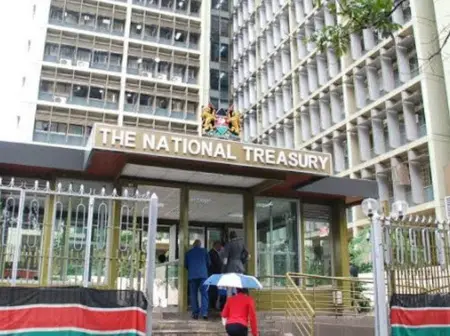
Two government departments responsible for public works, housing and urban development have raised concerns over funding shortages in the proposed 2027/28 Budget Policy Statement (BPS), warning that inadequate allocations could delay infrastructure projects, disrupt service delivery and increase pending bills.
The State Department for Public Works and the State Department for Housing and Urban Development told Parliament that their proposed allocations fall short of the amounts required to implement planned programmes and meet operational obligations.
The departments made the submissions on Thursday, November 19, 2026, before the National Assembly’s Departmental Committee on Housing, Urban Planning and Public Works, seeking parliamentary intervention to address the funding gaps.
The concerns come as government departments prepare their spending priorities for the 2027/28 financial year, with the Treasury’s proposed ceilings expected to determine how much money each department can access.
Principal Secretary for Public Works Joel Arumonyang told the committee that the department had received a proposed allocation of Ksh5.277 billion against its budget requirement of Ksh11.413 billion.
This leaves the department with a funding gap of approximately Ksh6.137 billion, meaning it has been allocated less than half of the amount it says is necessary to execute its planned activities.
Arumonyang warned that the shortfall could affect the maintenance of government infrastructure, supervision of construction projects and the department’s ability to monitor the quality of buildings across the country.
He also linked inadequate funding to the growing accumulation of pending bills, which currently stand at Ksh1.521 billion.
“Pending bills are a moving target caused by insufficient budgetary provision relative to contract values. So far, the department has an accumulated pending bill of Ksh. 1.521billion,” he said.
The PS further warned that inadequate funding could undermine building inspections, audits and technical supervision, noting that the department lacks essential testing equipment required to effectively carry out its responsibilities.
The State Department for Housing and Urban Development has also raised concerns over its proposed allocation, reporting a funding shortfall of Ksh5.464 billion.
Senior Chief Finance Officer Alexius Njue told the committee that the department had received a Treasury ceiling of Ksh132.166 billion against its budget requirement of Ksh137.629 billion.
The department is seeking an additional Ksh2.839 billion for recurrent expenditure and Ksh2.624 billion for development expenditure.
Recurrent expenditure covers the day-to-day running of government operations, including salaries, administration and other operational costs.
Development expenditure, on the other hand, finances projects and investments such as housing construction, infrastructure development and other long-term programmes.
Njue warned that failure to bridge the funding gaps could affect the implementation of priority programmes, potentially slowing down projects planned for the 2027/28 financial year.W
Budget shortfalls occur when the money allocated to a government department is lower than what it requires to implement its planned programmes and meet its financial obligations.
In this case, the two departments say the proposed allocations could create several challenges.
First, infrastructure projects could experience delays if departments lack sufficient funds to supervise, inspect and maintain construction works.
Second, pending bills could continue accumulating where government agencies are unable to settle payments for completed works and services.
Third, inadequate funding for recurrent expenditure could affect the day-to-day operations of departments, while reduced development funding could slow down planned projects.
For Public Works, the shortage could particularly affect building inspections and quality assurance, raising concerns about the oversight of construction projects across the country.
The Departmental Committee on Housing, Urban Planning and Public Works has pledged to push for increased allocations to the two departments.
Committee Chairperson Joseph Tonui said Parliament would use its oversight and budgetary powers to advocate for higher Treasury ceilings through a report to the Budget and Appropriations Committee.
“We have listened to both State Departments and it is clear they are being asked to deliver much more with far less. The Committee will use Parliament’s powers to push for substantial ceiling enhancements to ensure that critical programmes are not stalled,” Tonui said.
The committee is expected to submit its recommendations to the Budget and Appropriations Committee, which will consider them during the budget-making process.
The proposed increases, however, are not yet guaranteed, as the final allocations will depend on the outcome of parliamentary consideration and the overall budget priorities for the 2027/28 financial year.
Rono is a digital journalist with a proven track record in newsroom leadership and content creation. Currently a Digital Writer for People Daily Digital, Emmanuel’s career is rooted in a lifelong passion for storytelling. Let's talk here: emmanuel.rono@mediamax.ke or ronoemmanuel685@gmail.com
Leave a Reply