The new initiative, known as Forge Africa, will be headquartered in Kenya and initially support 100 businesses struggling to secure the financing and investment needed to grow.
The platform is backed by £40 million (approximately KSh6.81 billion) in UK funding and will begin its operations in Kenya before expanding into other African markets.
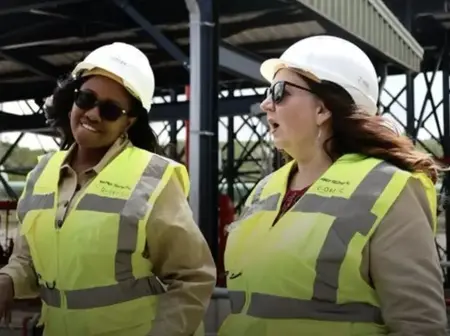
UK Minister for Africa Kirsty McNeill announced the initiative on Thursday, November 19, 2026, during a visit to Octavia Carbon's Project Hummingbird facility in Gilgil, Nakuru County.
The facility uses geothermal energy from the Rift Valley to capture carbon dioxide directly from the atmosphere before storing it permanently underground.
Octavia Carbon is among the Kenyan businesses that have benefited from UK-backed investment. Earlier support from the UK helped the company raise approximately $10 million and create more than 100 skilled jobs.
Speaking during the announcement, McNeill said Africa had many promising entrepreneurs and businesses capable of competing internationally but continued to face difficulties accessing the financing and support required to expand.
She explained that Forge Africa would help bridge the investment gap by connecting businesses with investors prepared to provide long-term financial support.
The initiative is expected to give promising African enterprises better opportunities to attract capital, develop their operations and compete in regional and international markets.
Separately, the UK government has announced a new phase of the Kenya Catalytic Jobs Fund, another initiative targeting business development and employment creation.
The programme seeks to mobilise £50 million (approximately KSh8.51 billion) by March 2029 to support more than 500 start-ups in Kenya.
Its next phase will concentrate on technology, artificial intelligence, biosciences and businesses led by women.
The Kenya Catalytic Jobs Fund brings together researchers, entrepreneurs, investors and government institutions to help transform innovative ideas into commercially viable businesses.
According to the announcement, its first phase supported 19 Kenyan companies, contributed to the creation of 145,000 direct and indirect jobs and attracted an additional £4 million in investment.
The new phase will be led by ISAAA AfriCenter and the Mawazo Institute, working alongside international and local partners.
These include Imperial College London, the University of Oxford's Africa Oxford Initiative (AfOx), BioInnovate Africa and the Nairobi Business Angel Network (NaiBAN).
British High Commissioner to Kenya Matt Baugh said the two initiatives would help businesses move from research and development to commercial production while enabling established start-ups to expand their operations.
During her visit to the Rift Valley, McNeill also toured the UK-backed Globeleq geothermal power plant at Menengai.
The facility harnesses underground steam to generate electricity, supporting Kenya's renewable energy ambitions while creating employment opportunities.
Kenya remains Africa's leading producer of geothermal electricity, with renewable sources accounting for more than 90% of its electricity generation, according to figures cited in the announcement.
The investment initiatives come against the backdrop of growing economic relations between Kenya and the United Kingdom.
Bilateral trade between the two countries is valued at approximately £2.1 billion (KSh357.42 billion) annually.
More than 150 British-linked companies operate in Kenya, supporting over 250,000 jobs across different sectors of the economy.
Through Forge Africa and the expanded Kenya Catalytic Jobs Fund, the UK is seeking to strengthen access to investment, encourage innovation and help more Kenyan businesses grow into sustainable employers.
Source
Leave a Reply