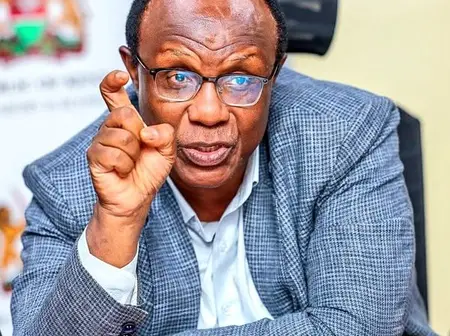
President William Ruto’s economic adviser David Ndii has responded to questions over the pricing of government affordable housing units after a Kenyan raised concerns about the cost difference between public housing projects and privately developed apartments.
The debate was triggered on Thursday, November 19, 2026, by an X user, @Kamugenius, who questioned why a two-bedroom apartment under the government’s Affordable Housing Programme costs Ksh3.6 million, compared to Ksh3 million for a similar unit at Greatwall Apartments in Mlolongo.
The user argued that government housing should cost less because it is being developed on public land using taxpayers’ money.
“Explain to us how housing built on free government land using our taxes cost more than housing built for profit by private investors. Two Bedroom ‘Affordable Housing’ units costs 3.6 million while a similar one built by Chinese at Greatwall Apartments in Mlolongo costs 3 Million,” the user wrote.
Ndii responded briefly, suggesting that the difference in prices was explained by the location of the developments.
“Location, location, location,” he replied.
His response points to the influence of geographical positioning on property prices, including access to transport networks, employment centres, social amenities, and infrastructure.
However, Ndii did not provide a detailed breakdown of the two projects’ construction costs or explain how much the location factor accounts for in the reported Ksh600,000 difference.
The exchange comes shortly after the government revised the prices of houses under the Affordable Housing Programme.
The revised rates, which took effect on October 1, 2026, increased affordable housing unit prices by 20 per cent and market-rate units by 10 per cent, according to an announcement by the State Department for Housing.
Under the revised structure, two-bedroom affordable housing units increased from Ksh3 million to Ksh3.6 million.
The adjustment added Ksh600,000 to the purchase price of the affected units, matching the difference highlighted by the X user.
The government said the revised prices applied to new applications submitted from October 1, while applicants who had registered before the deadline would retain their earlier prices.
The adjustment placed the two-bedroom affordable housing category at Ksh3.6 million, the same figure cited in the online exchange.
The government has previously argued that using public land is one of the strategies intended to reduce the cost of affordable housing.
Affordable Housing Board’s acting Chief Executive Officer, Sheila Waweru, said government projects were being developed on national or county government land, which was treated as zero-rated for the purpose of the programme.
She explained that the government had standardised construction costs per square metre across its projects, meaning the cost of constructing a particular category of house was generally similar across different locations.
Waweru also said the government negotiated with major manufacturers of construction materials, including cement and steel producers, to secure favourable prices for contractors involved in the programme.
She argued that bulk procurement and standardised construction were intended to bring down the cost of delivering the units.
Her explanation, however, also acknowledged that the final price of a house was influenced by factors beyond the cost of building materials.
The Affordable Housing Programme is funded through the Affordable Housing Fund, which receives money from the housing levy and other sources provided for under the law.
The Affordable Housing Act, 2024 defines affordable housing in relation to the cost of acquiring or renting a home, which should not exceed 30 per cent of a person’s monthly income.
The programme also has different categories, including social housing for lower-income households, affordable housing and market-rate units.
This distinction is important because a unit described as affordable under the programme is not necessarily the cheapest available house in the wider property market.
Government listings show that prices vary according to the housing category, project and unit type. For example, a Boma Yangu project listing currently displays a two-bedroom affordable unit at Ksh2.4 million, alongside other categories and prices.
Ndii’s response has consequently placed renewed attention on how the government determines the selling prices of its housing units, particularly when public land and money collected from Kenyans are involved.
While location may explain part of the difference, the exchange has left a wider question for the government: how does it demonstrate that the final prices offer value for money compared with comparable homes built by private developers?
Leave a Reply