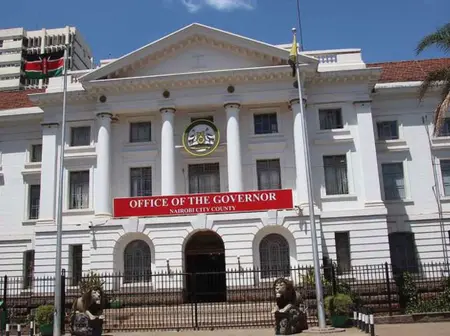
The report warns that some counties appear unable to settle obligations for services already delivered. Nairobi accounts for the largest share of the bills older than three years, with Ksh.49.1 billion outstanding.
The report also identifies Ksh.46.7 billion in pending bills accumulated during the 2025/26 financial year. It lists a further Ksh.30.6 billion as one to two years old and Ksh.22.9 billion as three to four years old.
Nairobi also owes suppliers Ksh.86.9 billion – the highest amount of any county and more than half of the total pending bills owed to suppliers by all counties.
The Parliamentary Budget Office is seeking action, warning that the scale of Nairobi’s unpaid bills poses a significant risk to businesses and economic activity.
Its proposals include a matching-funds arrangement in which the national government contributes Ksh.1 for every Ksh.2 Nairobi pays. Another option would see the national government match each shilling paid by the county. Either arrangement could shift part of the county’s obligations to the national government.
The Budget Office says clearing Nairobi’s pending bills by 2030 could improve cash flow for suppliers and contractors and strengthen business confidence.
The report also raises concerns about stalled projects. Nairobi has the most, with 57, followed by Kakamega with 26, Baringo with 23, Machakos with 22, and Kilifi with 10. The remaining counties each have fewer than 10 stalled projects.
The Budget Office is urging counties to complete viable stalled projects before starting new ones, arguing that finishing existing projects could deliver economic returns sooner.
Leave a Reply