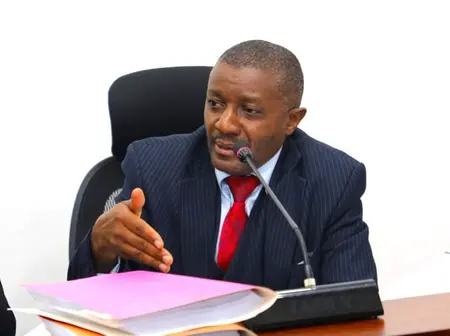
Makueni Senator Dan Maanzo has accused President William Ruto of failing to protect human rights, saying compensation for families who lost loved ones during the 2024 Gen Z protests cannot erase the deaths or substitute for justice.
Speaking during a morning breakfast television programme on Thursday, November 19, 2026, Maanzo revisited the June 2024 demonstrations, in which young Kenyans took to the streets to oppose the Finance Bill and the high cost of living.
The senator argued that the government had failed to adequately address the grievances that pushed young people into the streets, despite President Ruto’s latest remarks on human rights and compensation during his State of the Nation Address on Wednesday, November 18.
“On the human rights bit, the killings, when this preacher criticised that, he was actually chased out of the country. It was so nasty immediately after, and I promised him one day you will come back to this country a happy man,” Maanzo said.
He was referring to American preacher and former NFL player Rickey Allen Bolden, who challenged Kenya’s leadership to rebuild broken relationships with young people during the National Prayer Breakfast on May 28, 2025.
Bolden called on leaders to acknowledge the trauma experienced by young people during the protests and apologise for the government’s response, including arrests and internet restrictions.
Maanzo recalled how the preacher had used the biblical account of Nehemiah rebuilding Jerusalem’s walls to illustrate the need to restore trust between the government, young people and families who lost their children.
The senator argued that the government’s decision to compensate victims came too late, insisting that financial payments could not replace the lives lost during the demonstrations.
“William Ruto is doing too little, too late. For the last three years, he has done nothing, only killed children, now he is compensating them and pretending to start doing roads everywhere in the country,” he said.
His remarks followed Ruto’s announcement that the government had allocated KSh2 billion towards compensating victims of human rights violations arising from demonstrations and public protests.
During his address to Parliament on Wednesday, the President said KSh1.2 billion had been paid to 1,476 verified beneficiaries by July 2026.
However, Maanzo questioned the adequacy of the compensation, arguing that families who lost their children were still waiting for justice and meaningful accountability.
“The compensation is not sufficient,” he said.
The senator’s criticism comes amid continued public debate over whether compensation alone can address the grievances of families affected by protest-related deaths, injuries, abductions and other alleged human rights violations.
Maanzo also linked the 2024 demonstrations to the economic pressures that continue to affect households, arguing that the issues raised by young protesters have not been adequately addressed.
He cited the cost of electricity, fuel and basic commodities, saying the high cost of living remains a concern despite the government’s efforts to lower food prices.
“If you kill a young graduate who is just asking, say that, you know, the cost of living is high, and it’s still high today. Many, many families have suffered,” he said.
The senator also challenged the government’s narrative on falling maize flour prices, arguing that improved rainfall and increased production by Kenyan farmers had played a significant role in lowering the cost of maize.
He maintained that farmers across the country had worked hard to increase food supplies, cautioning against attributing all the gains to the government’s fertiliser subsidy programme.
“Every single Kenyan worked very hard in their farm. Even now when the rains have come, I can assure you every single Kenyan is working very hard and they have enough for themselves and for supply,” Maanzo said.
He acknowledged the contribution of subsidised fertiliser to agricultural production but maintained that favourable weather conditions and farmers’ efforts had also influenced food availability and prices.
Maanzo’s remarks come as the government’s handling of the 2024 Gen Z protests continues to shape debate over accountability, police conduct and the right to peaceful demonstrations.
The President has defended the compensation programme as part of efforts towards national healing, while acknowledging that financial payments cannot replace lives lost or fully address the suffering of affected families.
For Maanzo, however, the central issue remains the government’s responsibility to protect citizens, particularly young people exercising their constitutional rights.
He warned that families who lost their children and Kenyans who felt ignored by the government had not forgotten the events of 2024.
The senator argued that many citizens had resorted to waiting for the 2027 General Election after feeling that their grievances had not received sufficient attention.
Leave a Reply