Health professionals have attributed the concerning trend partly to maternal health complications, including hypertension, diabetes and malaria, warning that failure to detect and manage such conditions during pregnancy can increase the risk of early delivery.
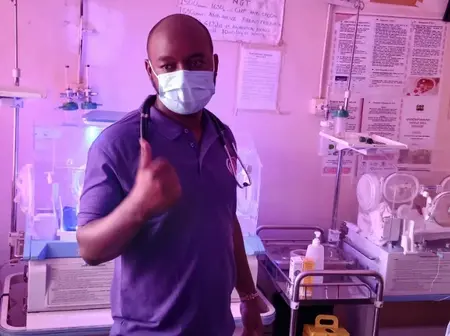
Dr Dickens Lubanga, a paediatrician at Webuye County Hospital, said underlying medical conditions, maternal age and multiple pregnancies are among the factors associated with premature births.
He raised the concerns during activities marking World Prematurity Day, where healthcare professionals highlighted the challenges facing mothers and newborns requiring specialised medical attention.
Premature birth occurs when a baby is delivered before completing 37 weeks of pregnancy. A full-term pregnancy typically lasts approximately 40 weeks.
According to Lubanga, women below the age of 17 and those above 35 may face increased risks of premature delivery. He also identified hypertension, diabetes and malaria as conditions that require careful monitoring throughout pregnancy.
"When these diseases are not properly managed, they can easily lead to babies being born earlier than expected," he said.
The paediatrician urged expectant mothers to attend all eight recommended antenatal clinic visits to allow healthcare workers to monitor their health, identify complications early and assess the development of their unborn babies.
The importance of specialised newborn care was also highlighted through the experience of Millicent Wabukala, a mother who delivered a baby weighing 2.3 kilogrammes.
Shortly after birth, the newborn developed jaundice, a condition that causes yellowing of the skin and eyes due to elevated levels of bilirubin in the blood.
The baby was admitted to the Newborn Unit at Webuye County Hospital, where medical professionals placed the child under phototherapy to manage the condition and monitored the newborn's progress.
Wabukala recalled that the experience was emotionally difficult, particularly because she was uncertain whether her baby would survive.
She said the uncertainty and stress took a significant psychological toll on her, nearly developing into a mental health challenge.
The mother expressed gratitude to the doctors, nurses and other healthcare workers who supported her family throughout the difficult period.
"I want to thank the healthcare providers and nurses at Webuye County Hospital for the care and dedication they showed in ensuring that my baby survived. It was not an easy journey, but their support gave me hope," she said.
Wabukala added that her child had made encouraging progress, gaining weight from 2.3 kilogrammes at birth to 10.5 kilogrammes.
Her experience illustrates the challenges families can face when newborns require specialised treatment and prolonged medical attention after delivery.
The high rate of premature births in Bungoma has renewed attention on the importance of accessible antenatal services, timely treatment of pregnancy-related complications and properly equipped newborn units.
For families whose children arrive before completing the normal pregnancy period, access to specialised newborn care can also make a significant difference in their recovery and development.
Source
Leave a Reply