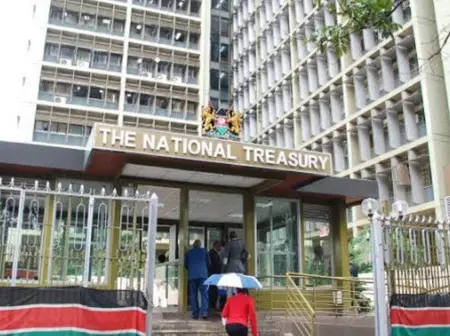
According to November 2026 baseline projections released by the Parliamentary Budget Office (PBO) alongside the National Treasury’s 2027 Budget Policy Statement (BPS) framework, ministerial recurrent spending alone is projected at Ksh2.284 trillion—more than double the Ksh862.4 billion proposed for ministerial development expenditure.
When Consolidated Fund Services (CFS)—which cover public debt interest payments, redemptions, and pensions—are factored in alongside routine administrative costs, total recurrent outlays exceed Ksh3.88 trillion (and climb past Ksh4.02 trillion in updated Treasury draft estimates), accounting for nearly three-quarters of the entire national spending plan.
Under the fiscal framework, county governments are set to receive approximately Ksh472.8 billion in equitable share transfers to fund devolved functions, while Ksh5 billion has been ring-fenced for the Contingency Fund.
The remaining development funds are anchored on the government’s five Bottom-Up Economic Transformation Agenda (BETA) pillars: agricultural transformation, MSMEs, healthcare and Universal Health Coverage, affordable housing, and the digital superhighway.
Because of the August 10, 2027 General Election, the budget preparation calendar has been fast-tracked so that Parliament concludes approvals by March 2027 rather than the traditional June deadline.
While Treasury officials maintain that tighter expenditure discipline and zero-based budgeting are being applied to curb waste amid a projected fiscal deficit of roughly Ksh1.32 trillion, economists and civil society groups have raised concern over the shrinking share left for long-term infrastructure and capital investments.
What are your thoughts about this article? Share your reactions in the comment section and don't forget to share and follow for more updates.
https://peopledaily.digital/news/kenyas-ksh5-3-trillion-budget-where-the-biggest-share-of-the-money-will-go
Leave a Reply